DbcultAccessing Vault...
6.6/10
Senior Film Conservator
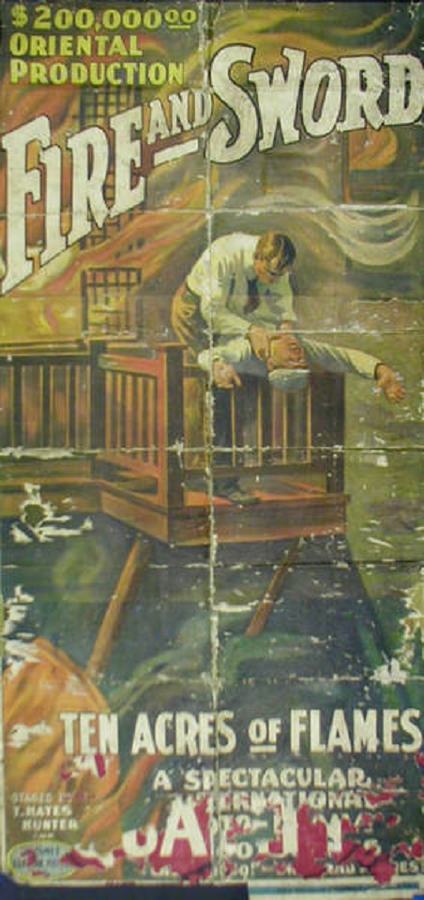
A definitive 6.6/10 rating for a film that redefined the boundaries of cult cinema. Fire and Sword remains a cornerstone of transgressive art.
The year 1914 stands as a monolithic pillar in the cathedral of cinematic history, a moment when the medium finally shed its swaddling clothes and began to walk with the stride of a titan. Within this transformative era, Fire and Sword emerges not merely as a relic of a bygone age, but as a pulsating document of artistic ambition. Starring Tom McEvoy and Isabel Rea, the film navigates the treacherous waters of historical melodrama with a gravitas that many of its contemporaries lacked.
To understand the impact of Fire and Sword, one must look at the landscape of 1914. While films like Atlantis were pushing the boundaries of scale and disaster-driven spectacle, Fire and Sword sought a more grounded, yet equally fervent, emotional resonance.
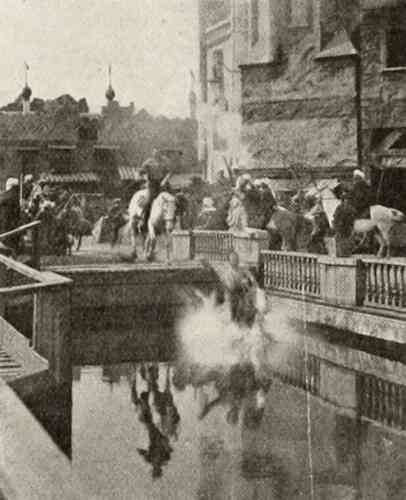
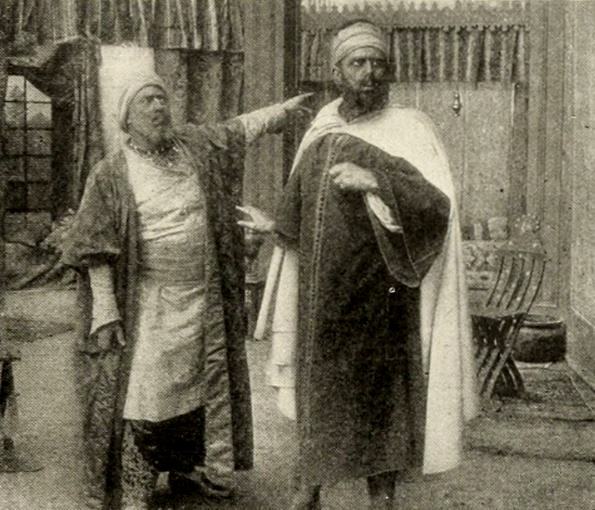
The performance of Tom McEvoy is a fascinating study in early screen presence. Unlike the exaggerated pantomime often found in the theatrical adaptations of the time—think of the heightened reality in East Lynne—McEvoy utilizes his physicality to suggest a brooding internal conflict. His movements are deliberate, almost sculptural, reflecting a man caught between the rigid requirements of his station and the chaotic impulses of his heart. Beside him, Isabel Rea offers a performance that transcends the 'damsel' archetype. There is a flickering intelligence in her eyes, a nuanced vulnerability that reminds one of the naturalism found in Asta Nielsen's work in Balletdanserinden. Together, they anchor the film's more explosive sequences with a humanistic core.
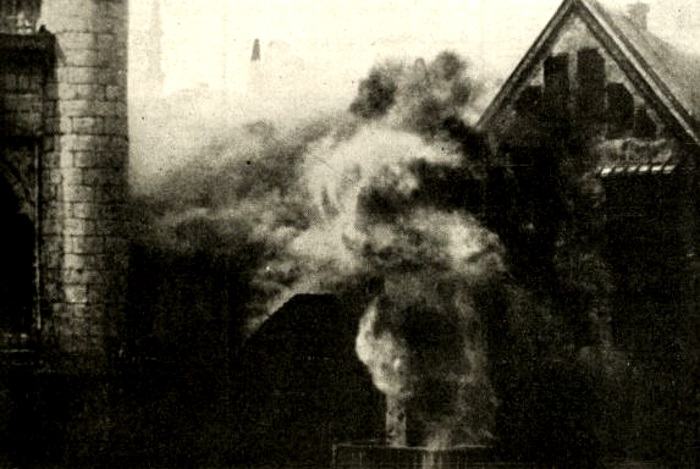
The visual language of the film is where its true brilliance lies. The director—though often overshadowed by the larger-than-life personalities of the era—demonstrates a sophisticated understanding of depth and composition. In the sequences involving the 'fire' of the title, the use of primitive tinting and clever lighting creates a hellish, immersive atmosphere. This isn't the stage-bound artifice seen in Solser en Hesse; this is cinema beginning to understand its own capacity for environmental storytelling. The 'sword' is equally well-represented through choreography that feels dangerously unpolished, lending a sense of verisimilitude to the combat that predates the more polished swashbuckling of the 1920s.
When we place Fire and Sword alongside other works from this period, its unique texture becomes even more apparent. For instance, while Wolfe; or, the Conquest of Quebec dealt with colonial aspirations and military strategy, Fire and Sword feels more intimate, focusing on the psychological toll of such conquests. It lacks the slapstick anarchy of Tillie's Punctured Romance, opting instead for a somber, almost liturgical pacing that shares more DNA with the religious epics like From the Manger to the Cross.
The narrative structure of the film is deceptively complex. It eschews the straightforward linearity that would soon become the Hollywood standard. Instead, it moves in rhythmic waves, alternating between moments of quiet contemplation and bursts of frantic action. This ebb and flow mirrors the volatility of the era itself. One can see shades of the burgeoning detective genre, reminiscent of Wer ist der Täter?, in the way the plot reveals its secrets. There is a mystery at the heart of the protagonist’s journey—a question of identity and loyalty that keeps the viewer engaged far beyond the simple thrill of the spectacle.
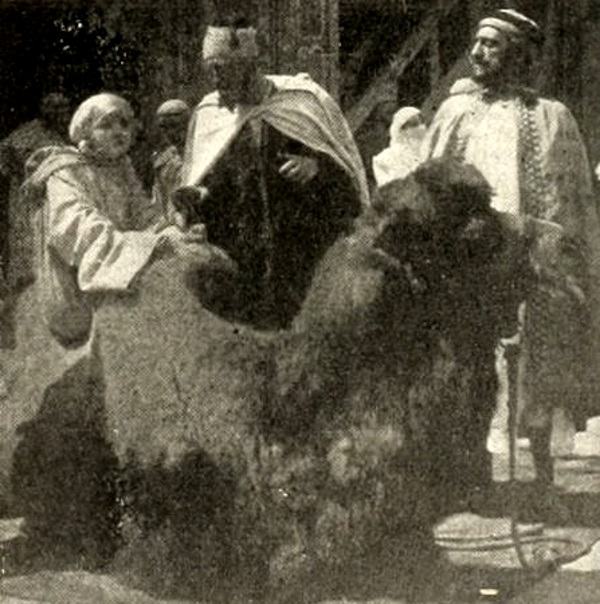
"Fire and Sword is a testament to the era's obsession with the friction between old-world chivalry and the encroaching brutality of modern warfare. It is a film that bleeds authenticity even through its silent, flickering frames."
Consider the technical hurdles of the time. Without the benefit of synchronized sound or the sophisticated editing suites of today, the filmmakers had to rely on the 'tableau'—the art of arranging a single shot to tell a multitude of stories. In Fire and Sword, these tableaus are breathtaking. There is a scene involving a burning bridge that rivals the kinetic energy of The Fugitive. The camera, though mostly static, is positioned with such precision that the viewer feels the heat of the flames and the cold bite of the steel. It is a masterclass in spatial awareness.
Furthermore, the film’s exploration of social themes cannot be ignored. Much like Your Girl and Mine: A Woman Suffrage Play sought to challenge the status quo through narrative, Fire and Sword subtly questions the glorification of war. While it presents the 'sword' as a tool of honor, it never shies away from the 'fire'—the destructive, indiscriminate force that leaves only ash in its wake. This nuanced perspective is rare for 1914, an era often characterized by simplistic jingoism. It shares a certain thematic kinship with the sprawling societal critiques found in Les Misérables, Part 2: Fantine, where the individual is often crushed by the gears of history.
To watch Fire and Sword today is to engage in a form of cinematic archaeology. Every frame is thick with the dust of the past, yet the emotions remain startlingly fresh. The chemistry between McEvoy and Rea is the engine that drives the film. In their scenes together, the world of politics and war falls away, leaving only the raw electricity of two people trying to find a foothold in a crumbling world. It is a dynamic that would be echoed decades later in the great romances of the screen, but here it is seen in its most primal, unadorned state.
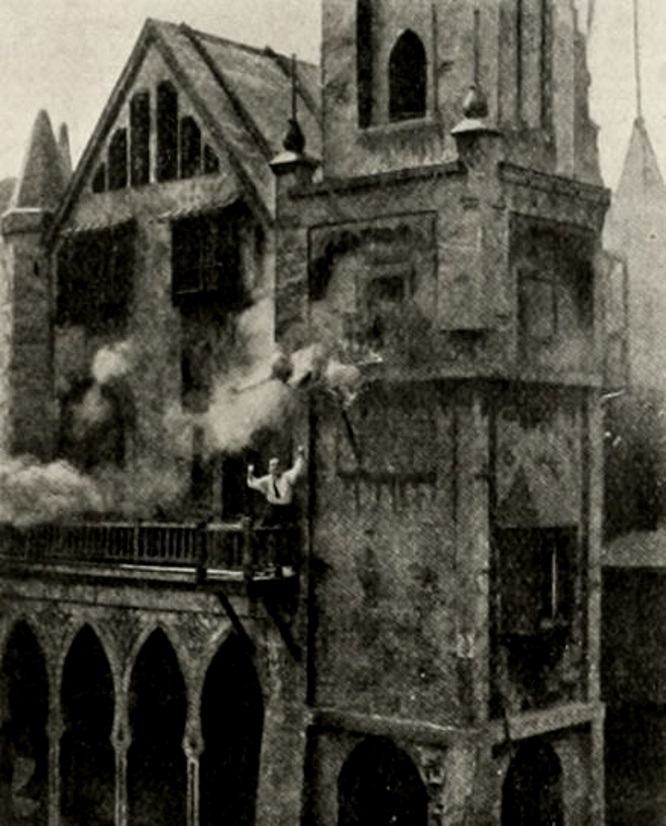
The film also serves as a fascinating contrast to the documentary-style realism of Giro d'Italia or the visceral athleticism of The Joe Gans-Battling Nelson Fight. While those films sought to capture the world as it was, Fire and Sword sought to create a world as it *felt*. It is an impressionistic work, where the lighting and the sets are designed to reflect the internal states of the characters. When the protagonist is in despair, the shadows grow long and oppressive; when there is hope, the screen seems to glow with a soft, ethereal light.
One must also mention the set design. In an era where many films were shot against painted backdrops that looked as flimsy as cardboard, Fire and Sword utilizes location shooting and solid, three-dimensional sets to great effect. There is a tactile quality to the environments—the rough stone of the castle walls, the damp earth of the trenches, the fine silk of Rea’s gowns. This attention to detail creates a sense of place that is as immersive as any modern CGI landscape. It reminds us that the power of cinema has always been rooted in the ability to transport the audience to another time and place, a feat achieved here with remarkable skill, much like the verticality explored in De levende ladder.
In the broader context of 1914, a year that also saw the biographical grandeur of A Vida do Barão do Rio Branco, Fire and Sword holds its own as a piece of pure narrative storytelling. It doesn't rely on the fame of historical figures or the novelty of technological gimmicks. Instead, it relies on the fundamental tools of the craft: acting, composition, and a deep understanding of human nature. It is a film that demands to be seen, not just by historians or students of the silent era, but by anyone who appreciates the power of a story well told.
The legacy of Fire and Sword is one of quiet influence. While it may not be as frequently cited as the works of Griffith or Murnau, its fingerprints can be found in the historical epics that followed. It proved that the 'sword' of action and the 'fire' of passion could be combined into a cohesive, artistically significant whole. It is a triumph of early cinema, a flickering flame that continues to burn bright for those willing to look into the shadows of the past. The interplay of light and dark, the synthesis of theater and reality, and the sheer audacity of its vision make it a cornerstone of the 1914 cinematic output. As we look back through the lens of a century, the film stands as a reminder that the heart of cinema has always been, and will always be, the human experience caught in the crosshairs of destiny.
IMDb —
1920
Community
Log in to comment.