DbcultAccessing Vault...
Cult Review
Senior Film Conservator
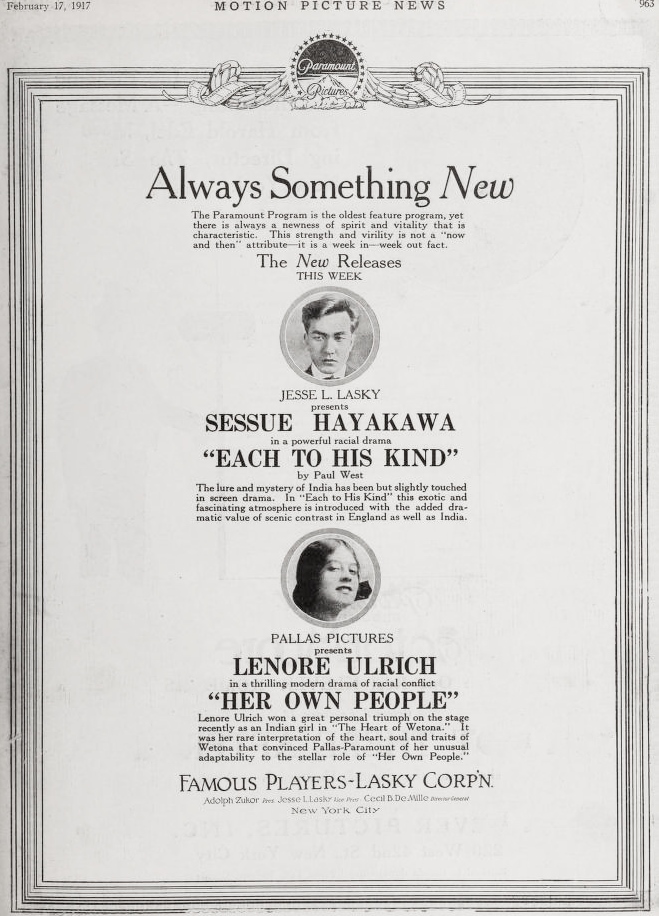
In the grand tapestry of early cinema, few narratives weave such an intricate web of societal critique and personal triumph as "Her Own People." This cinematic endeavor doesn't merely recount a story; it dissects the very fabric of human motivation, exposing the insidious nature of avarice and the enduring power of genuine affection. From its opening frames, we are plunged into a world where status and wealth dictate destinies, yet where the human heart, against all odds, yearns for something far more profound. The film masterfully juxtaposes the artificiality of high society with the raw, unvarnished truth of the wilderness, crafting a commentary that remains strikingly relevant even today.
The film introduces us to John Kemp, a titan of industry, whose world of calculated finance and social standing is abruptly shattered by a whispered revelation. His fiancée, Eleanor Dutton, a woman seemingly destined for a life of opulent ease, betrays the sacred trust of impending matrimony, confessing her true love for another while shamelessly admitting her intent to marry Kemp for his considerable fortune. This moment of brutal honesty, delivered with a chilling pragmatism, doesn't just break Kemp's heart; it shatters his perception of the "civilized" world he inhabits. He doesn't rage or retaliate; instead, he retreats, a wounded king abandoning his gilded castle for the untamed embrace of the mountain wilderness. This pivotal decision mirrors the thematic core found in films like The Marriage Speculation, where the transactional nature of marriage often eclipses true sentiment. However, Kemp's response is uniquely defiant, choosing exile over complicity, thereby initiating a profound re-evaluation of what truly constitutes wealth and happiness. His rejection of a society that values gold over integrity sets the moral groundwork for the entire narrative, positioning the wilderness not as an escape, but as a crucible for authenticity.
In the rugged solace of nature, Kemp finds an unexpected sanctuary and a new beginning. He weds The Morning Star, an indigenous woman, whose connection to the land and unvarnished spirit stands in stark contrast to the duplicity of his former life. From this union blossoms Alona, a daughter whom Kemp idolizes, raising her far from the corrupting influences of urban society. Her early life is one of freedom, authenticity, and a deep-seated connection to her heritage, a pristine existence that sets the stage for the dramatic conflicts to come. This idyllic, almost Edenic, upbringing imbues Alona with a strength of character and an intuitive wisdom that will serve her well when she is inevitably thrust back into the very world her father sought to escape. The film here subtly champions the virtues often ascribed to indigenous cultures – a harmony with nature, an honesty of spirit – contrasting them sharply with the perceived moral decay of the industrial age. It's a powerful statement on the innate dignity of a life lived outside the confines of societal artifice, preparing Alona for a world that will judge her not by her character, but by her origins.
The narrative takes a significant turn when Kemp, driven by a paternal sense of duty and perhaps a lingering belief in the benefits of formal education, decides to return to civilization to complete Alona's schooling. He places her in a fashionable boarding school, a bastion of refinement and social stratification, believing he is offering her the best of both worlds. Here, Alona, with her inherent grace and natural beauty, initially navigates this new environment with a quiet dignity. However, the revelation of her "Indian blood" acts as a social poison. The veneer of polite society crumbles, exposing the ugly underbelly of prejudice and exclusion. Most of the girls, steeped in their classist and racist biases, snub her, treating her as an exotic anomaly rather than a peer. This ostracization is a powerful commentary on the superficiality and cruelty of societal norms, reminiscent of the harsh judgments faced by characters in The Foundling, who struggle against the stigma of their origins. The institution, meant to enlighten, instead becomes a stage for demonstrating the deep-seated intolerance that society often nurtures beneath its polished surface. Alona's experience highlights the tragic irony: the very "civilization" her father believed would enrich her, instead seeks to diminish her very identity.
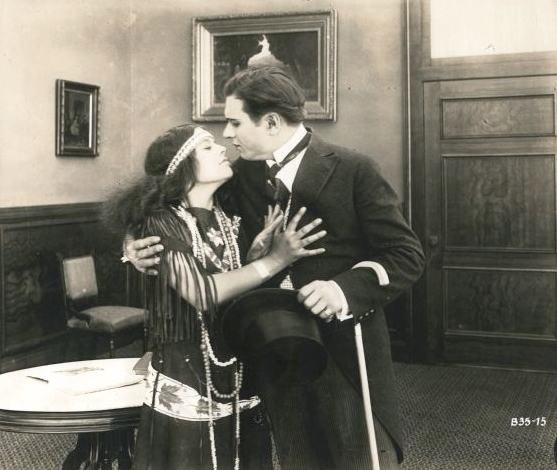
Amidst this sea of unkindness, a solitary beacon of humanity emerges in Myra Agnew, who extends a hand of genuine friendship to Alona. Yet, even this kindness proves to be a double-edged sword, tainted by the prevailing social currents. Myra, perhaps with well-meaning but ultimately misguided intentions, invites Alona home for Christmas, hoping to engineer a match between her brother, Blinn, and the seemingly wealthy Alona. The ensuing revelation is a gut-wrenching blow: Alona inadvertently discovers that Blinn, like Eleanor Dutton before him, cares only for her fortune. This echoes the cynical materialism explored in Her Father's Gold, where inheritance becomes both a blessing and a curse, attracting opportunistic suitors. The timing of this betrayal, coinciding with the tragic death of her father, John Kemp, leaves Alona utterly bereft and profoundly embittered. The "civilized" world has twice wounded her family, first her father, then her, proving itself a treacherous landscape where authenticity is sacrificed at the altar of material gain. With her spirit bruised and her trust shattered, Alona returns to "her people," seeking solace in the roots she had temporarily abandoned, convinced that the world of wealth and social standing offers nothing but deceit.
Her journey back to the wilderness is not merely a physical return but a spiritual re-anchoring. It is here that she reconnects with Frank Colvin, a poor young prospector whom she had met before her sojourn into society. Frank, whose affection for Alona is unburdened by knowledge of her wealth or social standing, declares his love, a declaration that, in Alona's embittered state, is met with skepticism. Having twice experienced the sting of mercenary intentions, Alona resolves to test Frank's sincerity with a meticulous and elaborate scheme. She buys his mine through an unknown agent, a shrewd move that not only secures her financial interests but also creates a scenario to gauge the purity of his intentions. This act of strategic manipulation, while born of pain, showcases Alona's newfound strength and cunning, a transformation from innocent maiden to a woman determined to protect her heart. It’s a compelling twist, turning the traditional damsel-in-distress trope on its head, much like the resourceful protagonists found in films such as Her Fighting Chance. Her actions demonstrate a powerful shift: she is no longer a passive victim of circumstance but an active agent in shaping her own destiny, demanding truth and integrity from those who claim to love her.
Frank, unaware of Alona's involvement, returns to the city, his dreams of fortune momentarily dashed but his spirit unbroken. He seeks out Alona, his affection undimmed by his financial setback, and promises to introduce her to his mother and sister, a gesture of genuine commitment that speaks volumes about his character. This unwavering devotion, despite perceived adversity, is the very quality Alona seeks to confirm. Meanwhile, Frank's family, having been informed of his intention to marry an Indian, initially harbors reservations. This moment deftly highlights the pervasive social prejudices of the era, showcasing how easily preconceived notions can cloud judgment and how deeply ingrained racial biases were in the societal psyche. However, upon meeting Alona, they are instantly disarmed by her profound beauty, grace, and intelligence. Their initial skepticism dissolves into admiration, and they not only approve of the match but decide to orchestrate a "big surprise" for Frank, becoming unwitting participants in Alona's grand design. This unexpected turn humanizes the family and underscores the film's message that genuine character can transcend ingrained prejudice.
The climax of "Her Own People" is a masterclass in dramatic revelation. That night, Alona dispatches her car to collect Frank, accompanied by his now-supportive mother and sister. They are driven not to some modest dwelling but to Alona's magnificent mansion, a symbol of her true status and wealth. Frank, expecting to find the simple Indian maiden he loves, is confronted with a stunning transformation. Alona, resplendent and regal, stands before him not as a prospector's hopeful bride but as an heiress of considerable means. The shock on Frank's face, the dawning realization, is palpable. It is in this moment, having witnessed his unwavering love through the trials of perceived poverty and societal judgment, that Alona is finally satisfied. She reveals her true identity, not as a test of his worth, but as an affirmation of his genuine character. Their happiness, forged in the crucible of deception and doubt, is now complete, built on a foundation of authentic love rather than superficial gain. This grand unveiling, where identity and status are dramatically recontextualized, resonates with the intricate social maneuvering found in narratives like The Social Highwayman, but here, the reveal serves to solidify love rather than to perpetrate fraud. It is a powerful theatrical flourish, ensuring that the audience, alongside Frank, truly understands the depth of Alona's journey and the purity of his proven affection.
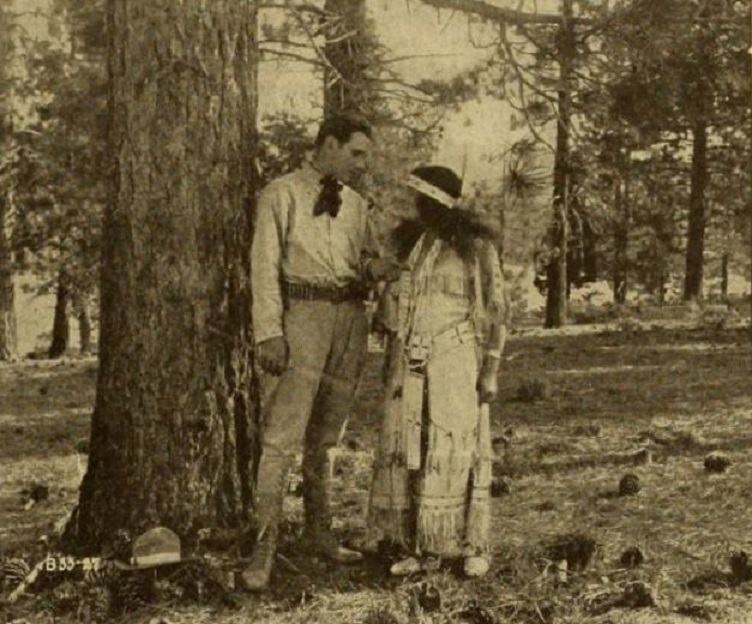
"Her Own People" transcends its period setting to offer a timeless meditation on societal values and personal integrity. The film's brilliance lies in its nuanced exploration of identity. Alona is not merely an "Indian maiden" or an "heiress"; she is a complex individual navigating a world that constantly tries to define her by her lineage or her ledger. Her journey is one of self-discovery, from the innocent child of the wilderness to the embittered woman betrayed by civilization, and finally to the empowered individual who orchestrates her own destiny. The narrative challenges the simplistic binaries of "savage" versus "civilized," demonstrating that true barbarity often resides within the heart of so-called polite society, while genuine nobility can be found in unexpected places. The film's critique of wealth as a primary motivator for relationships is stark and uncompromising, a theme that remains profoundly relevant even today, echoing the eternal struggle between materialism and genuine human connection. It forces viewers to question their own preconceived notions about worth and belonging.
The portrayal of John Kemp's initial disillusionment is crucial to setting the film's moral compass. His retreat from society is not an act of weakness but one of profound disillusionment, a rejection of a system that prioritizes material gain over emotional honesty. This act of self-exile becomes the catalyst for Alona's unique upbringing, blending the best of both worlds – the unadulterated truth of nature and the potential for refinement, albeit with its accompanying perils. The film subtly argues that while education and exposure to broader society can offer opportunities, they also expose individuals to its inherent corruptions. Alona's experiences at the boarding school serve as a microcosm of this societal rot, where prejudice, whispered judgments, and class distinctions are taught as implicitly as arithmetic or literature, further cementing the film's powerful social commentary on the hypocrisy of "progress."
Furthermore, the character of Frank Colvin stands as a powerful counterpoint to the avarice embodied by Eleanor Dutton and Blinn Agnew. His love for Alona is not contingent on her perceived wealth or social standing; it is a love for her intrinsic self, the "simple Indian maiden" he believes her to be. This purity of affection is what Alona so desperately seeks to validate, and it is his unwavering commitment that ultimately allows her to shed her protective layers of cynicism. The film posits that true love is blind not to flaws, but to superficialities, valuing character above currency. This idealism, juxtaposed against the film's harsh critiques of society, makes the eventual happy ending feel earned and deeply satisfying, rather than a mere contrivance. It's a testament to the idea that genuine human connection, when put to the test, can overcome even the most cynical of expectations, providing a hopeful resolution in a narrative fraught with betrayal.
The narrative also deftly handles the theme of "passing" or hidden identity, albeit with a unique twist. Alona doesn't try to hide her heritage; rather, society tries to box her in because of it. Her eventual "transformation" into an heiress is not about changing who she is, but about revealing the full spectrum of her being, challenging Frank to see beyond any single label. It's a powerful statement on authenticity, affirming that one's true worth lies beyond external circumstances. This intricate dance of identity and perception could draw comparisons to the complex psychological layers often found in narratives like Chained to the Past, where characters grapple with their origins and the societal expectations tied to them. The film, in essence, becomes a profound exploration of what it means to truly see and accept another person, flaws and fortunes notwithstanding.
In its entirety, "Her Own People" is more than just a melodramatic romance; it is a profound social commentary disguised within a compelling personal drama. It champions the virtues of integrity, loyalty, and genuine human connection over the ephemeral allure of wealth and status. The film, through Alona's journey, asks fundamental questions about what constitutes "one's own people" – is it a matter of blood, of social class, or of shared values and understanding? The resolution unequivocally suggests the latter, celebrating a union built on mutual respect and unconditional love. The enduring power of this story lies in its unwavering belief that, despite the cynicism and corruption that may permeate society, the human spirit's capacity for true connection can ultimately prevail. It’s a compelling cinematic artifact that, even decades later, continues to resonate with audiences grappling with similar questions of identity, belonging, and the relentless pursuit of an authentic life, making it a truly significant piece of film history worthy of rediscovery.
IMDb 7.5
1937
Community
Log in to comment.