DbcultAccessing Vault...
3.7/10
Senior Film Conservator
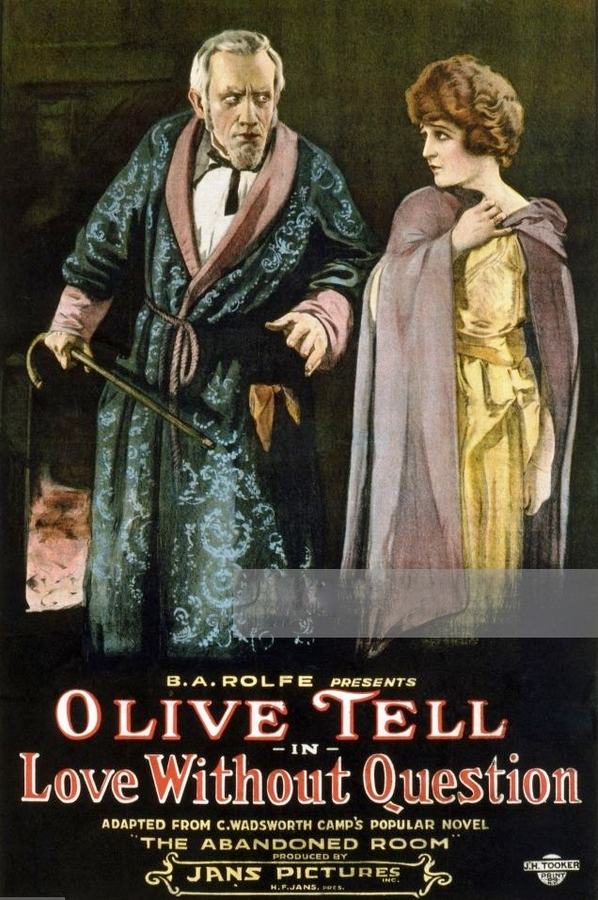
A definitive 3.7/10 rating for a film that redefined the boundaries of cult cinema. Love Without Question remains a cornerstone of transgressive art.
Stepping back into the cinematic annals of 1917, one encounters a peculiar gem, 'Love Without Question', a film that, despite its somewhat saccharine title, plunges audiences into a maelstrom of gothic mystery, familial secrets, and psychological intrigue. It's a narrative that, even a century later, retains a certain compelling, if slightly melodramatic, pull, showcasing the foundational elements of suspense and character-driven drama that would become staples of the genre. From the moment the first frame flickers, we are ushered into a world where shadows cling to ancestral homes and the past refuses to stay buried.
The film introduces us to the formidable Silas Blackburn, a wealthy recluse whose life unfolds within the confines of his sprawling, ostensibly cursed estate. This isn't merely a backdrop; it's a character in itself, imbued with a history of unexplained deaths, a silent sentinel to generations of tragedy. Silas lives a life of stark isolation, his only companions being his ward, Katherine, and his ever-present butler. This initial setup immediately establishes a sense of claustrophobia and foreboding, a common device in the gothic narratives of the era. The very air seems thick with unspoken secrets, a tension that promises an imminent unraveling.
The plot, as it meticulously unfurls, hinges on a series of increasingly bizarre and unsettling events. Katherine, the film's moral compass and emotional anchor, discovers Silas murdered in a room notorious for claiming the lives of three preceding Blackburn generations. This isn't just a death; it's an affirmation of a pervasive, malevolent force, a curse that seems to stalk the family line. The scene is crafted to evoke a profound sense of dread, relying on the audience's inherent fear of the unknown and the supernatural. One might draw thematic parallels to films like Garden of Lies, where familial secrets and hidden truths similarly fuel the narrative engine, though perhaps with less overt supernatural undertones. Here, the 'curse' serves as a narrative device, building suspense before the eventual rational explanation.
The arrival of Robert, Silas's grandson and Katherine's beloved, injects a fresh layer of complexity into the burgeoning mystery. Robert, unfortunately, is afflicted with amnesia, a convenient yet potent plot device that immediately renders him both a potential victim and a primary suspect. His clouded memory makes him an enigma, a man whose past is as opaque as the estate's secrets. This element of amnesia, while a frequent trope in early cinema, is employed here to great effect, creating dramatic irony and keeping the audience guessing about Robert's true nature and involvement. Is he a tragic figure, or a cunning perpetrator? The film plays on this ambiguity with considerable skill.
The plot thickens with the discovery of the detective, sent to investigate Silas's murder, also found dead in the very same 'cursed' room. This escalates the stakes significantly. With two bodies now discovered in quick succession within the same ominous chamber, suspicion inevitably coalesces around Robert. His amnesia, once merely a personal affliction, now becomes a damning piece of circumstantial evidence. Yet, Katherine, embodying unwavering loyalty and intuition, refuses to believe in his guilt. Her steadfast belief in Robert's innocence becomes the emotional core of the film, a beacon of hope in a narrative otherwise steeped in darkness and doubt. It's a testament to the power of love, even 'without question', to pierce through the murk of suspicion.
The narrative then takes an almost supernatural turn, momentarily blurring the lines between reality and the spectral. Following Silas's burial, the household returns from the cemetery only to find him, inexplicably, sitting by the fire. This moment is designed to send shivers down the spine, a classic horror trope that plays on the primal fear of the dead returning. It's a masterstroke of suspense, momentarily convincing both the characters and the audience that the curse is truly supernatural, or that a ghost walks among them. The sheer audacity of this plot twist, particularly for its time, is commendable, demonstrating a willingness to push narrative boundaries.
The subsequent revelation is where the film truly cements its place as a compelling mystery. The 'returned' Silas is, in fact, his long-lost twin brother, a man Silas had murdered years prior when his brother dared to demand a portion of the family fortune. This twist is both shocking and satisfying, providing a logical, albeit dark, explanation for the supernatural occurrences. It transforms the 'curse' from a spectral haunting into a chilling tale of human greed, fratricide, and hidden identities. The film deftly uses the twin trope, a device that allows for dramatic deception and a profound exploration of identity and moral culpability.
The appearance of Silas's brother's daughter serves as the ultimate catalyst for the real Silas's remorse. Confronted with the living embodiment of his past crime, the weight of his actions finally crushes him. This moment of reckoning leads to his self-inflicted demise, a grim but fitting end for a character consumed by avarice and deceit. It’s a powerful portrayal of justice, not through external forces, but through the internal torment of a guilty conscience. This resolution, while tragic, brings a sense of poetic justice to the narrative, cleansing the Blackburn estate of its long-standing shadow.
The performances, particularly from Olive Tell as Katherine, are a highlight. Tell embodies the quiet strength and unwavering devotion of her character, conveying a wide range of emotions through subtle gestures and expressive eyes, crucial for the silent film era. Her portrayal makes Katherine not just a damsel in distress, but an active participant in uncovering the truth, a woman whose love is a driving force. Ivo Dawson, in his dual role as Silas and his twin, would have faced a formidable challenge, requiring distinct physicalities and mannerisms to differentiate the characters without the aid of dialogue. This kind of nuanced performance in early cinema often went uncredited in the broader historical sense, but it was fundamental to the narrative's success. The supporting cast, including George Stevens and Peggy Parr, contribute to the atmospheric tension, filling out the eerie world of the Blackburn manor.
The direction, while perhaps adhering to the conventions of early 20th-century filmmaking, effectively builds suspense and maintains a pervasive sense of dread. The use of shadows, the framing of the 'cursed' room, and the pacing of the reveals are all orchestrated to maximize emotional impact. One can see rudimentary elements of film noir in its proto-form, a focus on moral ambiguity and psychological depth that would later define the genre. The film, like The Hunting of the Hawk, understands the power of a well-constructed mystery, even if its methods are more overtly theatrical than later, more subtle thrillers.
Beyond the immediate thrills of its plot, 'Love Without Question' explores several enduring themes. The corrosive nature of greed, the burden of inherited guilt, and the redemptive power of love are all woven into its fabric. The film suggests that true horror often lies not in the supernatural, but in the dark recesses of the human heart and the lengths to which individuals will go to protect their wealth and secrets. It also champions the idea of unwavering belief in the face of overwhelming evidence, personified by Katherine's faith in Robert.
The resolution, where Katherine and Robert find happiness together, offers a classical sense of closure. The mystery is satisfactorily resolved, the evil purged, and the path cleared for a future unburdened by past transgressions. This provides a cathartic release for the audience, a hopeful ending after a journey through deceit and death. It’s a reminder that even amidst the darkest of circumstances, love, truly 'without question', can prevail and pave the way for a brighter tomorrow. The film, despite its age, offers a fascinating glimpse into the nascent stages of cinematic storytelling, demonstrating how early filmmakers grappled with complex narratives and emotional depth, setting the stage for the rich tapestry of film history that would follow.
Comparing it to other films of the era, one can appreciate its ambition. While not as overtly action-packed as something like Speed, or as focused on social commentary as Why America Will Win, its strength lies in its intricate plot and character dynamics. It shares a certain dramatic intensity with films like The Devil's Trail, focusing on the pursuit of truth and the unraveling of a criminal act, but infuses it with a strong gothic sensibility that sets it apart. The film's reliance on suspense and psychological drama, rather than overt spectacle, makes it a compelling watch for those interested in the evolution of the mystery genre.
Ultimately, 'Love Without Question' stands as a testament to the enduring appeal of a well-crafted mystery, even when filtered through the lens of early silent cinema. It's a film that asks its audience to suspend disbelief, to embrace the theatricality of its twists, and to appreciate the foundational elements of storytelling that continue to captivate us today. It serves as a valuable historical artifact, showcasing the development of narrative complexity and emotional resonance in a medium still finding its voice. Its legacy lies not just in its individual plot points, but in its contribution to the growing lexicon of cinematic language, proving that a compelling story, no matter its vintage, can always find an audience.
The film's exploration of identity, particularly through the amnesia subplot and the twin reveal, delves into psychological territory that was quite advanced for its time. It challenges the audience to consider the nature of memory and the impact of hidden histories on present realities. Robert's journey from a suspected murderer to a cleared hero, guided by Katherine's unwavering love, is a classic arc that resonates deeply. The cast, under the direction of the era's pioneering filmmakers, managed to convey complex emotions and intricate plot details without spoken dialogue, relying entirely on visual storytelling, body language, and intertitles. This mastery of silent performance is what makes films like 'Love Without Question' so fascinating to revisit.
Moreover, the film's structural ambition, moving from a seemingly supernatural haunting to a purely human, albeit dark, explanation, demonstrates a sophisticated understanding of narrative mechanics. It builds expectations only to subvert them, a technique that remains effective in thrillers even today. The tension between the perceived supernatural 'curse' and the eventual mundane (though still horrifying) truth about Silas's actions creates a dynamic viewing experience. It's a testament to the writers, Wadsworth Camp and Violet Clark, that they could weave such a complex tapestry of deceit, love, and redemption within the constraints of early cinema. Their ability to construct a plot with such intricate layers of deception, culminating in a satisfying resolution, speaks volumes about their storytelling prowess.
In an age where cinematic language was still nascent, 'Love Without Question' managed to deliver a compelling, emotionally charged narrative that explored themes of familial betrayal, the weight of a guilty conscience, and the enduring power of unconditional affection. It's a journey through the dark corners of a family's past, culminating in a resolution that, while born of tragedy, ultimately brings peace and a promise of future happiness for its protagonists. A truly foundational piece in the mystery genre, demonstrating that even in the silent era, films could be profoundly impactful and thought-provoking.
IMDb —
1920
Community
Log in to comment.