DbcultAccessing Vault...
Cult Review
Senior Film Conservator
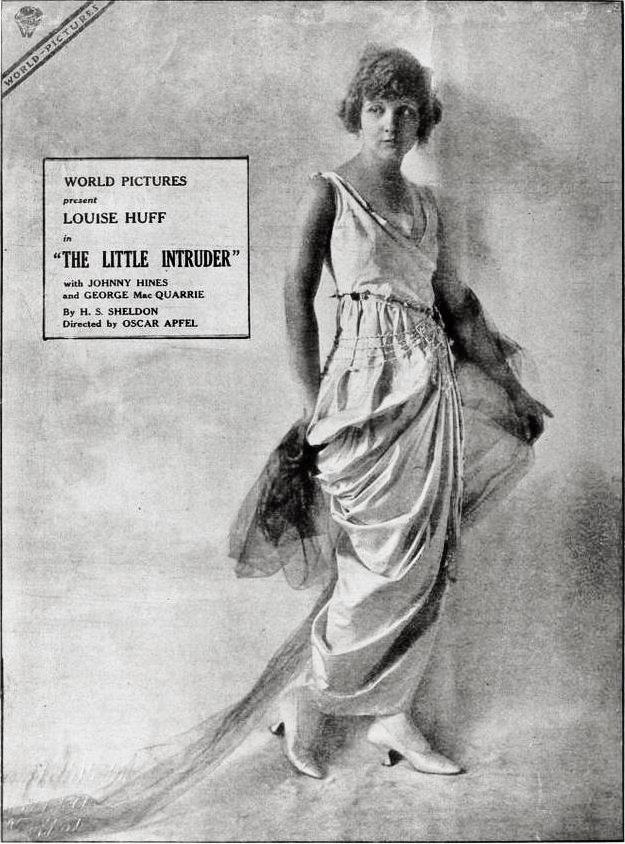
In the vibrant tapestry of early 20th-century cinema, where narratives often hinged on grand gestures, moral quandaries, and the burgeoning exploration of human psychology, The Little Intruder emerges as a delightful, if often overlooked, gem. This 1919 silent film, penned by the talented duo of Clara Beranger and H.S. Sheldon, delves into the perennial themes of marital suspicion, mistaken identity, and the surprising pathways to genuine affection, all wrapped in a package that oscillates between domestic drama and lighthearted intrigue. It's a testament to the era's storytelling prowess, demonstrating how complex emotional landscapes could be conveyed without a single spoken word, relying instead on the nuanced performances of its cast and the ingenuity of its direction.
At the heart of The Little Intruder lies George Conklin, portrayed with a commendable blend of possessiveness and vulnerability by Al Hart. His character is a vivid embodiment of the era's patriarchal anxieties, particularly concerning female autonomy and social interaction. Observing his wife Virginia (Louise Huff) enjoying the effervescent attention of other suitors, specifically the seemingly charming Henry Harding (Stuart Holmes), at a bustling seaside resort, George's insecurity metastasizes into a full-blown obsession. This isn't just about a husband's discomfort; it's a deep-seated fear of losing control, a common motif in early cinema that explored shifting gender roles. His decision to abandon the resort's pleasures and return to the urban anonymity of New York to hire a private investigator speaks volumes about his character – a man who prefers clandestine machinations to direct confrontation, revealing a certain cowardice masked by his pride. The film masterfully sets up this initial conflict, painting George not as a villain, but as a flawed individual driven by understandable, albeit destructive, human emotions.
Virginia Conklin, brought to life by the luminous Louise Huff, is no shrinking violet. Her character is a refreshing counterpoint to George’s brooding jealousy. She is vivacious, enjoying the attention she receives, yet her flirtations are presented more as a natural expression of her personality than a deliberate act of infidelity. Huff’s performance would have been key here, conveying a woman who is both desirable and perhaps slightly naive to the depth of her husband's suspicion. Her eventual reaction to George's underhanded tactics—planning to elope with Harding—is not merely an act of rebellion but a testament to her wounded pride and a desire to escape a suffocating marriage. This portrayal adds layers to the narrative, preventing it from becoming a simplistic tale of good versus evil. Virginia's journey underscores the film's subtle commentary on marital communication and the destructive power of mistrust.
The true spark of the film, and its titular 'little intruder,' arrives in the form of Betty McCarthy, a character whose entrance into George's life is a masterpiece of comedic timing and narrative convenience. George's discovery of a young woman in his house, followed by the police identifying her as the notorious 'Philadelphia Mary,' immediately injects a thrilling element of mistaken identity. George's quick thinking, claiming her as his long-lost niece, is a stroke of genius, both for his immediate predicament and for the film's overarching plot. This moment alone showcases the clever writing of Beranger and Sheldon, setting up a situation fraught with both danger and opportunity.
Betty, played by a yet-uncredited actress (likely Louise Huff in a dual role, or another performer with similar charm), transitions from a suspected criminal to George's unwitting operative with remarkable ease. Her agreement to spy on Virginia is born out of circumstance, creating a morally ambiguous position for her. Yet, as the narrative unfolds, Betty proves to be far more than a mere pawn. Her character develops agency, becoming the central figure through whom the audience experiences the unfolding drama. Her blossoming romance with Virginia's ardent brother, Billy Kent (Johnny Hines), adds a layer of genuine romantic comedy, providing a heartwarming contrast to the marital discord plaguing the Conklins. Hines, known for his comedic timing and earnest portrayals, would have undoubtedly brought a charming sincerity to Billy, making his affection for Betty believable and endearing.
Betty's discovery of Henry Harding's true motives – his avarice for Virginia's jewels rather than genuine affection – is the pivotal turning point. This revelation transforms her from a reluctant spy into a proactive heroine, demonstrating a keen intelligence and a strong moral compass. It's a classic cinematic device, revealing the villain's true colors through the eyes of an unexpected observer, and it's executed here with satisfying precision. Her decision to inform the police, leading to Harding's arrest, solidifies her role as the film's ethical anchor.
The film masterfully weaves together themes of deception, desire, and ultimately, redemption. George's initial deception regarding Betty's identity, Betty's own espionage, and Harding's calculated manipulation all highlight the various forms of dishonesty that permeate human relationships. George's desire to uncover the truth about Virginia's flirtation morphs into a desire for control, while Harding's desire is purely material. In contrast, Betty and Billy's burgeoning love is presented as pure and authentic, a testament to genuine connection amidst a sea of artifice.
The narrative's resolution, with Betty's confession about substituting candy for the jewels, is a particularly clever twist. It's a moment of both humor and profound insight, demonstrating that sometimes, the grandest deceptions can be undone by the simplest of truths, or in this case, a sweet, harmless prank. This act not only secures Harding's release (a surprisingly lenient outcome for a jewel thief, perhaps hinting at the film's lighthearted tone) but also paves the way for the Conklins' reconciliation. It forces George to confront the absurdity of his jealousy and the extent of his wife's loyalty, ultimately leading to a renewed understanding and trust within their marriage. This narrative choice elevates the film beyond a simple romantic drama, imbuing it with a sense of comedic irony and moral instruction.
The final revelation that Betty is, in fact, George's genuine niece ties all the loose ends together with a satisfying neatness. It retroactively justifies George's initial fabrication and transforms Betty's presence from an accidental intrusion into a destined familial reunion. This denouement reinforces themes of fate and the unexpected ways in which truth can emerge from the most convoluted circumstances. It’s a comforting, almost fairytale-like conclusion that resonates with the optimistic spirit often found in early Hollywood productions.
The success of The Little Intruder undoubtedly rested heavily on the shoulders of its cast and the nuanced direction required for silent film acting. Al Hart as George Conklin would have needed to convey a wide range of emotions, from seething jealousy to eventual relief and remorse, primarily through facial expressions and body language. Louise Huff's Virginia required a delicate balance of charm, defiance, and vulnerability. Johnny Hines, as Billy Kent, likely brought his characteristic amiable energy, making his character instantly likable and his romance with Betty believable. Stuart Holmes as Henry Harding would have had the task of portraying a suave, deceptive villain, a common trope that demanded a certain theatricality.
The direction, while uncredited in the plot summary, would have been crucial in orchestrating the intricate dance between these characters. Silent film direction required a keen understanding of visual storytelling, pacing, and the use of intertitles to guide the audience through complex plot points and emotional shifts. The ability to build suspense during Betty’s espionage, convey the blossoming romance between her and Billy, and manage the comedic elements of George’s predicament speaks to a director adept at the craft of early cinema. The film's reliance on physical comedy, subtle glances, and exaggerated gestures would have been paramount in conveying its narrative effectively.
Examining The Little Intruder within the broader landscape of early cinema reveals its place among films that explored domestic drama, light mystery, and burgeoning romantic comedy. For instance, films like Forbidden Paths often delved into moral dilemmas and societal expectations, much like Virginia's struggle with George's jealousy. The element of mistaken identity and clever deception finds echoes in works such as Raffles, the Amateur Cracksman, though the latter leans more into the criminal underworld. However, in The Little Intruder, the deception serves a more romantic and reconciliatory purpose, distinguishing its tone.
The film's exploration of hidden motives and the unmasking of a character's true intentions, as seen with Henry Harding, is a common narrative thread in many films of the era. One might draw a thematic parallel to The Woman in Black, where secrets and concealed identities drive much of the plot. Yet, The Little Intruder maintains a lighter touch, even with its underlying tension. The eventual happy resolution and the comedic elements – particularly Betty's candy-for-jewels swap – differentiate it from more somber dramas, aligning it closer to nascent romantic comedies.
The film's focus on a character who initially appears to be a criminal but is later revealed to be innocent and, in fact, family, is a compelling narrative arc that would have resonated with audiences. This trope, where initial perceptions are dramatically overturned, can be seen in various forms across early cinema, often exploring societal prejudices and the power of individual character. It’s a narrative device that still holds power today, demonstrating the timeless appeal of a good twist.
While The Little Intruder may not be as widely celebrated as some of its contemporaries, its intricate plot and engaging character dynamics speak to a sophisticated understanding of storytelling by writers Clara Beranger and H.S. Sheldon. Beranger, in particular, was a prolific and respected screenwriter of the silent era, known for crafting compelling narratives that often explored complex human relationships and social issues. Her work on this film, with its clever twists and satisfying resolution, demonstrates her skill in balancing drama, romance, and comedic relief.
The film's legacy lies in its ability to captivate an audience with a narrative that is both familiar in its themes and fresh in its execution. It reminds us of the ingenuity required to tell stories without dialogue, relying on visual cues, emotional depth, and well-crafted plot mechanics. For cinephiles and historians, The Little Intruder offers a valuable glimpse into the evolving art form of cinema in the late 1910s, showcasing how filmmakers experimented with narrative complexity and character development even in the absence of sound.
Ultimately, The Little Intruder is more than just a historical artifact; it is a charming and intelligent piece of filmmaking that deserves recognition for its clever plot, its engaging characters, and its enduring message about the destructive nature of jealousy and the unexpected paths to love and reconciliation. It’s a testament to the power of silent cinema to convey profound human experiences with elegance and grace, proving that a compelling story, well told, transcends the limitations of its medium.
Its blend of romantic intrigue, comedic elements, and a satisfyingly intricate plot makes it a delightful watch, even a century later. The film stands as a vibrant example of how early cinema tackled universal human emotions and relationships, offering both entertainment and subtle social commentary. It’s a reminder that sometimes, the most unexpected 'intruder' can bring about the most profound and heartwarming changes.
IMDb —
1918
Community
Log in to comment.