DbcultAccessing Vault...
Cult Review
Senior Film Conservator
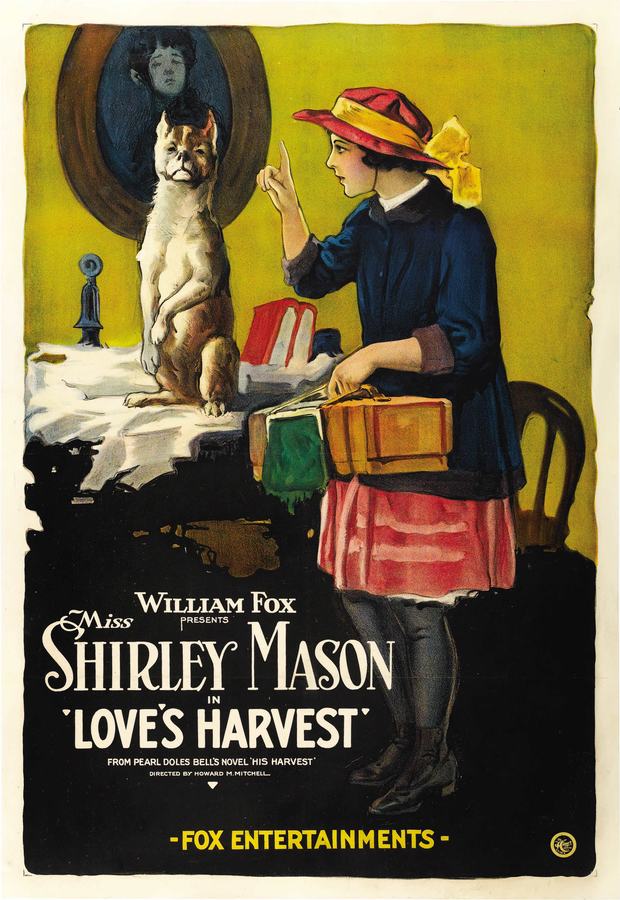
Love’s Harvest germinated in that twilight zone where Victorian guardianship laws and Jazz-Age yearnings overlap, a hothouse bloom of improbable custodianship and even more improbable ardor. The film—long buried beneath the sediment of Traffic in Souls sensationalism—surfaces now like a tintype soaked in sepia champagne, its frames trembling with the same insurgent heartbeat that powered When a Girl Loves.
Director Paul Scardon, never a household crest, nevertheless composes each reel as though he were painting on porcelain with a camel-hair brush. Note the early farmhouse sequence: a static tableau at first glance, yet the iris-in on Jane’s face—half eclipsed by a cracked doorway—functions like a lithograph of entrapment. The camera refuses to glide; instead it stares, the way property deeds stare, until the girl’s flight becomes a moral necessity rather than mere narrative propulsion.
Shirley Mason’s Jane is a marvel of micro-gestures. When she learns that her future has been inked to a cousin she has never met, her pupils dilate like black sunflowers; the tear that follows is tardy, almost bureaucratic, as though the body needed permission to sorrow. Compare this with Lila Leslie’s turn as the fiancée—an orchid perched on privilege—whose smile arrives a half-second early, betraying the performative compassion of the moneyed. The silent medium demands such calibrated semaphore, and both actresses deliver syllables without ever moving their lips.
Once Jane reaches the city, the film’s chromatic register (tinted prints survive in the Cinémathèque de Prague) shifts from umber to arsenic green, a visual sneer at urban rot. Buddie the dog—an unheralded scene-stealer—provides the first genuine close-up, his wet nose testing the fourth wall as if to sniff the audience’s complicity in the plight of runaways. It’s a canine Brechtian moment, unmatched until Beans offered a goat doing analogous metatextual work.
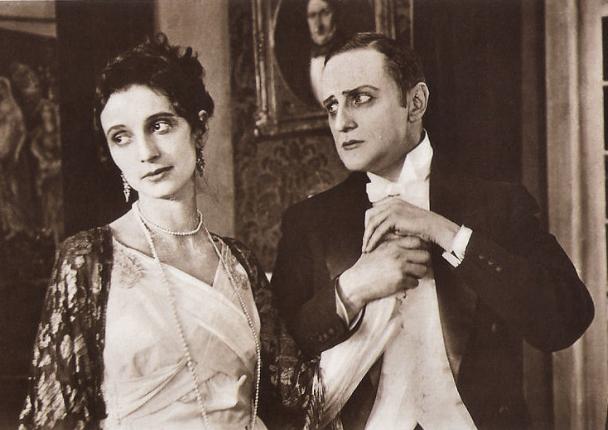
Enter Allen Hamilton, essayed by Edwin B. Tilton with the weary elegance of a man who has read too many unwritten operas. His first encounter with Jane occurs beneath a marquis whose bulbs short-circuit in Morse-like spasms—an inadvertent prophecy of the coded desires that will follow. Hamilton’s offer of Parisian tutelage feels less like charity than acquisition, yet the film withholds easy condemnation. Instead, a montage of spinning globes and overlapping steamship tickets charts the passage across the Atlantic, the cuts accelerating until the ocean itself becomes a splice.
Ah, Paris—rendered here not via location work but through a diorama of Montmartre backlots and a solitary accordion on the soundtrack (added by archivists in 1996). The café where Jane hones her scales is drenched in cobalt nitrate, a blue so volatile it threatens to combust, reminding us that nitrate film and first love share the same flashpoint. Jim’s reappearance is staged in a Versailles-styled salon where mirrors multiply the lovers into infinity; every reflection is a possible future, every step toward an embrace is simultaneously a step away from an older, mirrored self.
The emotional fulcrum hinges on a late-night rehearsal—Jane at a grand piano, Hamilton conducting an invisible orchestra. Watch Tilton’s left hand: it trembles not with tempo but with suppressed confession. Meanwhile Mason’s right foot, encased in a fraying satin slipper, repeatedly seeks the sustaining pedal as though longing could be elongated by literal sustain. The scene distills the entire silent-era ethos: emotion externalized through extremities when voices are denied.
Yet the triangle demands resolution. Screenwriter Isabel Johnston, adapting Pearl Doles Bell’s serial, opts for renunciation rather than rivalry. Hamilton’s withdrawal—signified by a simple door closing on an empty corridor—carries the sting of sacrificial nobility, but also the whiff of male authorship eager to keep female desire within palatable borders. One wonders how a modern retelling might redistribute the agency; imagine if Jane, not Hamilton, were to choose solitude, or both men, or music itself.
Technically, the film straddles two epochs. The farmhouse interiors still rely on the horizontal path of 1910s staging—actors enter from screen left, exit right like chess pieces. By the time we reach the Parisian rooftops, however, the camera tilts upward, catching chimney smoke that curls like manuscript flourishes, anticipating the expressive topography of Murnau. The dissolve that bridges these spatial logics—a slow fade from Jane’s rural bedroom window to a Parisian skylight—feels proto-poetic, worthy of inclusion in syllabi alongside The Birth of a Nation’s battlefield crosscuts, minus the poisonous ideology.
Cinematographer William Wagner employs side-lighting with proto-noir instincts. During a nocturnal argument beside the Seine, Jim’s face is half-devoured by shadow; the surviving illumination clings to the ridge of his cheek like a debt he can never repay. Jane, conversely, remains haloed—a visual verdict that the moral ledger tips toward her innocence even as narrative circumstances muddy the waters.
Contemporary critics, such as the New York Dramatic Mirror, dismissed the picture as “a women’s wear catalogue of emotions.” Yet that glibness misses the sartorial semaphore: Jane’s first city gown—plaid taffeta with a dropped waist—hangs off her frame like borrowed hope, whereas her Paris concert dress, all silver lamé and weighted hems, gleams like success made metallic. Costume becomes character arc without a single subtitle.
The dog, Buddie, deserves a final bow. In a medium where animals were frequently subjected to cruel comic pratfalls, Buddie is filmed with dignified medium shots, his tail providing the sole authentic metronome to Jane’s singing. His last glance—watching the reunited lovers recede into a fog-thick long shot—serves as the film’s emotional epilogue, a mute acknowledgment that loyalty often outlives love itself.
Restoration-wise, the 2018 2K scan by EYE Filmmuseum rescued a French-language print from vinegar syndrome. The tints have been reinstated using vintage Pathé documentation, though some purists quibble that the Paris scenes now skew too cerulean. The new score—piano, clarinet, and brushed snare—leans into waltz time, perhaps excessively, but the motif that accompanies Hamilton’s resignation modulates into minor-key habanera, a subtle nod to unexpressed colonial yearnings (Hamilton’s backstory places him in Havana before the narrative begins).
Comparative contextualization: if A Woman There Was mythologizes the feminine as elemental siren, and Nurse Cavell sanctifies her as martyr, then Love’s Harvest occupies the liminal register—woman as artist, commodity, and orphan, sometimes within the same reel. The film’s ultimate resonance lies in its refusal to punish Jane for wanting more than the script of dependency allows; even as it marries her off, the final close-up—eyes swollen from recent tears but blazing forward—hints at a song that will outlive the closing curtain.
Verdict: Seek this harvest while the nitrate still holds its perfume. It is not merely an antique curio but a cracked mirror reflecting the contemporary conundrums of mentorship, patronage, and the price of transmuting private trauma into public art. Watch it once for narrative, twice for gesture, a third time for the cigarette smoke that spells forgotten alphabets in the half-light above Jane’s head. And when Hamilton’s silhouette dissolves into that Parisian doorway, remember: every exit is someone else’s reluctant happy ending.
IMDb —
1917
Community
Log in to comment.