DbcultAccessing Vault...
Cult Review
Senior Film Conservator
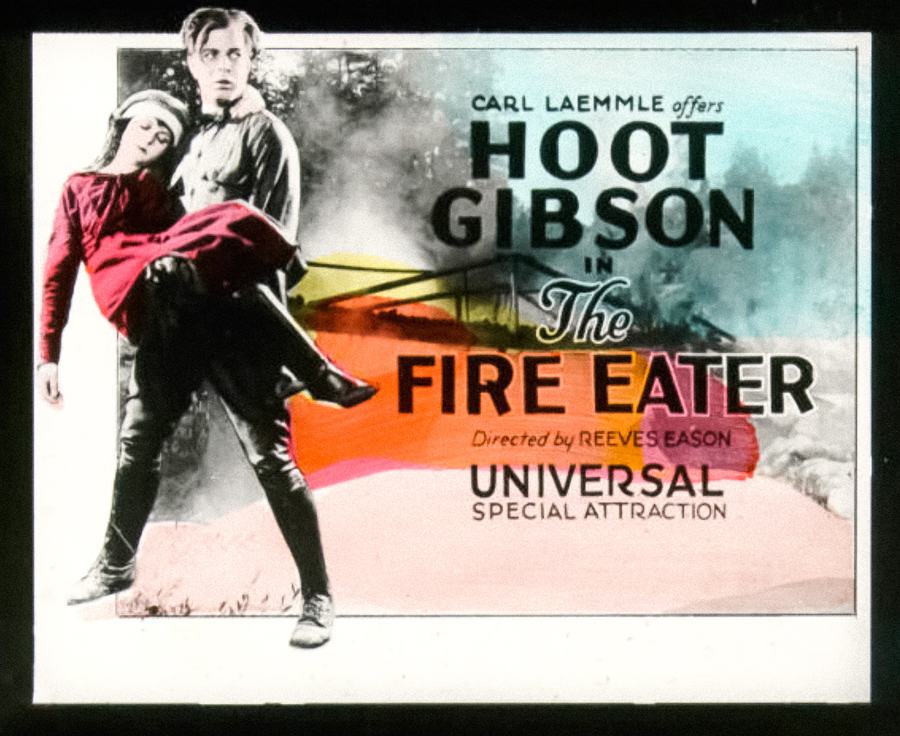
The Fire Eater (1935) is a relic of pre-Code Hollywood, a film that burns brightest when its characters are forced to confront the chasm between their ideals and the unforgiving terrain they inhabit. Set against the backdrop of a fictional Montana valley slated for national park status, the film uses the clash between corporate expansion and frontier individualism as a lens to explore moral decay. At its core, it’s a story about how easily peacekeepers become pawns in a game of power, and how the line between hero and outlaw blurs in the face of systemic corruption.
The film’s opening act establishes a palpable sense of unease. Forest rangers 'Smilin' Bob' Corey (Thomas G. Lingham) and Jim O'Neil (George A. Williams) arrive in Paradise Valley with a mandate that’s less about conservation and more about quieting dissent. The townspeople, led by the enigmatic Wolf Roselli (Hoot Gibson), greet them with suspicion. The valley’s inhabitants—loggers, ranchers, and opportunists—are all tethered to the land in ways that the rangers can’t begin to understand. Marie Roselli (Louise Lorraine), Wolf’s sister, emerges as both a symbol of hope and a red herring; her role as a bridge between the outsiders and locals is undercut by her own entanglements in the valley’s darker dealings.
What begins as a bureaucratic tussle quickly spirals into a far more visceral conflict. The kidnapping subplot, though derivative of classic Western tropes, gains texture through its exploration of familial loyalty and economic desperation. When Bob and Jim uncover an illegal logging operation, they’re not just thwarting crime—they’re challenging the livelihoods of those who see the forest as their only currency. The murder that follows is less a plot twist than a logical endpoint, a grim reminder that in Paradise Valley, silence is often bought with blood.
The film’s technical execution is unpolished by modern standards, yet its rawness is part of its charm. The cinematography leans into stark contrasts: wide shots of the valley’s rugged beauty juxtaposed with claustrophobic close-ups of characters caught in moral quandaries. The score, a blend of melancholic piano and dissonant strings, underscores the tension between the film’s naturalist setting and its human-scale tragedies. While the pacing occasionally lags—particularly in the second act—the urgency of the final act, where every character’s hand is forced, is nearly electrifying.
The performances are a mixed bag. Lingham’s 'Smilin' Bob' is a archetype of the earnest outsider, his grin masking a growing cynicism. Williams, as Jim, provides a more brooding counterpoint, his quiet intensity a contrast to Bob’s overt optimism. Hoot Gibson’s Wolf Roselli is a standout, a character who embodies both the rugged individualism of the frontier and the corrosive effects of isolation. His dynamic with Marie is the film’s emotional cornerstone, their interactions laced with a complexity that transcends mere sibling loyalty. Carmen Phillips and Walter Perry deliver strong supporting turns, though their roles feel underwritten compared to the central trio.
Thematically, 'The Fire Eater' is a product of its time. The conflict between conservation and exploitation was a hot-button issue in the 1930s, and the film reflects both the idealism of the New Deal era and the skepticism toward corporate overreach. Yet its most compelling theme is the fragility of morality in the face of necessity. The rangers’ initial belief in their mission is systematically dismantled, revealing how even well-intentioned actions can perpetuate harm. This moral ambiguity is rare for pre-Code films, which often leaned into clear-cut hero-villain dichotomies.
Comparisons to other 1930s Westerns like The Isle of Desire and The Bait highlight 'The Fire Eater’s' unique strengths. Where those films prioritize romantic subplots or comedic relief, this one leans into grit and moral complexity. Its tone is closer to the later, more serious Westerns of the 1940s, yet it retains the pre-Code freedom to depict violence and adult themes without the Hays Code’s constraints. This lends the film a rawness that feels both dated and eerily prescient, particularly in its portrayal of small-town corruption.
The screenplay, credited to Ralph Cummins and Harvey Gates, is a testament to the era’s reliance on tight, dialogue-driven storytelling. While the plot’s many twists—some of which strain credulity—could have derailed a lesser film, the script’s commitment to its characters’ motivations keeps the narrative grounded. The dialogue is terse and realistic, with the occasional flourish of poetic dialogue during the rangers’ internal monologues. The film’s climax, a tense showdown that plays less like a resolution and more like an admission of futility, is both thematically resonant and emotionally devastating.
Visually, 'The Fire Eater' is a study in contrasts. The wide, desolate landscapes of Paradise Valley are rendered in a way that feels both majestic and oppressive, a duality that mirrors the characters’ internal struggles. The use of natural light and shadow is rudimentary but effective, with scenes set at dusk or dawn carrying an almost mythic quality. Action sequences are staged with a practicality that emphasizes physicality over spectacle, a choice that aligns with the film’s grounded tone.
For modern viewers, the film’s most striking aspect is its willingness to let its protagonists fail. In an era where even flawed heroes often find redemption, 'The Fire Eater' offers a more nihilistic vision: here, survival is not a triumph but a compromise. The rangers’ final act is not one of justice, but of quiet resignation, a recognition that they’ve become part of the very system they sought to challenge. This refusal to offer easy answers is both its greatest strength and its potential weakness; those seeking catharsis may find the ending unsatisfying.
In the pantheon of 1930s Westerns, 'The Fire Eater' occupies a curious niche. It lacks the mythic grandeur of Way Out West or the lavish production values of The Idle Rich, but it more than makes up for it with its thematic depth. It’s a film that rewards patience, offering layers of meaning beneath its straightforward plot. For enthusiasts of the genre’s pre-Code era, it’s a fascinating artifact—a glimpse into a time when Hollywood was still grappling with the complexities of American identity.
Ultimately, 'The Fire Eater' is a film about the cost of progress. Its characters are bound by the same forces that shaped the American West: greed, ambition, and an almost pathological need to conquer the wild. Yet in its portrayal of these forces, the film avoids moralizing, instead presenting them as inescapable. It’s a bleak but honest meditation on the human condition, one that lingers long after the credits roll. For those willing to meet it on its terms, it’s a rewarding experience—a reminder that even in the darkest corners of the frontier, the fire of human spirit can still burn, if only for a moment.
IMDb 6.4
1923
Community
Log in to comment.