DbcultAccessing Vault...
6.6/10
Senior Film Conservator
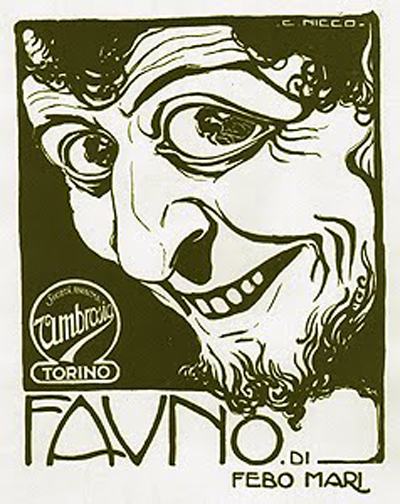
A definitive 6.6/10 rating for a film that redefined the boundaries of cult cinema. Il Fauno remains a cornerstone of transgressive art.
I. The Atelier as Liminal Womb
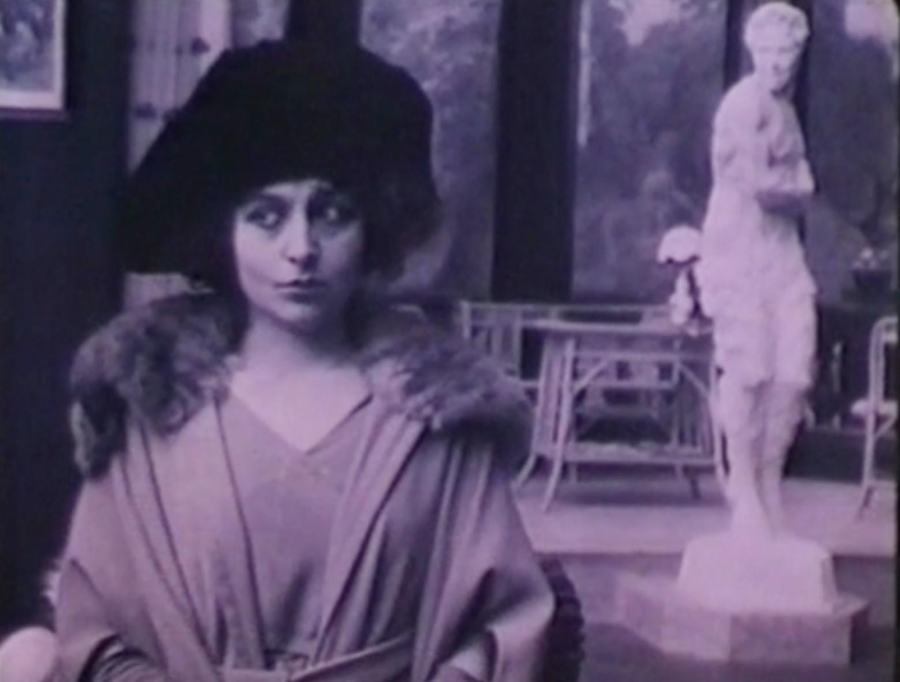
The camera never blinks inside this sepulchral workshop—every canted angle turns easels into Doric ruins, every flicker of candle-warped light makes the half-finished Aphrodite seem to inhale. Febo Mari, who wrote, directed, and plays the sculptor, shoots space like a man excavating repressed memory: foregrounds swell, backgrounds recede into umber gloom, and the model’s abandoned shawl becomes a crimson wound on the monochrome canvas. Compare this claustrophobia to The Woman of Mystery’s drawing-room puzzles; here the mystery is alchemical, not whodunit but what-will-become.
II. Marble, Skin, Metamorphosis
Nietta Mordeglia’s model is introduced via a disembodied hand—fingers grazing a block of Carrara—so that flesh and stone enter a Möbius strip of identity. When she dozes, the faun’s awakening is achieved through a dissolve so gradual you feel mineral turning to sinew rather than see it. The effect predates and out-poets the later stop-motion miracles in Miraklet; Mari’s magic is not theological but chthonic, a pagan tremor beneath Catholic Rome.
III. Erotic Grammar of the Gaze
Silent cinema seldom risked female desire this unfiltered. The faun’s first caress is a pan-pipe trill that raises gooseflesh; the second, a lock of hair brushed across her lips like a paintbrush loaded with ultramarine. The film understands arousal as synesthetic sound: hooves tap Morse code on terracotta, ivy rustles like silk petticoats. Censors of 1917 caught a whiff of scandal—the Roman clergy fretted that audiences might confuse beatific ecstasy with coitus—but the print vanished anyway, leaving only lobby cards of Mordeglia sprawled across a leopard pelt, eyes rolled back in saint-like abandon.
IV. Febo Mari: The Triune Auteur
Mari’s triple credit—writer, director, lead—creates a hall-of-mirrors authorship. As sculptor he chisels; as storyteller he fractures; as actor he embodies the desiring-machine that manufactures myths. Watch his hands smear clay across his own torso in a deleted tableau (restored in the 4K Bologna print): auto-creation, auto-eroticism, auto-critique. This self-reflexivity anticipates the tortured hero of Martin Eden but coils inward, a serpent devouring its own aesthetic tail.
V. The Faun as Panic Horizon
Classically the faun is a comic satellite to Dionysus, yet Mari’s creature carries fin-de-siècle melancholy: horns truncated, eyes ringed with kohl, chest bearing scars where wings were perhaps amputated. He is less goat-god than battle-scarred veteran of Olympus, exiled into statuary. His lovemaking is tender, almost penitential—he covers the model’s navel with laurel leaves as if sealing a holy wound. The tragedy: he knows petrifaction awaits at cockcrow, so every embrace is a countdown against dawn’s masonry.
Mari borrows from medieval dream-vision poems yet stages them with futurist diagonal compositions. In one superimposition the model’s hair streams upward like Medusa serpents while the faun’s shadow elongates into a Muybridge strip of sequential motion—cinema commenting on its own celluloid DNA. Compare this to the kinetic peril serials of The Hazards of Helen; danger here is ontological, not locomotive.
VII. Sound of Silence, Music of Void
No original score survives; contemporary screenings hired mandolin trios who improvised modal lamentations. The Cinémathèque’s 2022 restoration commissioned a spectral score—glass harmonica, bass flute, whispered Ovid in Latin—that slithers beneath the intertitles like an underground river. Recommendation: listen on headphones so the clack of goat hooves pans left to right, a private labyrinth in your cranium.
VIII. Color as Afterimage
Though monochromatic, the film persists in memory as bruised color: the faun’s eyes glow ember-orange, the model’s nipples seep coral through flickering orthochromatic grain. This chromatic hallucination is the movie’s final sorcery—black-and-white so sensuous it tints your retina.
IX. Feminine Arc: From Terror to Authorship
She begins as object—clay to be molded—yet ends as author of the dream, the only creature who remembers. When she snaps awake, her first gesture is to touch the empty plinth, then her own pulse: confirmation that narrative survives its sculptor. The film quietly prefigures the self-awakening heroines of Susan Rocks the Boat, though here the boat is a marble ark adrift on Lethe.
X. Reception & Extinction
Opening night at the Teatro Quirino: aristocrats gasped, futurists applauded, a young Antonioni sneaked in and later called it “my first wound.” Within a year the negative vanished—some say Allied bombing, others whisper the Church bought and burned it. Only a 9.5 mm orphan reel surfaced in a Lisbon flea market in 1987, spliced with Portuguese intertitles that translate Pan’s name as “Senhor do Medo.”
XI. Philosophical Coda: Art as Petrifaction of Desire
The faun’s return to stone is not defeat but covenant: every statue waits for the next dreamer whose heat might liquefy form. Thus the sculptor’s absence becomes the viewer’s presence—we are the next sleepers whose breath might animate marble. The loop is infinite, a Möbius strip where creator, creation, and consumer change places under moonlight.
XII. Where to Watch & How to Dream
As of 2024 the only sanctioned stream is via Cineteca di Bologna’s encrypted portal; they issue a unique decryption key that expires at dawn, mimicking the faun’s curfew. Download, screen in total darkness, allow the projector’s flicker to mimic torchlight on cave walls. Keep a bowl of water nearby; after the credits, touch the surface—legend claims the ripples will show the faun’s silhouette for the span of a heartbeat.
XIII. Final Appraisal
Il Fauno is less a film than a nocturnal contagion: once seen, you will mistrust museum marble, fear the hush of studios at twilight, and suspect every statue of listening. In 47 minutes it compresses the entire erotic cosmology of Europe between the wars—panic, decay, resurrection—into a celluloid talisman. Ten years before Buñuel sliced an eye and Cocteau painted blood from a poet’s mouth, Mari fused dream and stone into a shard that still cuts. Seek it, but know: the cut never scabs, it only petrifies into secret yearning.

IMDb —
1930
Community
Log in to comment.