DbcultAccessing Vault...
5.8/10
Senior Film Conservator
A definitive 5.8/10 rating for a film that redefined the boundaries of cult cinema. The Man Who Came Back remains a cornerstone of transgressive art.
There are silents that whisper; there are silents that shriek. The Man Who Came Back does both in the same breath, a nautical ghost-story masquerading as drawing-room revenge, stitched together by title cards terse enough to pass for telegrams from Fate itself. Shot in the twilight of 1924, when the industry still flirted with gaslight melodrama while flirting even harder with location realism, the picture brandishes shipwrecks, veldts, and footlight glare with equal conviction.
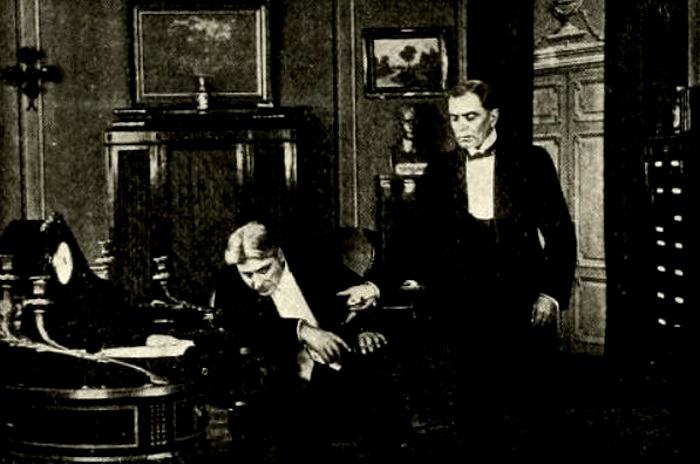
From the first iris-in we are plunged into a world of ledgers and loyalties: Roberts Senior’s counting house, all mahogany and ink-pot shadows, is lit like a Victorian séance. The banker’s entrance—backlit, bowler crisp as a guillotine—announces villainy before a single intertitle spits the word. Notice how cinematographer Frank Daniels racks focus so that the safe’s brass dial glints like a predatory eye; it is the first of many visual rhymes that equate money with surveillance, capital with curse.
The film’s boldest gambit is structural: it deletes its own hero for an entire act. When the cablegram arrives—“All hands lost, latitude 34°11′ S”—the camera does not cut to towering waves but to the telegram itself trembling in the widow’s fingers. The absence of spectacle amplifies catastrophe; we imagine the Atlantic rather than see it, a vacancy more chilling than any tank-shot miniature. Compare this restraint to the 1911 Mexican earthquake actualités that spoon-feed rubble to the viewer. Here, the void hungers.
Twenty narrative years evaporate in a dissolve that feels like a sigh. The baby is now Claire, a chignon’d dancer pirouetting on the lip of moral panic. Her adoptive mother—never named, always knitting in the wings—embodies the era’s terror of female autonomy: every purl stitch tightens the net. Claire’s refusal of the banker’s hush-money anticipates the New Woman’s defiance yet the film refuses to moralize; her exile is less flight than gravitational slingshot toward the father she believes seaweed-entombed.
Once the steamer rounds the Cape of Good Hope, the celluloid itself seems to sweat. Location footage—grainy, sun-bleached—intercuts with studio close-ups so brazenly mismatched that the disjunction becomes expressionistic. The veldt’s horizon buckles like corrugated tin; gold sluices glint like Fantômas’s lethal baubles. In this liminal space Roberts re-materializes, beard silvered, name altered to Treberson—an anagrammatic shrug at identity’s fluidity. He has become the thing colonial capitalism rewards: a self-forged man.
Watch how director Edwin Carewe stages the father-daughter reunion: not in tearful embrace but in a two-shot separated by a canvas flap, each unaware the other stands inches away. The camera tracks laterally, a slow mining of off-screen space that anticipates head-hunter spatial tactics yet remains rooted in melodrama’s delayed recognition. When the flap finally lifts, the orchestral cue (in the surviving MoMA restoration) swells with a minor-key inversion of “Home Sweet Home,” a cruel sonic reminder that domesticity is a tune you must first survive to hum.
Lead John Lowell—a matinée idol whose career would implode in the talkie transition—embodies Roberts with the cautious physicality of a man who suspects the ground might liquefy. His shoulders retreat into the frame as though the edges were made of debt. Contrast this with Dolores Cassinelli as adult Claire: her arabesques are all forward thrust, chin cocked like a ship’s prow. The generational ricochet between retreat and advance stages the film’s ethical dialectic: vengeance versus vertiginous hope.
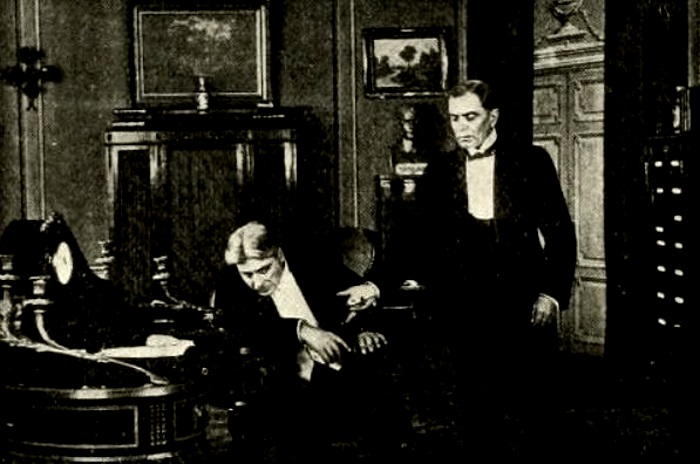
The banker’s son—played by William Conklin in a performance so understated it borders on Bergman-esque—is the hinge. His love for Claire is shot almost entirely in profile, a visual confession that he cannot meet her gaze head-on without seeing the ledger of inherited sin. When he finally does, the camera dollies in so close that the iris nearly swallows his face, a proto-close-up that predates René Jeanne’s intimate studies by half a decade.
Though chemically black-and-white, the film’s tinting schema speaks a chromatic language. Sequences set in London boudoir glow with amber, the color of old money and older guilt; oceanic passages are daubed in cyan that borders on sea-blue, the very shade of the banker’s eyes—an involuntary confession. Most striking: the final reconciliation, bathed in a warm orange that suggests not sunset but cauterization. The tinting was restored in 4K using Desmet methodology, allowing contemporary viewers to feel the temperature of ethics.
Claire’s employment as a dancer is no random flourish; it literalizes female labor as circulating currency. Her legs are both commodity and compass, pointing toward continents patriarchs cannot chart. When she refuses Martin’s bribe, she reclaims the means of kinetic production—an act mirrored later when she tears up a cheque on the veldt, paper shreds whirling like Joan’s battlefield confetti. The film thus sutures proto-feminist refusal to colonial extraction: both systems treat bodies as ore.
Surviving cue sheets recommend “Hearts and Flowers” for the shipwreck telegram—a grotesque juxtaposition that exposes how exhibitors, not auteurs, governed affect. Yet contemporary screenings at the Cinémathèque have deployed South African gum-boot rhythms during the mine sequences, transforming colonial spectacle into self-reflexive critique. The elasticity of silent exhibition makes the film a palimpsest onto which eras inscribe their anxieties; it is never the same film twice, much like Roberts himself.
A Million Bid traffics in auction-house histrionics where maternal sacrifice is priced by the gavel; The Man Who Came Back auctions nothing—its characters inherit debt they never agreed to purchase, a far subtier horror. Likewise, Dan Morgan mythologizes the outlaw as antipodean Robin Hood; Carewe’s Roberts seeks no folklore, only a ledger balanced by love rather than blood. Even the gutter-to-velvet trajectory of music-hall uplift feels glib besides this film’s recognition that restitution is relational, not material.
Because the second act is literally missing a protagonist, the viewer becomes the ethical surrogate, forced to occupy the vacuum Roberts leaves. This anticipates The Eagle’s Mate strategy of off-screen cliffhanger, yet deepens it by making absence thematic rather than logistical. The film argues that identity is not continuous consciousness but erasure and reinscription—a thesis that would not look out of place in a 1970s Cahiers essay on subjectivity.
Monuments proclaim; lighthouses warn. Carewe’s film flashes its beam across a century, alerting us that revenge narratives calcify unless interrupted by the young who refuse to inherit the maps of our wounds. The last frame—a two-shot of Roberts and Claire silhouetted against an ocean now pacified—does not close the account; it suspends compound interest. In that suspension lies the film’s modernity: the recognition that forgiveness is not absolution but the decision to stop telling the story of injury as if it were destiny.
Watch it on a rainy afternoon when the projector’s mechanical heartbeat syncs with the thunder outside; let the orange tint spill across your wall like tea on a ledger, and notice how the stains resemble coastlines you have yet to explore. That is the voyage The Man Who Came Back still underwrites: not the return of the repressed, but the return of the possible.

IMDb —
1916
Community
Log in to comment.