DbcultAccessing Vault...
4/10
Senior Film Conservator
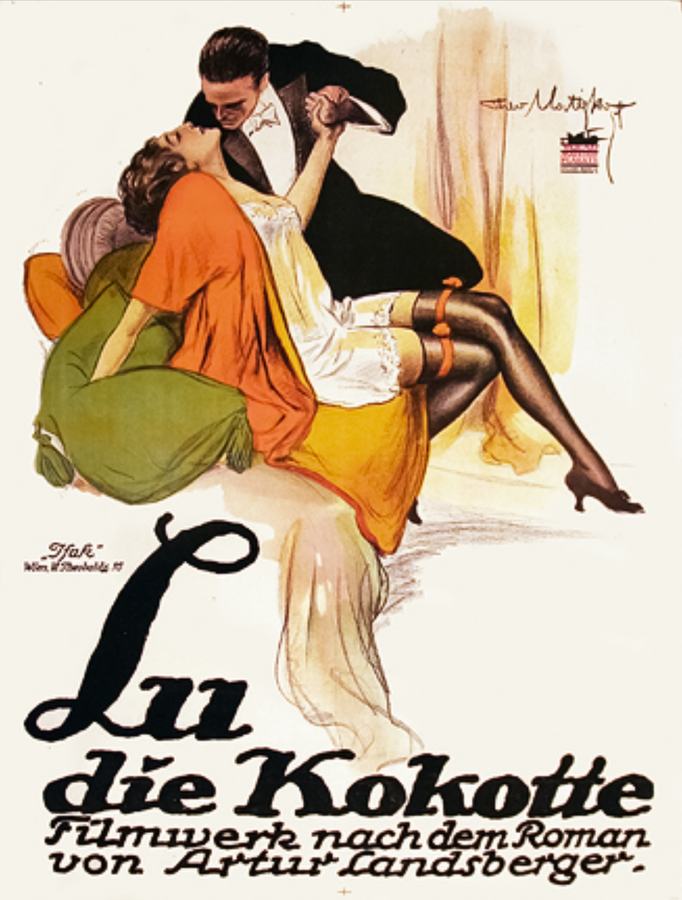
A definitive 4/10 rating for a film that redefined the boundaries of cult cinema. Lu, a kokott remains a cornerstone of transgressive art.
In the liminal twilight between Austro-Hungarian collapse and modernity's dawn, Michael Curtiz crafted "Lu, a kokott" — a film pulsating with visual audacity rarely seen in 1918. The opening sequence alone establishes Curtiz’s mastery: tracking shots glide through Budapest’s Andrássy Avenue, juxtaposing gilt-edged cafés where aristocrats sip espresso against alleyways where women barter their dignity for survival. This isn’t mere scene-setting; it’s socioeconomic cartography. When Lu first materializes in a haze of cigarette smoke at the Magyar Cabaret, her sequined gown catching lamplight like shattered glass, Curtiz frames her as both predator and prey in a single composition — an icon of transactional grace.
Berta Valero achieves the extraordinary through microscopic gestures. Witness the scene where Baron Kovács gifts her pearls — rather than radiating joy, Lu’s fingers trace the jewels with clinical detachment, her eyes reflecting not gratitude but inventory assessment. This isn’t acting; it’s emotional taxidermy. Compare this to Mária Kelemen’s turn as Zsófia, Lu’s terminally ill rival: where Valero weaponizes stillness, Kelemen deploys tremors — a cough rattling her frame like death knocking at a door. Their confrontation in the bathhouse steam rooms (shot through dripping lenses for visceral claustrophobia) remains a masterclass in contrasting pathologies: Lu’s glacial calculation versus Zsófia’s feverish desperation.
"What society condemns by daylight, it demands by candlelight."
Curtiz architects power dynamics through disequilibrium in mise-en-scène. Consider Baron Kovács’ mansion: ceilings loom oppressively high, dwarfing characters in cavernous rooms where footsteps echo like distant gunshots. Yet in Lu’s modest apartment, low angles and tight closeups create combustible intimacy — a visual metaphor for her controlled domain. The film’s structural zenith occurs during the masquerade sequence, where Curtiz choreographs chaos with mathematical precision. Harlequins and aristocrats waltz through hallways mirrored to infinity, their reflections fracturing into grotesque parodies. When the gunshot rings out, Curtiz freezes the frame for three full seconds — not on the victim, but on a shattered Venetian mask pooling blood like wine.
Intertitles in "Lu, a kokott" function not as exposition but as ironic counterpoint. A card reading "She chose this path freely" appears precisely as Lu pawns her mother’s wedding ring for rent money — the disconnect between text and image creates devastating critique. Similarly, the film’s much-debated ending subverts redemption tropes: Lu’s razor-blade vengeance against Kovács isn’t framed as catharsis, but as cyclical violence. The final shot — her bloodstained hand smearing crimson across a window overlooking Budapest — suggests no liberation, only the perpetual stain of transaction. Unlike the sentimentalized fallen women in The Lure of New York, Curtiz offers no path to salvation.
Recent restoration by the Hungarian Film Archive uncovered startling sequences previously censored: a tango between Lu and sex worker Marcella (Margit Lux) that simmers with unspoken desire — their fingers lingering during a cigarette exchange speaks volumes about solidarity among the commodified. This discovery radically reframes Lu’s motivations; her protection of Marcella from police brutality isn’t mere altruism, but tribal allegiance. The restored footage also amplifies Miklós Poór’s performance as István. Watch his hands during Lu’s trial: while his face projects bourgeois outrage, his fingers tear a handkerchief to shreds — physicalizing the hypocrisy of respectable society.
Film scholars often treat Curtiz’s Hungarian period as mere prelude to Hollywood triumphs, but "Lu, a kokott" reveals his fully formed visual lexicon. The chiaroscuro lighting that later defined The Mystery of No. 47 originates here in cabaret scenes where faces emerge from darkness like specters. Similarly, Lu’s final walk through the prison corridor prefigures Rick’s foggy runway in Casablanca — both sequences use environmental pressure to manifest moral turning points. Yet what distinguishes this early work is its savage intimacy. Unlike the crowd-pleasing mechanics of Brave and Bold, here Curtiz stares unblinking at desperation’s raw nerve.
Costume designer Ilona Mattyasovszky crafts sartorial narratives that subtly undermine characters. Baron Kovács’ impeccably tailored suits increasingly constrict him as his obsession deepens — watch how actor Ernõ Tarnay’s collar seems to throttle him during the blackmail scene. Conversely, Lu’s wardrobe evolves from peacock extravagance to austere grays as she sheds performed identities. Most ingenious is Zsófia’s tuberculosis shawl: what initially reads as fashionable accessory gradually morphs into a death shroud, its paisley patterns resembling multiplying bacteria under Curtiz’s macro lens. This textile storytelling surpasses even the sartorial coding in The Idol of the Stage.
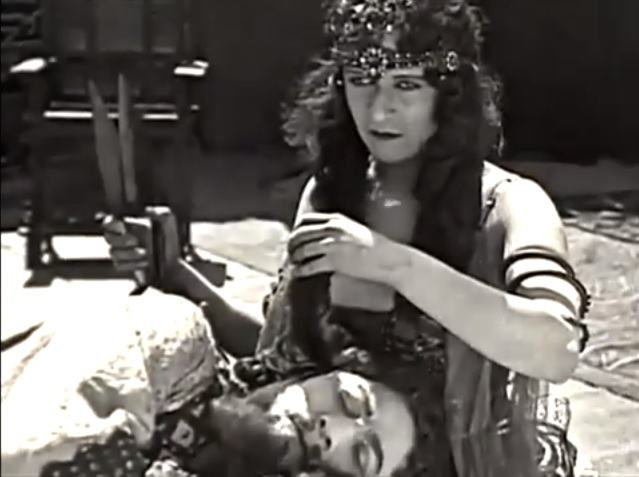
A century after its controversial premiere, "Lu, a kokott" retains its capacity to unsettle precisely because it rejects facile categorization. Is it feminist indictment or exploitation melodrama? Both readings coexist uneasily — like Lu herself, the film thrives in contradiction. Unlike the victimized heroines of A Lass of the Lumberlands, Lu exerts agency even in annihilation. When she slits Kovács’ throat with a razor hidden in her hair comb, Curtiz lingers not on the violence but on her face: a terrifying calm settles over her features, as if she’s finally balanced society’s ledger. This moment of dark transcendence anticipates film noir’s femmes fatales while predating them by decades — a testament to Curtiz’s prescient grasp of cinematic darkness.
The restored print’s granular clarity reveals astonishing details: the cracked varnish on Lu’s bedside table, the muddy hem of her gown after walking through slums, the almost imperceptible tremor in Jenö Balassa’s hands as the corrupt detective pockets bribes. These textures accumulate into a tactile historical document — not of Budapest’s geography, but of its psychic scars. In an era where silent cinema often defaulted to broad pantomime, Curtiz demanded psychological precision. His direction of Béla Magas as the opium-den proprietor remains revolutionary: rather than playing addiction for grotesquerie, Magas portrays it as spiritual exhaustion — a man weary of his own survival.
The film’s DNA surfaces in unexpected places. Rainer Werner Fassbinder borrowed Lu’s transactional gaze for his heroines in "Berlin Alexanderplatz". Pedro Almodóvar recreated the masquerade bloodsplash in "Talk to Her". Even modern Hungarian directors like Kornél Mundruczó channel Curtiz’s unsparing social autopsy in "White God". Yet what remains most radical is the film’s refusal to moralize Lu’s profession. Unlike later works like That Devil, Bateese which mythologize prostitution, Curtiz presents it as brutal economics — no different than Baron Kovács’ factory exploitation. This equivalence of transactions — flesh for money, labor for wages — remains profoundly disruptive.
In the penultimate scene — often misread as defeat — Lu sits motionless in her prison cell. Moonlight slices through barred windows, striping her body like a caged tiger. As the guard slides a food tray beneath the door, she doesn’t glance at the gruel. Instead, her fingers trace the grooves in the stone wall — mapping escape routes only she can see. Curtiz holds this shot for twenty seconds, forcing confrontation with her indomitability. No triumphant music swells; no title card offers platitudes. There’s only the scrape of fingernails on granite and the terrible weight of freedom imagined. This is cinema stripped of illusion — a testament to the human spirit not through victory, but through refusal to be erased. Eighty minutes earlier, she entered the frame as society’s victim; now, as the screen fades to black, she claims the last word without uttering a sound.
IMDb —
1922
Community
Log in to comment.