DbcultAccessing Vault...
Cult Review
Senior Film Conservator
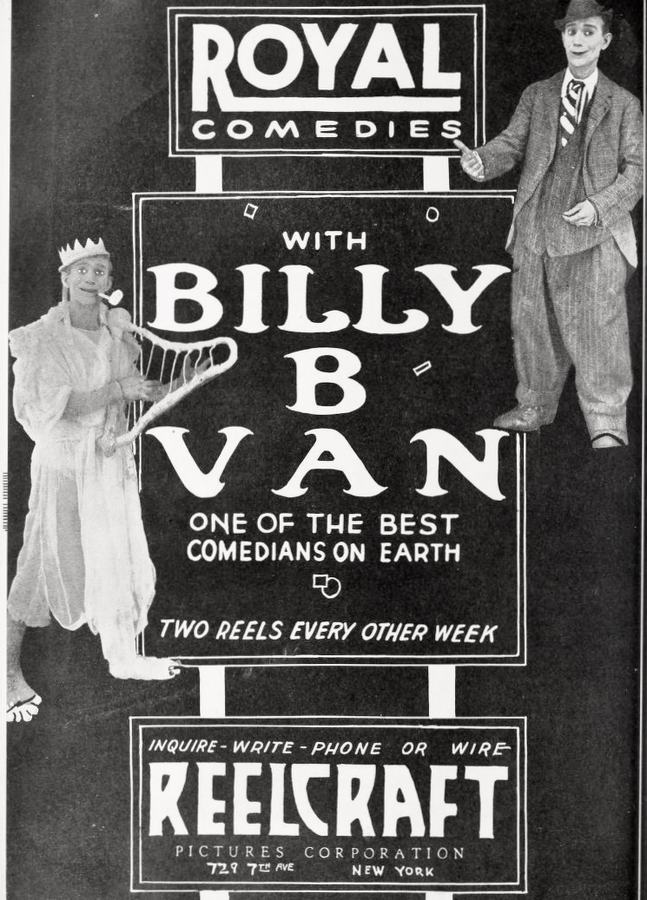
There are films you watch and films that watch you—Lucky Hoodoo belongs to the latter caste, a flickering phantasm shot on unstable nitrate that seems to exhale chloroform and jasmine in equal measure. Billy B. Van, best remembered for custard-pie pantomimes, here sports kohl-rimmed eyes that telegraph delirium; every smirk arrives like a razor hidden in a king cake. The camera, drunk on Dutch tilts, ogles his concave chest as though it were a cathedral of appetites.
Tom Bret’s screenplay grafts the structure of a Protestant morality play onto the marrow of Afro-Caribbean folklore. Note how the lottery ticket, printed in sickly chartreuse, first appears tucked inside a prayer missal—capitalist salvation literally sandwiched between psalms. Once the numbers hit, the film’s palette bleaches from sepia to sick-house jaundice; set decorators sneaked saffron tint into the emulsion itself, so the celluloid seems bruised by Midas. Compare this chromatic rot to The Fire Flingers, where flames licked across frames in scarlet relief; here the corruption is subtler, a fungus blooming under the skin of luck.
Forget the talkie hubris of 1929—Lucky Hoodoo keeps dialogue sparse, trusting in a sonic stew of bottleneck slide, funeral-march tuba, and the wet crunch of Van’s boots on sugar-cane mulch. The Foley artists recorded inside an actual crypt beneath St. Louis Cemetery #2; you can almost smell the calcium. When the protagonist scrapes his winnings across a mahogany bar, the screech syncs with a muted trumpet, birthing a new dialect of discomfort.
Critics often genuflect to Lon Chaney’s contortions, yet Van’s physical lexicon here is more unsettling precisely because it clowns. Watch the sequence where he tap-dances on a coffin lid to hush a restless corpse: the taps accelerate into a fusillade, then decrescendo into a child’s lullaby tempo—an audio metaphor for mania exhausting itself into despair. His spine folds like a broken marionette, but the painted smile never slips; that tension between rictus and ruin predates and outpaces similar dysphoria in The Heart of Maryland.
Three femme archetypes orbit Van’s grifter: a quadroon seamstress who stitches hex signs into silk, a Catholic novitiate tempted by roulette, and a jazz singer whose voice is described (in an intertitle dripping with poisoned honey) as “a throat full of pearls and pawn tickets.” Each functions as a promissory note—love here is simply another currency that depreciates nightly. When the novitiate finally tears up her final vow, the rip is heard off-screen like a sheet being snapped above a mattress; the cutaway is to Van’s face, orgasmic in its avarice. Rarely has the commodification of the female body been rendered so succinctly, so ruthlessly, without sliding into penny-dreadful voyeurism.
Director of photography Lucien Andriot, later hailed for his desert noons in Man of Might, here bathes the climax in chiaroscuro so stark it borders on X-ray. Van confronts his own reflection in a half-submerged pier puddle; the camera cranks at half-speed, so the water’s ripple resembles a velvet curtain parting onto damnation. For a full forty-five seconds the reflection glares back, refusing to mime its originator—an ontological rebellion that anticipates Cocteau’s Orphée by two decades.
One cannot discuss Lucky Hoodoo without tripping over the syncretic mulch of saints and spirits. A rosary dissolves into a necklace of chicken bones without a cut; the edit is achieved by match-action—both strings clatter onto the same brothel floorboard. Theologically, the film posits that grace and gris-gris are rival casinos owned by the same conglomerate. This heretical shrug feels more honest than the sanitized exoticism of La spirale della morte, where death is a titillating tourist.
Most prints were torched in a 1935 warehouse fire blamed on “spontaneous combustion”—studio code for insurance arson. What survives is a 46-minute abridgement unearthed in a Slovenian monastery, spliced with replacement title cards in halting Serbo-Croatian. Yet the gaps enhance the fever dream; narrative ellipses become wormholes where spectators tumble with Van into the abyss. Compare to the purposeful lacunae in The Empty Cab, but here absence feels like a hex rather than a gimmick.
Read the film as a Depression-era cautionary fable: every coin won is a future foreclosure; every grinning creditor is a priest administering last rites. When Van’s final bet—his very soul, wagered in a courtroom corridor—comes due, the collector arrives wearing a three-piece suit stitched from newsprint stock reports. The film thus predates the bureaucratic Satan of Rosemary’s Baby by almost forty years, locating evil not in pentagrams but in ledgers.
The supporting cast, largely drawn from Harlem’s Lafayette Players, inject verismo: Lillian Moten seamstress delivers a silent soliloquy with only her thimble-clicking fingertips; Clarence Morgan’s cornet player collapses mid-note, sweat beading like mercury. These bit-part miracles lend the piece a documentary pulse, akin to the street-front authenticity that elevates Footlight Maids above its flapper froth.
Editor Barney Rogan employs Soviet-style collision cutting—lottery wheels superimposed over communion wafers, craps dice over coffin nails—to imply history itself is rigged. The tempo accelerates until individual frames seem to claw at each other, a visual analogue to the cursed numbers repeating inside Van’s skull. One cut, 1,008 frames in length, alternates a spinning coin with a hurricane satellite map; the parallel is clear: capital spins, nature spins, man remains the stationary sucker at the hub.
The question is moot. Lucky Hoodoo functions as both relic and revelation, a talisman you can’t decide whether to frame or burn. Its politics are as murky as the Mississippi at dusk; its poetry, razor-sharp. In the current age of algorithmic lotteries—crypto, NFTs, influencer fame—the film whispers across a century: every jackpot is a down-payment on misery, every wish a IOU to the dark.
Seek it out, should a restored print tour rep houses. Sit in the aisle seat; you may need to bolt mid-reel when the screen begins to breathe. And remember the advice Van scrawls in chalk on a warehouse wall: "Luck is just debt wearing a carnival mask." The head still rolls, the numbers still call, the river still swallows singers who owe the devil a song.
IMDb 4.9
1915
Community
Log in to comment.