DbcultAccessing Vault...
5.4/10
Senior Film Conservator
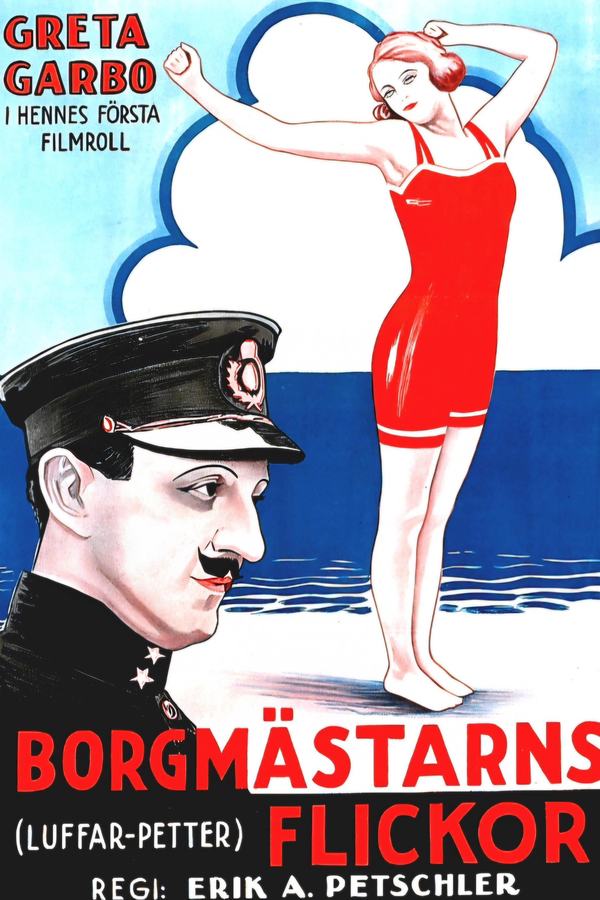
A definitive 5.4/10 rating for a film that redefined the boundaries of cult cinema. Luffar-Petter remains a cornerstone of transgressive art.
Stepping back into the cinematic tapestry of 1922, one encounters Luffar-Petter, a Swedish silent film that, while perhaps not a grand epic, holds a unique charm and historical significance, primarily due to the nascent appearance of a future legend, Greta Garbo. Directed and written by Erik A. Petschler, this picture offers a delightful, albeit light-hearted, journey into the escapades of its eponymous protagonist, painting a vivid, if somewhat whimsical, portrait of early 20th-century Swedish life and the perennial human dance of love, deception, and social ambition. It's a testament to the era's storytelling, where character archetypes and straightforward narratives often served as the foundation for engaging cinematic experiences.

At its core, Luffar-Petter unfurls as a picaresque tale, following Peter, portrayed with an engaging blend of roguishness and charm by Valdemar Dalquist. Peter is not merely a drifter; he is a man propelled by circumstance, a consequence of a past romantic entanglement that necessitates a swift, if not entirely voluntary, departure from his former life. This opening premise immediately establishes Peter as an individual operating on the fringes, constantly adapting and reinventing himself. His decision to join the army isn't born of patriotic fervor but rather a pragmatic need for refuge, a temporary sanctuary from the repercussions of his amorous adventures. This kind of character, one who navigates life through wit and improvisation, is a common thread in early cinema, often serving as a vehicle for comedic situations and social commentary. One might draw a parallel to the resourceful protagonists found in films like On Our Selection, where individuals, though rooted in a different social milieu, similarly rely on their ingenuity to overcome challenges and navigate societal expectations.
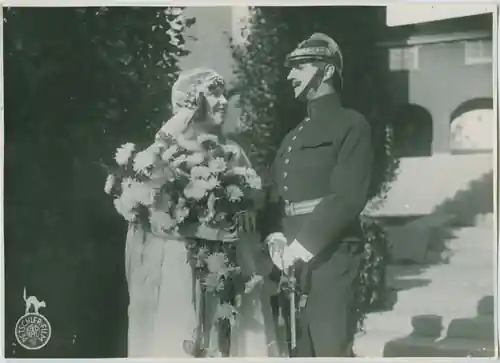
The army, rather than imposing strict discipline, becomes another stage for Peter's theatrical antics. His regiment's stationing in a provincial town, under the command of a mayor who also holds the rank of major, sets the scene for his next romantic conquest. Enter Greta, one of the major's daughters, brought to life by the then-unknown Greta Garbo. Here, Peter's innate charisma resurfaces, drawing Greta into a clandestine affair that adds another layer of complication to his already convoluted existence. This romantic subplot, while perhaps conventional for its time, gains a certain piquancy through the budding screen presence of Garbo. Even in these early roles, one can discern the magnetic quality that would later define her legendary career. The film expertly uses Peter's romantic entanglements not just for plot progression but also to highlight his character's inherent impulsiveness and his knack for finding himself in compromising, yet often amusing, situations.

While Luffar-Petter is undeniably Peter's story, for contemporary audiences, its most compelling aspect remains the early appearance of Greta Garbo. Cast as Greta, the major's daughter, her role here is relatively minor, yet it provides a fascinating glimpse into the nascent talent of an actress who would soon captivate the world. Her screen time might be limited, but even in these formative moments, her distinct aura is palpable. One can observe the subtle gestures, the expressive eyes, and the understated elegance that would later become her hallmarks. It’s a remarkable opportunity to witness the very beginnings of a cinematic icon, to trace the origins of her profound screen presence. For fans of film history and those captivated by the mystique of the silent era, Garbo's participation elevates Luffar-Petter from a charming period piece to a significant historical document. It reminds us that even the most legendary careers often begin with humble, yet telling, steps.

Her performance, even in its brevity, suggests a depth beyond the simplistic character she portrays. She isn't merely a love interest; there's an undercurrent of sensitivity and perhaps a touch of melancholy that hints at the more complex roles she would inhabit. This early work provides a stark contrast to the sophisticated, often tragic heroines she would later embody in Hollywood. It’s akin to seeing a rough sketch before the masterpiece, offering invaluable insight into the evolutionary path of an artist. Her scenes with Dalquist, though brief, possess a natural chemistry, a testament to her innate ability to connect with her scene partners and, more importantly, with the camera itself. This nascent magnetism makes her presence in Luffar-Petter not just a footnote, but a genuine highlight for those seeking to understand the trajectory of her unparalleled career.
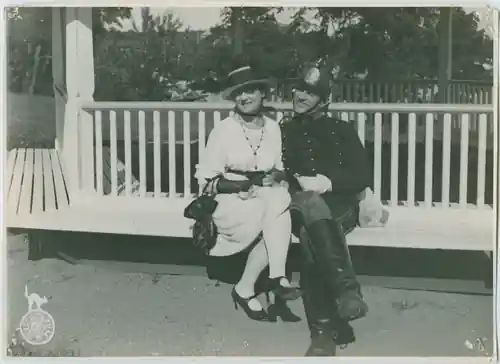
Peter's journey is not solely defined by his romantic escapades; it is also a narrative of audacious deception and social maneuvering. His military tenure is punctuated by an act of impersonation, a bold move that further illustrates his resourcefulness and his willingness to bend societal norms to his advantage. This element of disguise and mistaken identity is a classic trope in comedy and drama alike, offering fertile ground for both humorous misunderstandings and moments of genuine tension. The film capitalizes on this, using Peter's various guises to propel the plot forward and to explore themes of identity and authenticity. In this regard, one might find thematic echoes in films like The Spite Bride, where characters often resort to unconventional means to achieve their desires, blurring the lines between who they are and who they pretend to be.
The culmination of Peter's adventures is perhaps the most telling aspect of his character arc: his strategic marriage to a wealthy widow. This denouement is not a grand romantic gesture, but rather a pragmatic resolution, a calculated move that secures his future and provides him with a stable, albeit unconventional, position in society. It speaks to a certain cynical realism prevalent in some narratives of the era, where true happiness isn't always found in passionate love, but sometimes in financial security and social standing. This ending reinforces Peter's nature as a survivor, a man who adapts to his circumstances and ultimately finds a way to thrive, even if it means sacrificing romantic idealism for material comfort. This kind of social climbing, often through less-than-noble means, is a recurring theme in cinema, reflecting broader societal anxieties and aspirations. Films like The Way of the World often explore similar narratives of individuals striving for status and security within complex social structures.
Erik A. Petschler, wearing the hats of both writer and director, crafts a narrative that is straightforward yet engaging. His direction is characterized by a clear visual storytelling approach, typical of the silent era, relying heavily on expressive acting and well-placed intertitles to convey plot and emotion. The pacing, while perhaps deliberate by modern standards, allows the audience to fully absorb the various comedic and dramatic beats. Petschler demonstrates a keen understanding of character-driven humor, allowing the quirks and predicaments of Peter to naturally unfold. He doesn't strive for grand artistic statements but rather aims for accessible
IMDb 5.3
1918
Community
Log in to comment.