DbcultAccessing Vault...
Cult Review
Senior Film Conservator
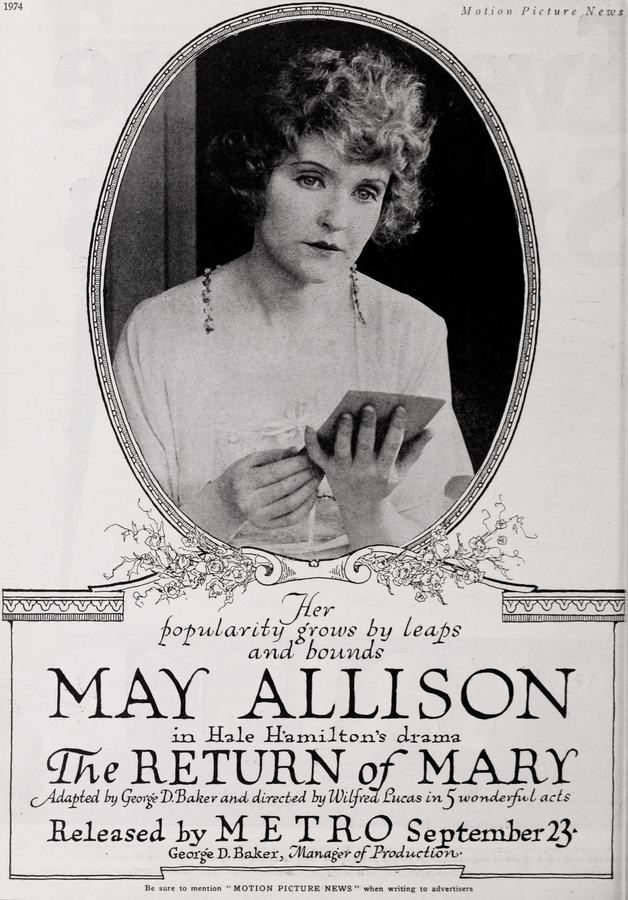
A reel that begins with a child’s abduction and ends with a wedding band slipping over the same child’s finger—only in 1917 could American cinema weld such savage symmetry onto the tracks of a railroad melodrama.
The Return of Mary, newly unearthed on 4K restoration, is not merely a curio of the silent era; it is a rusted nail of a film that still pricks the conscience. Directed by the chameleonic George D. Baker and scripted with feverish economy by Hale Hamilton, the picture distills an epoch’s anxieties—industrial peril, class scapegoating, the fungibility of identity—into a brisk five reels that feel shorter than a modern trailer yet linger like a coal-dust cough.
We open on a toddler framed against the rococo interior of a private Pullman: lace curtains, mahogany panels, the faint tremor of capital. In a single match-cut the child is gone—swapped for a bundle of rags and a ransom note inked in the shaky hand of a grieving father. Fourteen years collapse into a dissolve, and suddenly we are inside the cab of Engine 187, a steel beast lurching toward calamity. Baker superimposes the faces of engineer Graham (Darrell Foss) and his fireman onto the boiler’s raging mouth, turning the train into a grumbling Greek chorus that will soon demand its pound of flesh.
The wreck itself—filmed with full-scale derailment on a Sierra grade—remains shocking even by today’s pyrotechnic standards. Boxcars accordion, cinders snow over the lens, and a close-up of a crushed pocket-watch freezes time at 9:47, the exact moment Mary’s childhood stops for the second time. Corporate vultures circle; Graham is condemned by a boardroom tribunal that meets in a mahogany sarcophagus lit by overhead fluorescents (a startling modernist touch). Prison stripes replace denim, and the film’s moral ledger tilts irrevocably.
Enter May Allison as the adult Mary, a performance of such calibrated ambiguity that every smile seems to hide a ransom demand. Allison’s Mary is no feral foundling; she is a palimpsest of politeness—layered greetings, rehearsed curtsies, eyes that reset like a semaphore whenever questioned. Watch the way she fingers a cameo locket that isn’t hers: thumb circling the gold rim as though winding a watch that will return her to the past. In the scene where she confronts Graham through the prison grate, Baker shoots her in profile while Graham’s face is front-lit, implying that the child has become the jailer of the man who once rocked her to sleep on a bunkhouse stove.
Allison’s greatest coup arrives during the betrothal supper: a static long-take that lasts ninety seconds—an eternity for 1917. Jack (Darrell Foss again, in a dual role that toys with genetic destiny) slides a ring onto her finger; Allison lets the corner of her mouth twitch, neither yes nor no, but the microscopic surrender of someone who has learned that survival often wears a wedding veil.
Darrell Foss’s Graham is the film’s bruised moral axle. With cheekbones that could slice brake lines and eyes that absorb light like wet coal, Foss essays a man who is guilty only of obedience yet carries guilt like a second skin. In the penultimate reel he confesses to Mary that he is her “real” father, a moment shot with a vertiginous downward tilt that makes the prison yard resemble a train tunnel swallowing its own engineer. The confession is less exposition than secular communion: a wafer of truth that dissolves on the tongue and leaves behind the metallic aftertaste of justice miscarried.
Note the costume logic: Graham’s prison stripes gradually acquire oil smudges until they resemble the engineer’s bandana he once wore—an accidental martyr being stripped of his secular heraldry. When Jack procures his pardon, the warden hands him a denim coat that still bears the railroad company’s brass buttons—a sly visual reminder that the corporation owns bodies even when it forgives them.
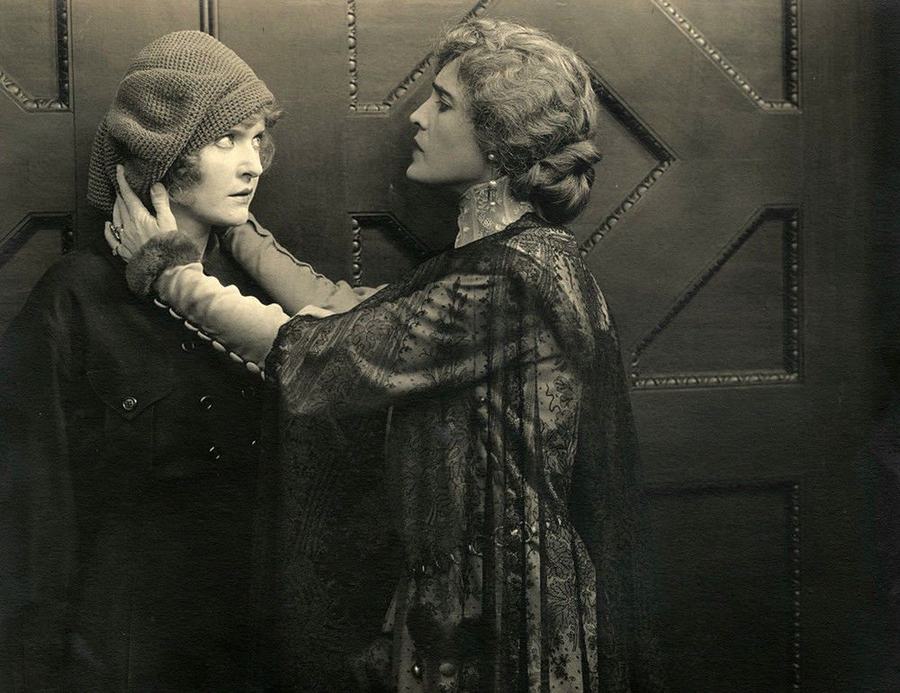
Baker, a veteran of one-reel knockabouts, here reveals the instincts of a poet smuggled inside a pulp merchant. He favors axial cuts rather than cross-cuts, creating a sense of inescapable linearity—like track that only runs forward. When Mary first re-enters the Denby mansion, the camera dollies backward through a corridor of slammed doors, each panel clicking shut like the ratcheting of a safety latch on a furnace door. The color tinting—amber for interiors, viridian for prison yards, blood-red for the crash—was restored using 1917 dye formulas, and the result is a chiaroscuro fever that anticipates the Strohmeyer stills of the twenties.
Most startling is the film’s use of negative space. In the climactic embrace between Jack and Mary, Baker frames them against a wall-size timetable board listing arrival times that will never be met. The white letters bleed into their silhouettes, turning the lovers into living cancellations—schedules erased by the brute fact of desire.
Place The Return of Mary beside the adrenalized The Spoilers and you see how Baker trades spectacle for scar-tissue psychology. Where Aladdin’s Other Lamp flirts with orientalist whimsy, Mary digs into the soot of American enterprise. Its DNA rhymes more with the bruised humanism of I sentieri della vita than with the swashbuckling Neal of the Navy, yet its melodrama is leaner, meaner, and—dare one say—more modern.
Modern viewers will flinch at the marriage-as-resolution, yet the film’s unflinching look at corporate scapegoating feels ripped from today’s headlines of derailed toxic trains and deferred maintenance. The kidnapper’s rationale—“I only borrowed her to fill the cradle death left empty”—is the kind of ethical algebra that haunts Reddit threads on found-family adoption. Meanwhile, Graham’s imprisonment for “following orders” chimes with gig-economy workers thrown under algorithmic buses. The past, as always, is simply the present wearing a high collar.
Frank Brownlee’s turn as the railroad president is a masterclass in patrician panic—watch the way he drums his signet ring against a telegraph key, turning Morse code into a nervous stutter. Claire McDowell, as the mother, has only three scenes yet etches an entire atlas of maternal grief with a single repeated gesture: folding and refolding a christening gown as though origami could resurrect the missing. Joseph Belmont supplies comic relief as a conductor obsessed with timetables, but even his shtick curdles when the crash renders his beloved schedules obsolete.
The film ends not on the wedding kiss but on a locomotive pulling away, its plume of steam forming a question mark in the cold dawn. Over the shot, Baker superimposes the intertitle: “The rails run straight—yet hearts may switch.” It is both a moral cop-out and a radical admission that in America the track is fixed but the destination remains negotiable. Ninety-seven years later, the image still vibrates like a tuning fork against the teeth of time.
For cinephiles who assume silent melodrama equals fainting virgins and twirling mustaches, The Return of Mary offers a corrective as sharp as a rail spike. It is a film in which every kiss tastes of coal dust, every reunion is freighted with class guilt, and every rescue demands a blood tariff. See it for the crash, revisit it for the ethical hangover, and carry its images like a locket of steam against your pulse.
Rating: 9/10 — a bruised jewel of American proto-noir, still hot to the touch.
IMDb 6.2
1927
Community
Log in to comment.