DbcultAccessing Vault...
6.8/10
Senior Film Conservator
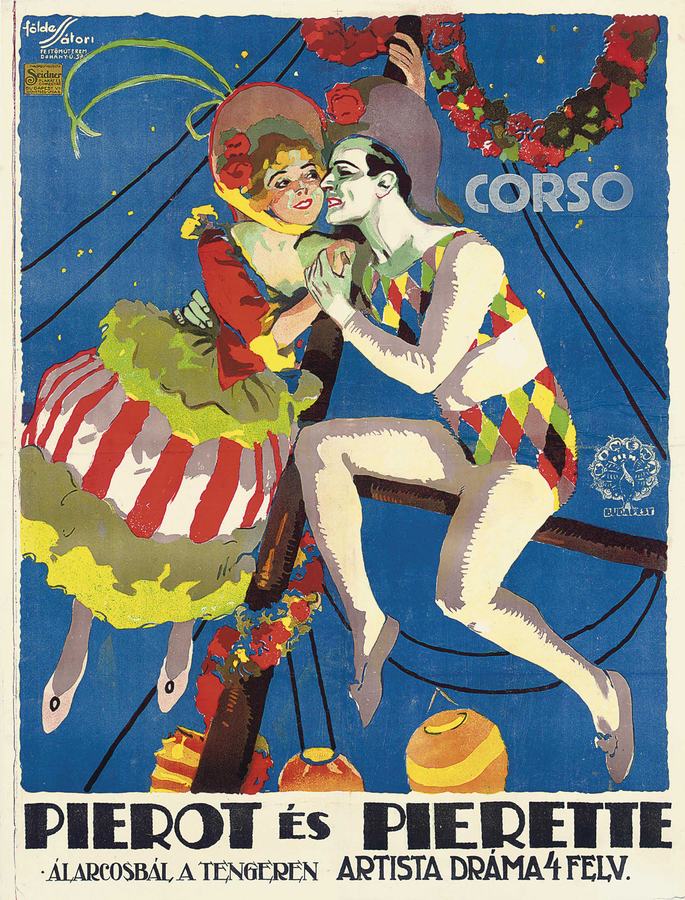
A definitive 6.8/10 rating for a film that redefined the boundaries of cult cinema. Pierrot, Pierrette remains a cornerstone of transgressive art.
In the annals of early cinema, certain works possess a haunting resonance that transcends their often rudimentary technical origins, speaking volumes through their sheer emotional candor. Louis Feuillade's Pierrot, Pierrette is undoubtedly one such creation, a deeply affecting silent film that, despite its relative brevity and the passage of a century, retains a profound capacity to stir the soul. It is a cinematic lament, meticulously crafted by a director renowned for his sprawling serials, yet here, he distills human vulnerability into a narrative of stark simplicity and devastating impact. The film offers a glimpse into a world where the precariousness of existence is juxtaposed with the unwavering resilience of childhood spirit, a testament to Feuillade's often understated genius in capturing the human condition.
The narrative commences with a picturesque, albeit melancholic, portrayal of familial harmony. We are introduced to Pierrot and Pierrette, two children whose world revolves around their grandfather, a figure of faded grandeur, a former circus ringmaster whose past glories now manifest as a quiet dignity. Their home is a caravan, a symbol of their nomadic freedom and a sanctuary from the rigidities of conventional society. This mobile dwelling, though modest, provides a haven where the bonds of kinship are paramount, fostering an environment of mutual dependence and affection. Their livelihood is earned through the performance arts, singing in the bustling streets, an honest if humble pursuit that allows them to sustain their unique, self-sufficient lifestyle. Feuillade paints this initial scenario with a gentle hand, inviting the viewer to appreciate the unvarnished beauty of their lives, underscoring the profound contentment found in their simple, interconnected existence. The performances by Bouboule as Pierrot and René Poyen as Pierrette are particularly noteworthy, their youthful exuberance and natural chemistry immediately establishing a sympathetic connection with the audience, making their eventual plight all the more heart-wrenching.
However, this fragile equilibrium is shattered by the arrival of a 'charitable' lady, a character who embodies the insidious nature of misguided benevolence. Her intentions, ostensibly noble, are rooted in a societal paradigm that views any deviation from its prescribed norms as a problem to be rectified. For her, the caravan, the street performances, and the grandfather's age are not elements of a unique family unit, but rather symptoms of neglect and destitution requiring intervention. Her solution is a starkly institutional one: the grandfather to an old folks' home, the children to an orphanage. This intervention, delivered with an air of unassailable righteousness, acts as the primary catalyst for the film's tragic trajectory. It exposes the chasm between well-meaning actions and their devastating consequences, illustrating how a lack of true understanding can inflict more harm than overt malice. Feuillade, through this character, subtly critiques the paternalistic attitudes of the era, where 'charity' often meant imposing one's own vision of order upon those deemed less fortunate, without truly respecting their autonomy or existing familial structures. The film raises uncomfortable questions about the true nature of help and the potential for societal institutions, even those designed for good, to inadvertently dismantle genuine happiness.
Faced with the imminent dissolution of their family, Pierrot and Pierrette, driven by an instinct for self-preservation and an unwavering loyalty to their grandfather, make the desperate decision to flee. Their escape marks a dramatic shift in the film's tone, transitioning from a gentle, almost pastoral depiction of life to a tense, perilous journey into the unknown. The freedom they once knew within the confines of their caravan is now replaced by the harsh realities of the open road, a world far less forgiving than their previous existence. This flight, however, does not lead to renewed liberty but rather to a new, more insidious form of captivity. They fall into the hands of a traveling vendor, a seemingly innocuous figure whose charm quickly dissipates to reveal a manipulative and exploitative nature. This vendor sees not two vulnerable children, but tools for his nefarious purposes, intending to exploit their innocence and small stature for burglaries. The progression from the threat of institutionalization to outright criminal exploitation is a chilling descent, highlighting the multifaceted dangers that lurk for the unprotected. It underscores a thematic parallel that can be drawn to other films exploring the vulnerability of the young, such as The Martyrdom of Philip Strong, where innocence is similarly placed in direct confrontation with overwhelming, often malevolent, forces. While the specifics of their predicaments differ, the core struggle against forces seeking to exploit or destroy their inherent purity remains a poignant connection.
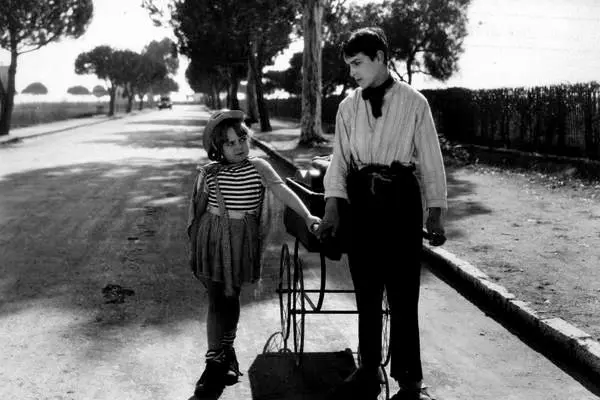
Louis Feuillade, a master storyteller, particularly renowned for his serials like Fantômas and Les Vampires, demonstrates a different facet of his directorial prowess in Pierrot, Pierrette. Here, the grand, labyrinthine plots of criminal masterminds are exchanged for a more intimate, yet equally compelling, human drama. Feuillade's strength lies in his ability to imbue even the simplest gestures with profound meaning, his camera acting as a silent observer, capturing the subtle nuances of emotion that define the silent film era. He utilizes the mise-en-scène effectively, contrasting the cramped but cozy interior of the caravan with the vast, indifferent expanse of the outside world, and later, the unsettling claustrophobia of the vendor's domain. His framing often emphasizes the smallness of the children against towering adults or expansive landscapes, visually reinforcing their vulnerability. The chase sequences, though perhaps less elaborate than those in his action-packed serials, are nonetheless effective in conveying urgency and fear, propelled by the raw performances of the child actors. Feuillade's direction here is less about spectacle and more about emotional veracity, proving that a director of his caliber could evoke powerful sentiments regardless of the scale of the production. The film’s pacing, deliberate yet engaging, allows the viewer to fully absorb the emotional weight of each scene, building a sense of dread and sympathy that culminates in the poignant climax.
The performances in Pierrot, Pierrette are crucial to its enduring impact, especially given the absence of spoken dialogue. Bouboule and René Poyen, as the titular siblings, deliver performances that are remarkably nuanced for child actors of that period. Their expressive faces, natural body language, and believable reactions convey a spectrum of emotions—joy, fear, determination, and despair—without ever feeling forced or melodramatic. The bond between them is palpable, a shared resilience that becomes the film's emotional core. Jean-Pierre Stock as the grandfather, though perhaps with less screen time after the initial setup, establishes a profound sense of warmth and protective love, making his potential institutionalization all the more tragic. The supporting cast, including Emile Dupré, Prouzac, Julio de Romero, and Henri-Amédée Charpentier, contribute to the film's atmospheric realism, each portraying their roles with a convincing authenticity that grounds the narrative. The vendor, in particular, is portrayed with a chilling blend of superficial charm and underlying menace, a testament to the actor's ability to communicate duplicity through subtle cues. These collective performances elevate the film beyond a simple melodrama, transforming it into a compelling study of innocence under siege.
Thematically, Pierrot, Pierrette is a rich tapestry woven with threads of innocence, freedom, societal intrusion, and the desperate struggle for survival. It asks profound questions about the nature of family – is it defined by blood, by shared dwelling, or by an unbreakable bond of affection? The film strongly advocates for the latter, presenting the caravan family as a legitimate, loving unit, despite its unconventional structure. The 'charitable lady' serves as a potent symbol of societal forces that, even with good intentions, can be destructive when they fail to recognize and respect individual autonomy and diverse ways of life. This critique of misguided philanthropy is particularly insightful, suggesting that true charity must involve empathy and understanding, not just the imposition of a predefined order. The children's journey from a state of contented freedom to one of threatened institutionalization, and then to outright exploitation, serves as a powerful allegory for the fragility of childhood and the ever-present dangers lurking for those without protection. It's a stark reminder of how quickly circumstances can devolve, and how the pursuit of 'betterment' can sometimes lead to far worse outcomes. This exploration of socio-economic vulnerability and the often-harsh realities of life outside the dominant societal framework finds echoes in other films of the era, such as The Money Mill or even The Saleslady, which, while focusing on different facets of economic struggle, similarly delve into the pressures and ethical compromises individuals face when confronted with societal or financial precarity. While Feuillade's film centers on children, the underlying critique of systems and their impact on personal lives is a resonant shared thread.
From a historical perspective, Pierrot, Pierrette stands as a significant, albeit perhaps lesser-known, work by one of cinema's foundational figures. Louis Feuillade, as both writer and director, demonstrates a mastery of visual storytelling that was groundbreaking for its time. The film’s ability to convey complex emotional states and social commentary without dialogue is a testament to the power of early cinema and its reliance on visual cues, physical acting, and evocative cinematography. It offers valuable insights into the social concerns of the period, particularly regarding child welfare, poverty, and the role of charity. Its relatively simple narrative structure, compared to Feuillade's later, more complex serials, allows for a concentrated focus on character and emotion, making it an accessible entry point into his diverse filmography. While not as widely celebrated as some of his more action-oriented works, Pierrot, Pierrette holds its own as a poignant and artistically accomplished piece, showcasing the breadth of Feuillade's talent and his commitment to exploring the human condition in all its forms.
In conclusion, Pierrot, Pierrette is far more than a mere historical curiosity; it is a timeless exploration of innocence, resilience, and the sometimes-unintended cruelties of the world. Through the skilled direction of Louis Feuillade and the compelling performances of its cast, particularly Bouboule and René Poyen, the film crafts a narrative that is both heartbreaking and hopeful. It serves as a potent reminder that true compassion extends beyond good intentions, requiring a genuine understanding and respect for the lives it seeks to touch. The film's enduring power lies in its ability to evoke profound empathy for its young protagonists, making their struggle for freedom and family a universal tale that resonates deeply even today. It stands as a testament to the enduring power of silent cinema to tell profoundly human stories with an elegance and emotional depth that remains captivating and relevant.
IMDb 5.7
1933
Community
Log in to comment.