DbcultAccessing Vault...
6.4/10
Senior Film Conservator
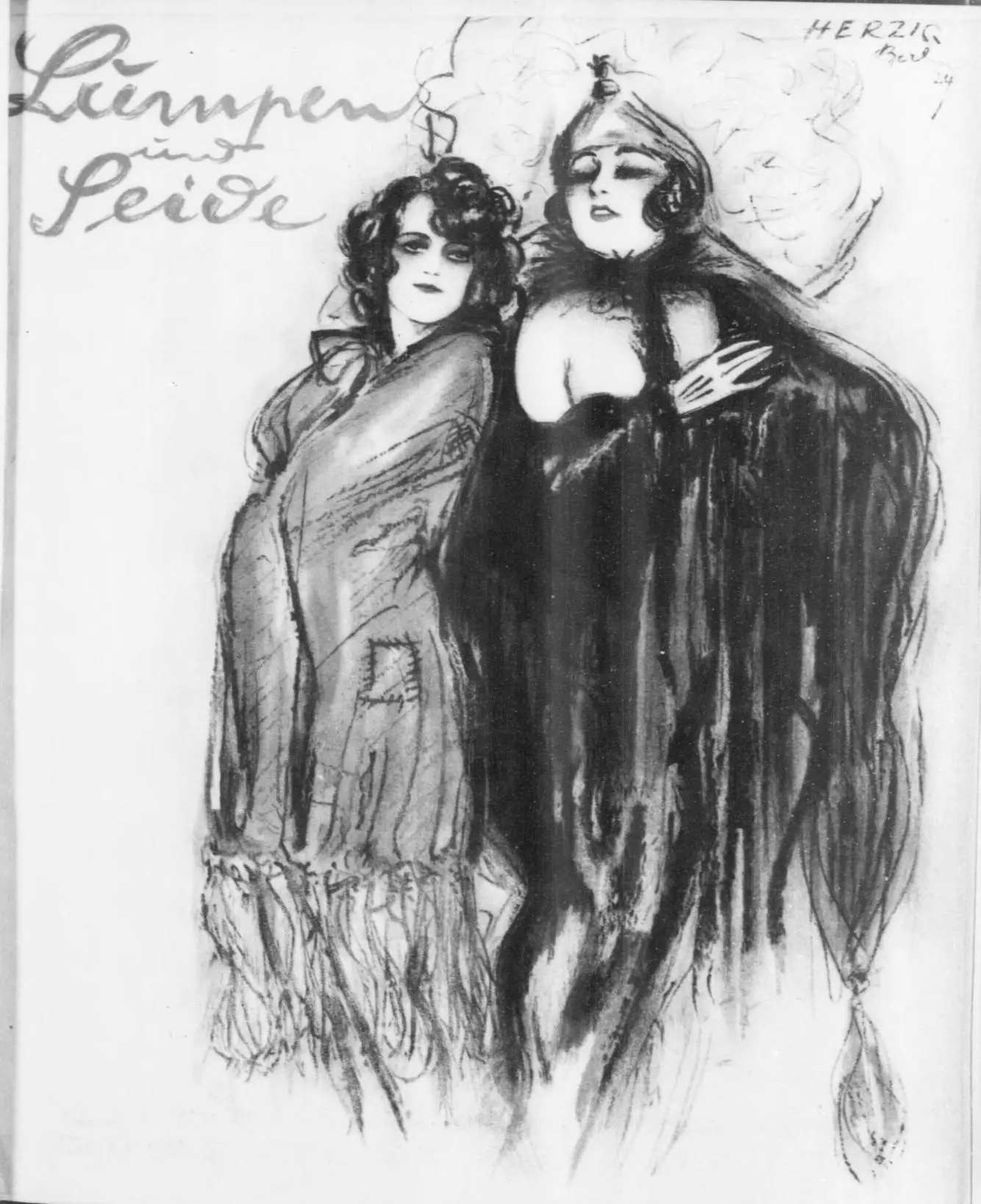
A definitive 6.4/10 rating for a film that redefined the boundaries of cult cinema. Lumpen und Seide remains a cornerstone of transgressive art.
Is Lumpen und Seide worth your time in the modern era? Short answer: Yes, but only if you have the stomach for a film that treats human empathy as a luxury the rich can't afford. This is a film for fans of cynical social dissections and those who appreciate the dark undercurrents of 1920s German cinema; it is certainly not for those looking for a lighthearted escapade or a traditional romance.
Lumpen und Seide remains a relevant piece of cinema because it captures a specific type of high-society boredom that feels hauntingly modern. If you enjoy the sharp class commentary found in films like Manhattan, you will find this silent era satire surprisingly biting. It is a film that demands your attention not through spectacle, but through the sheer discomfort of its premise. It works. But it’s flawed.
1) This film works because it refuses to sanitize the motivations of its protagonists, painting Erik and Irene as genuine predators rather than misunderstood eccentrics.
2) This film fails because the third act leans too heavily into conventional melodrama, losing the sharp satirical edge established in the first hour.
3) You should watch it if you want to see a masterclass in silent-era acting from Reinhold Schünzel, who manages to be terrifyingly charming.
The central conflict of Lumpen und Seide isn't just about a love triangle; it’s about the consumption of the poor by the rich. When Erik (played with a chilling, detached elegance by Einar Hanson) spots Hilde in the club, he doesn't see a human being. He sees a seasoning for his bland marriage. This isn't the whimsical class-clash of The Poor Boob; it's something much more sinister. The way Erik looks at Hilde is the same way a diner looks at a menu.
Director Richard Oswald, known for his willingness to tackle controversial social themes, uses the camera to emphasize the physical distance between these worlds. In the club scene, the lighting on Irene is harsh and brilliant, highlighting her expensive jewelry, while Hilde is often kept in soft, almost muddy shadows. This visual storytelling tells us everything we need to know about their social standing before a single line of dialogue appears on an intertitle.
The film’s portrayal of 'spicing up' a marriage feels decades ahead of its time. While other films of the era, like Amour et carburateur, might treat infidelity as a farce, Lumpen und Seide treats it as a symptom of a decaying society. The 'silk' isn't just a fabric; it's a shroud covering the moral emptiness of the elite.
Reinhold Schünzel is the gravitational center of this film. His performance is a masterclass in subtlety. Unlike the broader acting styles found in A Circus Romance, Schünzel uses tiny shifts in his expression to convey a deep-seated arrogance. There is a specific moment when he invites Hilde to their home where his smile doesn't reach his eyes—it’s a predatory leer disguised as a polite invitation.
Mary Parker as Irene provides the perfect foil. She plays the 'bored wife' not as a victim, but as a willing participant in the game. Her chemistry with Hanson is intentionally cold. They move around each other like two statues in a gallery, only coming to life when they have a new 'toy' to play with. This makes the eventual introduction of Hilde even more jarring. Mary Kid brings a necessary vulnerability to Hilde, though at times she is written a bit too much like a saintly martyr.
The supporting cast, including Ferdinand Bonn and Johannes Riemann, flesh out a world that feels lived-in and busy. Unlike the isolated feel of Still Waters, Lumpen und Seide feels like it takes place in a bustling, uncaring metropolis. The social circles are tight, and the gossip is lethal.
Technically, the film is a fascinating bridge between expressionism and the more grounded realism that would follow. The cinematography doesn't rely on the distorted sets seen in Dämon und Mensch, but it uses shadow to create a similar sense of unease. The interior of Erik and Irene’s mansion is shot to look like a gilded cage—high ceilings, long hallways, and far too much empty space.
The pacing is where the film stumbles slightly. The setup is electric, but the middle section gets bogged down in repetitive scenes of Hilde feeling out of place. We get the point: she is poor, they are rich. We don't need five scenes of her staring at a silver spoon in confusion. Compared to the tight editing of The Wig-Wag System, Lumpen und Seide feels like it could have benefited from a ten-minute trim in the second act.
However, the use of close-ups is exceptional. Oswald understands that in a silent film, the eyes do the heavy lifting. When Hilde finally realizes she is being used as a sexual prop, the camera lingers on her face for an uncomfortably long time. It’s a moment of pure, unadulterated heartbreak that elevates the film from a mere social satire to a human tragedy.
Pros:
The film offers a brutally honest look at the moral bankruptcy of the 1920s elite. The costume design is exquisite, perfectly capturing the 'silk' of the title. The satirical elements are sharp and avoid being overly preachy. It manages to feel modern despite being nearly a century old.
Cons:
The plot becomes somewhat predictable by the final third. Some of the secondary characters, like those in Anita Jo, feel more like archetypes than real people. The intertitles can be a bit heavy-handed in explaining emotions that the actors have already conveyed perfectly.
Without spoiling the specific beats, the ending of Lumpen und Seide is what cements its status as a significant work. It doesn't offer a clean resolution. It suggests that the cycle of consumption will simply continue. The rich will find a new 'Hilde,' and the poor will continue to be lured by the shine of the silk. This cynicism is what separates it from more commercial fare like The Masquerader.
It is a bold stance for a 1925 film to take. Most films of the time felt the need to reward virtue and punish vice. Lumpen und Seide suggests that vice is its own reward if you have enough money to buy your way out of the consequences. It’s a nasty observation. It’s also probably true.
Watching this film alongside others from the same period, such as Et Syndens Barn or Farkas, reveals a fascinating trend in European cinema toward exploring the darker side of the human psyche. Lumpen und Seide sits comfortably at the top of that list because it focuses on the most mundane of evils: boredom.
Lumpen und Seide is a sharp, uncomfortable, and essential piece of silent cinema. While it suffers from some of the pacing issues common to the era, its thematic depth and powerhouse performances make it a must-watch for any serious cinephile. It doesn't just show us the 1920s; it critiques them with a scalpel. It is a film that recognizes that the most dangerous thing in the world is a wealthy person with nothing to do. It’s a dark mirror. Look into it.
IMDb 6
1928
Community
Log in to comment.