DbcultAccessing Vault...
Cult Review
Senior Film Conservator
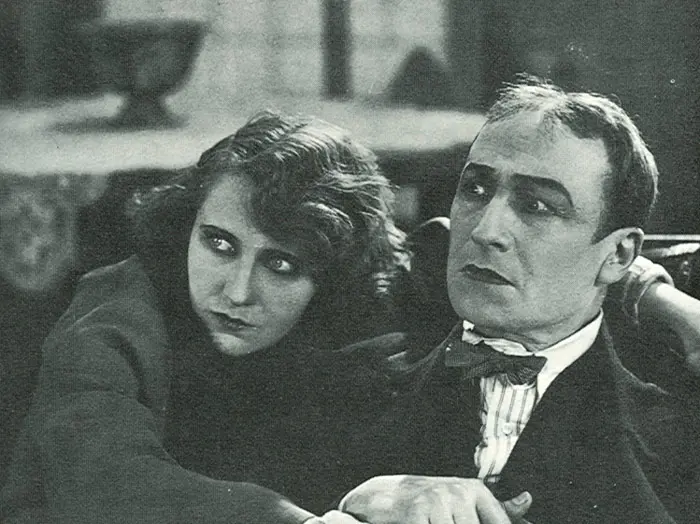
Is this silent film, L'uomo più allegro di Vienna, a relic of its time or a surprisingly resonant experience for modern audiences? Short answer: yes, it absolutely holds up, provided you approach it with the right cinematic sensibility. While its pacing and narrative style are distinctly of the silent era, its thematic core — the performance of happiness — feels remarkably prescient in our image-obsessed world.
This film is essential viewing for cinephiles, students of early cinema, and anyone fascinated by the nuanced art of silent acting. It’s a compelling character study that transcends its technical limitations. However, it is decidedly not for those seeking fast-paced plots, explicit dialogue, or modern narrative conventions. If you lack patience for intertitles and the grand theatricality of early film, you'll likely find it a challenging watch.
When one considers silent cinema, the immediate assumption often leans towards exaggerated melodrama or simplistic narratives. Yet, L'uomo più allegro di Vienna, or 'The Happiest Man in Vienna,' defies such easy categorization. It is, at its heart, a profound character study, leveraging the unique strengths of the silent medium to explore a surprisingly complex psychological landscape. The film’s ambition lies in its attempt to dissect the very nature of happiness, not as an intrinsic state, but as a performance, a public role adopted in the face of private turmoil.
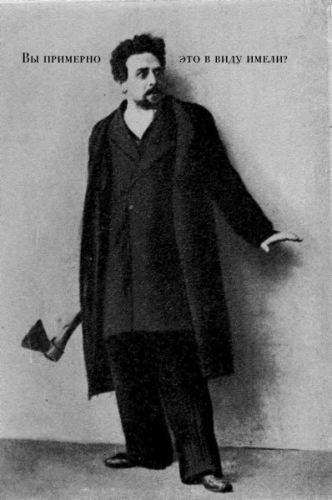
The film works because it commits wholeheartedly to this central thematic inquiry. Ruggero Ruggeri, in the titular role, delivers a performance that, even without spoken word, communicates layers of suppressed emotion. His smile, initially a beacon of joy, slowly transforms into a mask, a subtle shift that speaks volumes about the character's internal conflict. This isn't just acting; it's a masterclass in conveying the weight of a persona through posture, gaze, and the slightest tremor of a facial muscle. The camera lingers on these moments, inviting the audience to become active interpreters of the unspoken.
This film fails, however, in its occasional reliance on broad, almost caricatured supporting performances that pull focus from Ruggeri's nuanced portrayal. While a certain theatricality was common in silent cinema, some of the ensemble, particularly Maria Lapini and Fosco Risturi, occasionally veer into a territory that feels less like heightened emotion and more like pantomime. This unevenness can disrupt the delicate balance the film attempts to strike between grand emotion and intimate psychological exploration.
You should watch it if you appreciate the artistry of silent film, particularly its unique ability to communicate profound emotional truths through visual storytelling. It’s a rewarding experience for those willing to engage with a different pace and a different language of performance. The film invites contemplation, rather than demanding immediate emotional gratification, which is precisely its enduring strength.
The premise of a man defined by his happiness is compelling, especially when viewed through a modern lens. In an era saturated with curated online personas, the idea of a 'happiest man' existing as a public spectacle resonates deeply. The film, consciously or not, foreshadows our contemporary obsession with projecting an idealized self. This is where its brilliance truly shines, offering a commentary that feels decades ahead of its time. It’s an unconventional observation, but the film feels like a proto-social media critique, long before such a concept was even imaginable.
The direction, under the guidance of its uncredited helmer (as is often the case with early cinema where directorial credit was less formalized or shared), demonstrates a clear understanding of visual storytelling. The use of close-ups on Ruggeri's face is particularly effective, isolating his expressions and forcing the audience to confront the truth or artifice behind his smiles. These are not merely functional shots; they are deliberate acts of psychological dissection, revealing the cracks in the façade. This technique is far more sophisticated than many of its contemporaries, which often prioritized wider shots to capture the full theatricality of a scene.
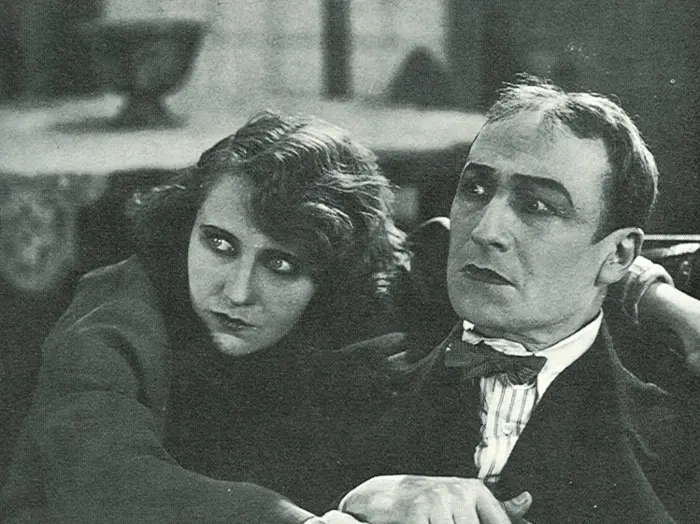
The cinematography, though constrained by the technology of its era, manages to capture the essence of Vienna. While we don't see sweeping, digitally enhanced panoramas, there's a tangible sense of place evoked through careful framing and lighting. The film often contrasts the bright, bustling public spaces with more dimly lit, intimate interiors, visually mirroring the protagonist's dual existence. This interplay of light and shadow becomes a silent narrator, underscoring the film's central themes of appearance versus reality.
Pacing in silent films can often be a point of contention for modern viewers, and L'uomo più allegro di Vienna is no exception. It is deliberate, unhurried, allowing moments to breathe and emotions to slowly build. This isn't a flaw; it's a feature. The gradual unfolding of the protagonist's inner world requires this measured approach. Attempts to rush such a narrative would dilute its impact. However, there are instances, particularly in the film's middle act, where certain subplots involving other characters feel slightly protracted, momentarily stalling the momentum of the central character's journey. This is where a tighter edit could have elevated the experience even further.
The tone of the film is a delicate tightrope walk between gentle comedy, poignant drama, and existential rumination. It never fully descends into overt tragedy, nor does it maintain a purely comedic facade. Instead, it hovers in a space of bittersweet observation, a characteristic that makes it feel surprisingly mature and sophisticated. It works. But it’s flawed. This nuanced tone is perhaps its greatest achievement, avoiding the pitfalls of easy emotional manipulation.
Ruggero Ruggeri's performance is the undeniable anchor of the film. He embodies the 'happiest man' with a captivating blend of charm and underlying melancholy. His ability to convey profound internal conflict through subtle gestures – a slight slump of the shoulders, a momentary flicker of doubt in his eyes – is truly remarkable. One particular scene, where he performs for a crowd, his smile unwavering even as a single tear escapes, is a powerful moment of silent agony. It’s reminiscent of the emotional depth achieved by actors like Emil Jannings in The Last Laugh, where the entire narrative hinges on non-verbal communication.
Victor Varconi, a prominent figure in international cinema of the era, provides a strong counterpoint. His character often serves as a mirror or a catalyst for the protagonist's journey, and Varconi plays this role with a quiet intensity that complements Ruggeri's more outwardly expressive performance. María Corda brings a delicate grace to her role, her presence often softening the more somber undertones of the film. Her interactions with Ruggeri are particularly effective, conveying a sense of understanding and empathy that cuts through the protagonist's carefully constructed defenses.
However, the supporting cast, while competent, occasionally struggles to maintain the same level of nuanced performance. While actors like Gianna Terribili-Gonzales and Giuseppe Pierozzi contribute to the bustling atmosphere of Vienna, some of their reactions and comedic beats feel more aligned with stage melodrama than cinematic subtlety. This contrast in acting styles, while perhaps intentional to highlight the protagonist's unique struggle, sometimes creates a slight disconnect within the film's otherwise cohesive vision.
The enduring power of L'uomo più allegro di Vienna lies not just in its historical significance as a silent film, but in its timeless exploration of the human condition. It asks us to look beyond the surface, to question the smiles we see, and to consider the cost of maintaining a public facade. It's a film about empathy, about understanding that true happiness is rarely as simple as it appears. This makes it incredibly valuable today.
Ultimately, L'uomo più allegro di Vienna is more than just a historical curiosity; it is a compelling, if imperfect, work of art. Its strengths — primarily Ruggero Ruggeri's extraordinary performance and its surprisingly modern thematic depth — far outweigh its minor structural and performance inconsistencies. It demands patience and an open mind, but for those willing to lean into the unique language of silent cinema, it offers a profoundly rewarding experience.
This film serves as a powerful reminder that the exploration of complex human emotions is not limited by the absence of sound, but can instead be amplified by it, forcing us to engage more deeply with visual cues and the unspoken truths they convey. It's a testament to the enduring power of character-driven storytelling, proving that even a century later, the 'happiest man' can still prompt us to reflect on our own masks and realities.
IMDb —
1929
Community
Log in to comment.