DbcultAccessing Vault...
6.6/10
Senior Film Conservator
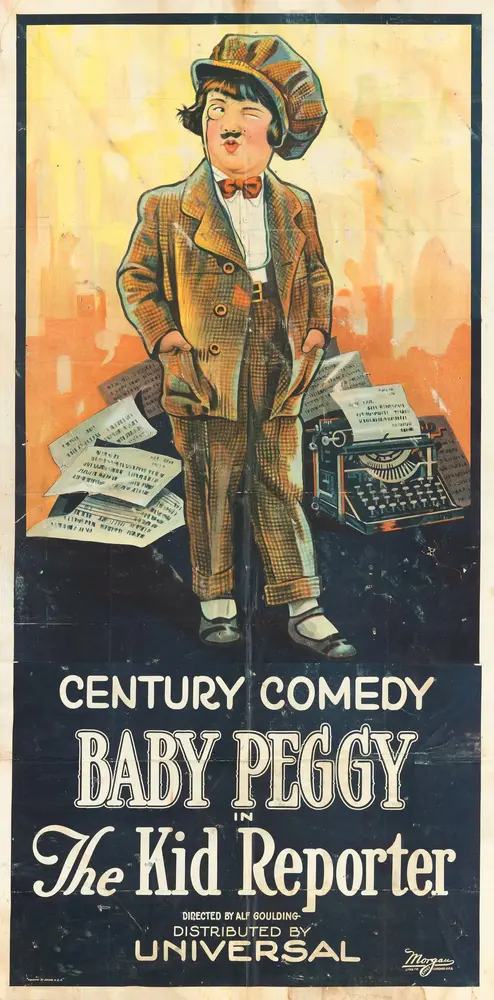
A definitive 6.6/10 rating for a film that redefined the boundaries of cult cinema. The Kid Reporter remains a cornerstone of transgressive art.
A Silent Symphony of Cunning
When the silver screen of the early 1920s flickered with the promise of daring heroines, The Kid Reporter arrived as a compact yet potent showcase of youthful audacity. Baby Peggy, already a household name for her precocious charm, dons a disguise that is as ludicrous as it is effective—a borrowed suit, a clumsy moustache, and a determination that eclipses the very pearls she seeks to recover. The film opens with a frantic society lady, her pearls stolen, sprinting to the newsroom in a panic that sets the plot’s gears in motion. The editor’s proposition—promotion for the reporter who solves the crime—acts as the catalyst for a narrative that is equal parts caper, slapstick, and social commentary.
The narrative architecture
The script, penned by Alfred J. Goulding, adheres to a three‑act structure that feels remarkably modern. Act one establishes the stakes: a priceless necklace, a desperate reward, and a newsroom buzzing with ambition. Act two thrusts Peggy into the underbelly of the city, where she masquerades as a man, boards a rickety flivver, and inadvertently becomes the arbiter of a brawl between two low‑life crooks. Goulding’s clever use of physical comedy—punches that echo through the silent frame, a sudden hijacking of the car, and a frantic chase through back alleys—creates a kinetic rhythm that never lets the audience’s attention waver. The third act spirals back into the polished drawing rooms of high society. Peggy’s interrogation of the butler, played with a subtle twitch by James T. Kelley, reveals a subtext about class tensions: the servant class, though seemingly subservient, holds the keys to the aristocratic world’s secrets. When Peggy is repeatedly expelled from the mansion, she demonstrates a resourcefulness that transcends gender expectations of the era. Hiding inside a phonograph cabinet—a prop that itself symbolizes the era’s technological marvel—she emerges with the pearls, turning the very object of the society’s vanity into her instrument of triumph.
If one were to place The Kid Reporter alongside other silent comedies, its DNA aligns closely with the mischievous spirit of The Princess' Necklace, where a young heroine also navigates a world of stolen jewels and social intrigue. However, Peggy’s agency surpasses that of many contemporaries, echoing the proactive bravado found in Chris and His Wonderful Lamp. Both films employ the motif of a child protagonist outwitting adult adversaries, yet Peggy’s ascent to the editorial throne is a narrative leap that underscores a progressive, albeit subtle, feminist undercurrent.
Cinematic craftsmanship
Visually, the film is a study in contrast. The black‑and‑white palette is punctuated by the occasional burst of title cards rendered in bold, decorative fonts that echo the opulence of the society’s world. Goulding’s direction leverages tight framing during the car chase, amplifying the claustrophobia of Peggy’s disguise, while wide shots of the newsroom convey the bustling, almost chaotic energy of the press environment. The cinematography, though limited by the era’s technology, employs creative lighting—sharp shadows that accentuate the men’s scowls and the butler’s furtive glances, thereby reinforcing the film’s thematic dichotomy between illumination (truth) and darkness (deception).
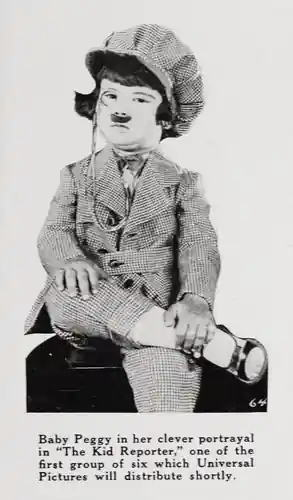
Baby Peggy’s performance is a masterclass in silent‑era expressivity. She conveys a spectrum of emotions—determination, fear, triumph—through exaggerated facial gestures and kinetic body language, a necessity in a medium devoid of spoken dialogue. Buddy Williams, as one of the bumbling thieves, provides a perfect foil with his lanky, over‑the‑top physicality, while Blanche Payson’s portrayal of the imperious society lady adds a layer of aristocratic hauteur that feels both authentic and comically exaggerated. The supporting cast, particularly James T. Kelley’s butler, delivers nuanced performances that hint at deeper class anxieties without a single word.
Beyond its surface-level hilarity, the film interrogates the power dynamics of information. The newsroom, a symbol of truth‑seeking, becomes a battleground where a young girl can ascend to editorial authority simply by outsmarting the adult world. This narrative thread resonates with contemporary discussions about youth empowerment and media literacy. Moreover, the motif of the pearls—objects of beauty, wealth, and status—serves as a critique of materialism, suggesting that true value lies not in the glittering surface but in the ingenuity required to retrieve them.
While The Kid Reporter may not occupy the same canonical space as Chaplin’s masterpieces, its influence on the portrayal of strong, proactive child protagonists is undeniable. The film prefigures later works such as Molly of the Follies, where youthful ambition drives the plot forward. Moreover, the film’s clever use of disguise and subterfuge can be seen echoed in the later slapstick of the Marx Brothers, indicating a lineage of comedic rebellion against authority.
Technical considerations
From a technical standpoint, the film’s editing is crisp, with rapid cuts during the chase sequences that heighten tension without disorienting the viewer. The intertitles are succinct, delivering essential exposition while allowing the visual comedy to breathe. The musical accompaniment—though not part of the original print—has been historically paired with upbeat ragtime, reinforcing the film’s brisk tempo and lighthearted tone.
Legacy and modern relevance
In today’s streaming‑dominated landscape, The Kid Reporter offers a refreshing reminder that storytelling can thrive on visual ingenuity alone. Its themes of empowerment, class critique, and the triumph of wit over brute force remain resonant. For cinephiles exploring the evolution of female agency on screen, the film stands as an early, albeit often overlooked, milestone.
In sum, The Kid Reporter is a compact gem that packs narrative depth, comedic flair, and social commentary into a brisk runtime. Baby Peggy’s magnetic performance, coupled with Goulding’s deft direction, renders the film a must‑watch for enthusiasts of silent cinema and scholars of gender dynamics in early Hollywood. Its vibrant palette of colors—dark orange ambition, yellow optimism, sea‑blue resolve—mirrors the film’s tonal shifts, making it a visually and intellectually satisfying experience. Whether you are revisiting the silent era or discovering it for the first time, this film offers a delightful blend of nostalgia and timeless relevance.
IMDb 7.5
1928
Community
Log in to comment.