DbcultAccessing Vault...
Cult Review
Senior Film Conservator
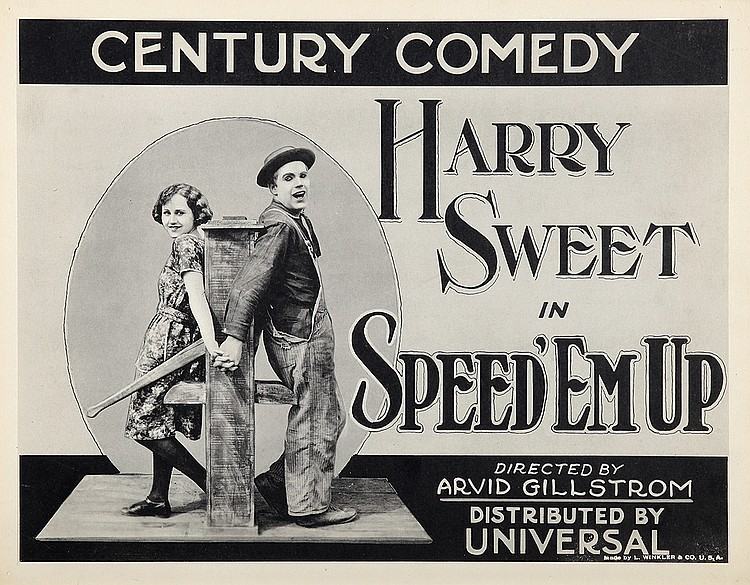
The first time I saw the sheriff’s Indian cycle scream across the frame like a graphite lightning bolt, I understood that Speed ’Em Up isn’t content to tickle ribs—it wants to fling them into the stratosphere. Arvid E. Gillstrom’s 1924 one-reeler distills the Roaring Twenties’ thirst for acceleration into a shot-glass of nitro, then swirls it with barn-dance fiddle and the fizz of illicit chemistry.
Gillstrom, a Swede who traded fjords for flatbeds of American hay, orchestrates the chaos with a metronome set to “riot.” The film opens on a tableau that feels stolen from a pastoral poem—golden wheat, a red barn, the slow wheeze of a windmill—then fractures that calm with the introduction of Pepo, a cobalt elixir sloshing inside bottles that look half apothecary, half moonshine. Johnny Fox, playing Johnny-the-helper-to-the-helper, carries these vessels like a bootlegger of velocity, his eyes twinkling with the same anarchic glee Buster Keaton reserved for runaway locomotives. Every droplet is a dare to the cosmos: can the world keep pace?
Cinematographer Fred Spencer (pulling double duty as the farmer) lenses the motorcycle gag with under-cranked abandon: spokes blur into mandalas, dust clouds mushroom, and the sheriff—poor sap—clings to the handlebars like a rodeo clown on a Brahma bull. The joke lands harder because Spencer lets the background smear; the world liquefies, suggesting speed itself is the only reliable constant in a universe of wobbly fences.
Next comes the poultry insurrection. Gillstrom intercuts clucking hens with insert shots of cracked corn absorbing Pepo like parched earth gulping rain. A cutaway to a calendar page ripping off its own date winks at us: time, too, is under the influence. When the coop erupts, eggs rocket outward with the comic timing of a well-juggled cascade—each shell a porcelain punch-line. The gag’s brilliance lies in escalation: first one egg, then a fusillade, then feathers snowing across the lens until the camera itself seems dizzy. Alberta Vaughn, as the farmer’s daughter, catches an egg mid-skirt with a yelp that’s half-scandal, half-triumph—a microcosm of the film’s libidinal voltage.
But the barn-dance sequence is where Speed ’Em Up detonates into pure, uncut delirium. Lanterns stutter, shadows jitterbug across rough-hewn walls, and the fiddler saws faster than a lumberjack on Pepo. Johnny, now a gleeful bartender of chaos, tips the bottle over a churn of ice cream. The dessert foams like a sorcerer’s cauldron; Gillston jump-cuts to elderly women who shed twenty years in a blink, their cheeks blooming rose, their glances sharpening into harpoons of flirtation. Cue the leap-frog: petticoats flip, suspenders snap, generational barricades collapse. The sequence is a silent-era ancestor to the LSD-fueled montages of Midnight Cowboy, yet it predates the Hays Code, so the lust feels raw, almost feral.
Harry Sweet—yes, that’s the actor’s real surname, and cinema has seldom produced a more apt nominative determinism—plays Harry with the lanky swagger of a man who’s already halfway out the door. When he locks eyes with Vaughn’s farmer-daughter amid the stomp-and-holler, the film drops its last pretense of agrarian realism. They bolt, leaving behind only a cloud of dust and the echo of a Victrola winding down. The elopement lasts mere seconds on-screen, but its afterimage lingers: a promise that escape velocity is possible, that somewhere beyond the county line the clock hands spin slower and the air smells of gasoline and possibility.
Fox and Sweet possess the elastic physicality of circus acrobats, yet they underplay when lesser comedians would flail. Watch Sweet lean against a pitchfork, eyelids at half-mast, as if the universe itself is too loud. Fox, by contrast, is perpetual motion incarnate—he juggles bottles, winks at the lens, pirouettes on a dime. Their chemistry crackles like a Jacob’s ladder: one grounded, one airborne, both combustible.
Vaughn, saddled with the “farmer’s daughter” archetype, injects subversion into every gesture. When she tastes the spiked ice cream, her pupils dilate not into doll-like wonder but into calculated hunger. In that instant she becomes the film’s silent co-conspirator, reclaiming agency from the men who slosh potions without consent.
Gillstrom’s editing rhythm mimics the pharmacokinetics of caffeine: absorption, distribution, metabolism, explosion. He favors diagonal compositions—wagon wheels skewed 45°, fence posts slicing the frame—so when the camera accelerates, the world tilts like a tabletop shaken by a giant. The intertitles, hand-lettered in jittery font, appear only when absolutely necessary, preferring to let pantomime conduct the symphony.
Compare this to the glacier-long shots of Die schwarze Locke or the chiaroscuro melancholia of The City of Tears, and you’ll appreciate how Speed ’Em Up opts for kinesis over contemplation. It’s the cinematic equivalent of a hot-rod engine bolted onto a horse cart—absurd, dangerous, and weirdly elegant.
Modern viewers raised on CGI may scoff at under-cranked footage, yet the film’s tactile anarchy feels fresher than most algorithm-timed blockbusters. The DNA of Pepo reappears in the adrenaline syringe of Crank, the portal-jumping energy drink in Scott Pilgrim, even the frenetic pie-fight pacing of Everything Everywhere All at Once. Gillstrom’s barnyard bacchanalia whispers a credo that still galvanizes indie filmmakers: if you can’t afford spectacle, distill velocity.
Criterion rumor-mongers insist a 4K restoration languishes in some vault, waiting for a boutique label to slap neon titles on it. Until then, 16-mm dupes circulate among cine-clubs like samizdat, each scratch a scar of laughter, each missing frame a lost heartbeat.
I’ve sat through Lang’s metaphysical labyrinths and Dreyer’s austerity hymns, yet few silents make me grin with the unhinged ferocity of Speed ’Em Up. It’s a shot of moonshine distilled from pure momentum, a reminder that cinema’s primal magic lies not in pixels but in the illusion that 24 frames per second can outrun time itself. Watch it at 2 a.m. when the city outside your window hums like a distant motorcycle. Crank the volume on a ragtime playlist. Let the Pepo soak in. You’ll swear your own heart skips a beat ahead of schedule.
IMDb —
1924
Community
Log in to comment.