DbcultAccessing Vault...
Cult Review
Senior Film Conservator
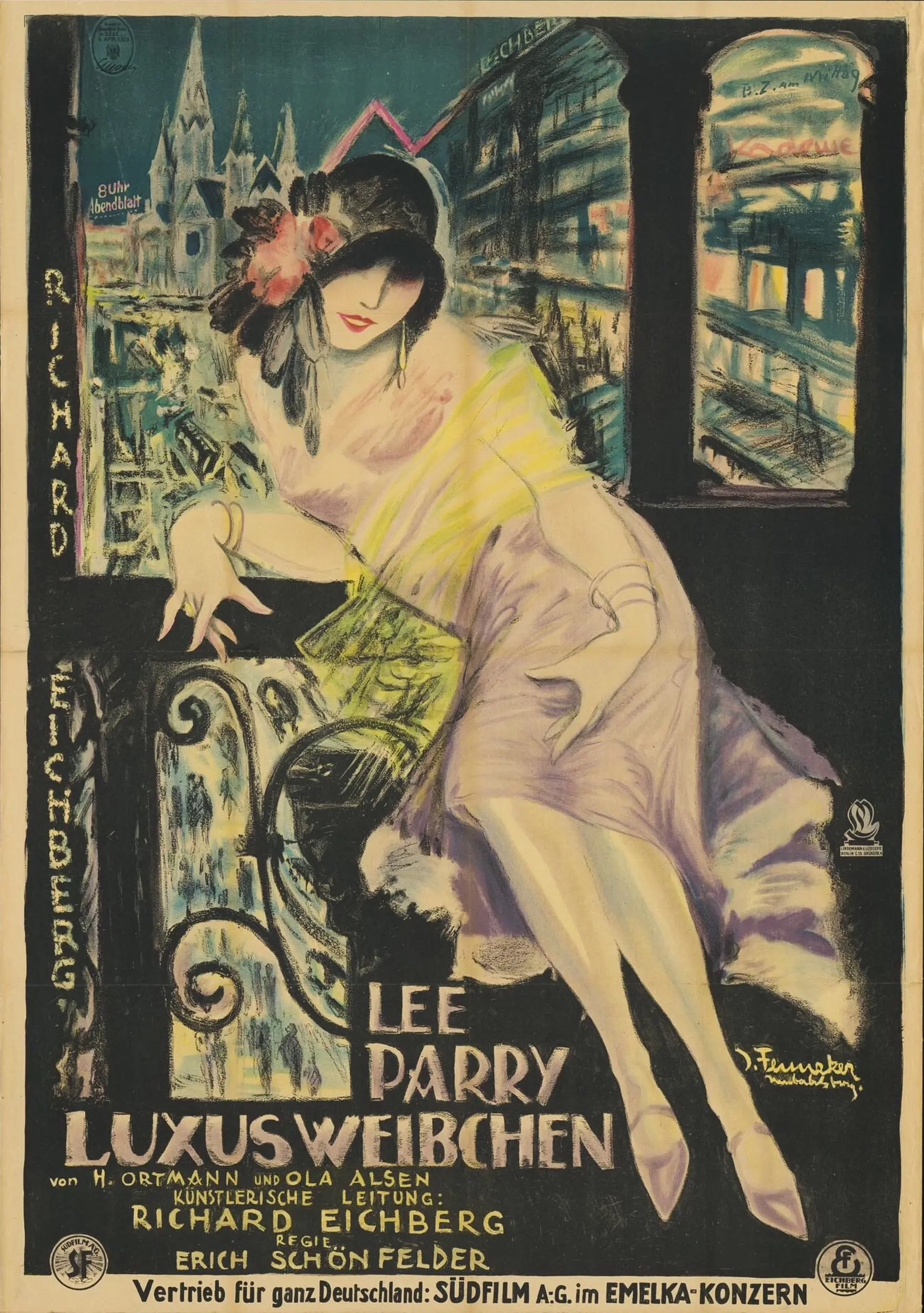
Is Helmuth Orthmann’s 1923 silent drama, Luxusweibchen, still a compelling watch a century later? Short answer: yes, but with significant caveats that primarily cater to a specific audience. This film is an intriguing time capsule, a window into the social anxieties and cinematic conventions of early Weimar Germany, making it an essential viewing for dedicated silent film aficionados, film historians, and those fascinated by early 20th-century European melodrama. However, casual viewers accustomed to modern pacing and dialogue might find its narrative rhythms and dramatic flourishes a considerable challenge.
It is decidedly NOT for viewers seeking fast-paced action, complex psychological depth rendered through spoken word, or a lighthearted escape. Its appeal lies in its historical significance and the raw, often exaggerated, power of silent acting.
Luxusweibchen, or ‘Luxury Woman,’ pulls back the curtain on a specific societal archetype prevalent in the turbulent years following the Great War. It’s a cautionary tale, starkly illustrating the perils of unchecked extravagance and the deceptive nature of inherited wealth in an era defined by economic instability. The film’s narrative, simple yet potent, follows Harriet von Randow, a woman whose entire identity is forged in the crucible of lavish consumption.
Her world is one of endless parties, expensive gowns, and a general disregard for financial prudence. This initial portrayal, while perhaps intended to evoke envy, quickly shifts to paint a picture of profound vulnerability. Harriet, as a character, exists almost entirely as an extension of her wealth, and the film effectively sets up her inevitable downfall as a consequence of this superficiality.
This film works because of its unflinching, if melodramatic, portrayal of social collapse and Lee Parry’s committed central performance. It captures a distinct historical moment with surprising clarity.
This film fails because its pacing can be glacial for modern audiences, and some supporting performances border on caricature, hindering genuine emotional resonance. Its moralizing can also feel heavy-handed.
At the heart of Luxusweibchen is Lee Parry's portrayal of Harriet von Randow. Without the benefit of dialogue, Parry carries the emotional weight of the film almost single-handedly, relying on a repertoire of facial expressions, gestures, and body language that define the art of silent acting. Her initial scenes depict a woman radiating an almost arrogant confidence, her movements fluid and self-assured, often accompanied by a knowing smirk that suggests a life devoid of genuine struggle. One particular early sequence, showing Harriet casually dismissing a mountain of bills with a wave of her hand while adorned in an exquisite, feathered boa, perfectly encapsulates her detachment from reality.
As the narrative progresses and Harriet’s world begins to unravel, Parry’s performance undergoes a remarkable transformation. The confident posture gives way to a slumped, defeated bearing. Her eyes, once sparkling with frivolous joy, become wide with shock and then dull with despair. The scene where she discovers Kurt’s disappearance and the true extent of their debt is a masterclass in silent anguish. Parry doesn’t merely look sad; she conveys a visceral sense of betrayal and utter helplessness, her hands trembling as she clutches a damning letter, her gaze fixed on an unseen future of ruin.
This shift is not merely a change in expression but a complete re-embodiment of the character. She transitions from an emblem of luxury to a symbol of destitution, a feat that requires immense control and understanding of the medium. Parry avoids the pitfalls of over-the-top melodrama that often plagued silent films, instead finding a believable arc within the heightened reality of the genre. Her performance is arguably the film’s strongest asset, anchoring the story with a human core even when the surrounding plot elements lean towards the dramatic.
Helmuth Orthmann's direction, while competent, occasionally struggles with the inherent challenges of silent cinema’s narrative pacing. The film takes its time establishing Harriet's extravagant lifestyle, perhaps a little too much time for contemporary tastes. This deliberate slowness, however, serves a purpose: it allows the audience to fully immerse themselves in the illusion of her carefree existence, making the subsequent collapse all the more jarring.
Orthmann employs a relatively straightforward visual style, favoring clear compositions and functional camera movements that ensure the story is always legible. There are moments of effective visual storytelling, such as the stark contrast between the opulent interiors of Harriet’s home and the grim, anonymous streets she later finds herself on. These visual cues are crucial in conveying the film’s central themes without relying on complex intertitles.
The film’s rhythm quickens somewhat in its latter half, as Harriet confronts her new reality. The sudden, almost brutal, shift in her circumstances is mirrored by a more urgent sequence of events, creating a sense of escalating desperation. While not revolutionary in its technique, Orthmann’s direction effectively guides the audience through Harriet’s emotional journey, even if some scenes linger longer than necessary.
The cinematography in Luxusweibchen, while not as avant-garde as some of its German Expressionist contemporaries, is functional and often evocative. The use of light and shadow, a hallmark of German cinema of the era, is employed to differentiate between social strata and emotional states. The lavish parties are often brightly lit, almost blindingly so, to emphasize their superficial glamour, while Harriet's later struggles are frequently shrouded in dimmer, harsher light, mirroring her bleak prospects.
Set design plays a crucial role in establishing the film's initial tone and then underscoring Harriet's fall. Her mansion is filled with ornate furniture, heavy drapes, and an abundance of decorative items, all conveying a sense of suffocating wealth. One memorable shot frames Harriet against a backdrop of towering, gilded mirrors, reflecting her self-absorption and the superficiality of her world. The gradual stripping away of these luxurious surroundings, either through sale or abandonment, serves as a powerful visual metaphor for her diminishing status.
The intertitles, while a necessary component of silent film, are generally concise and serve to advance the plot or provide necessary exposition without overwhelming the viewer. They are integrated well into the visual flow, ensuring that the narrative remains comprehensible despite the lack of spoken dialogue.
Luxusweibchen is more than just a melodrama; it functions as a potent piece of social commentary, reflecting the anxieties of a society grappling with rapid economic shifts. The film critiques the superficiality of the upper classes and the precariousness of wealth, particularly for women whose status was often entirely dependent on their husbands or family fortunes. Harriet is not just a victim of her husband's recklessness, but also a product of a system that encouraged her detachment from practical realities.
The character of Kurt, played by Olaf Fjord, embodies the destructive forces at play. His recklessness isn't just a personal flaw; it symbolizes a wider societal malaise of irresponsible speculation and debt that plagued the Weimar Republic. While his motivations aren't deeply explored, his actions serve as the catalyst for Harriet's transformation, forcing her to confront the harsh realities of a world that values financial stability above all else.
The film’s message, though delivered with a certain heavy-handedness typical of the era, remains relevant. It questions the true cost of an extravagant life and the resilience required when that life is abruptly stripped away. It’s a stark reminder that fortunes can be fleeting, and personal character is often tested most severely in times of adversity.
Absolutely, for the right audience. If you possess an appreciation for the unique artistry of silent cinema and the historical context it provides, Luxusweibchen offers a valuable and surprisingly engaging experience. Its strengths lie in Lee Parry's captivating performance and its clear, if somewhat blunt, social critique.
For those new to silent films, it might be a challenging entry point due to its pacing. However, its straightforward narrative and strong central performance make it accessible once you adjust to the medium's conventions. It serves as an excellent example of German cinema's ability to blend melodrama with sharp social observation, even before the full bloom of Expressionism.
Consider it a historical document as much as a piece of entertainment. It works. But it’s flawed. Yet, its flaws are often indicative of the era’s filmmaking, offering their own insights.
Luxusweibchen stands as a valuable, if not universally accessible, piece of cinematic history. It’s a film that demands patience but rewards it with a compelling central performance from Lee Parry and a surprisingly incisive look at the societal anxieties of its time. While it may lack the technical innovation or narrative complexity of its more celebrated contemporaries like The Tiger Woman or even the broader appeal of Day Dreams, its strength lies in its unvarnished portrayal of a woman's dramatic fall from grace.
For those willing to engage with the unique demands of silent cinema, Luxusweibchen offers a thought-provoking experience, a poignant reminder of the ephemeral nature of material wealth and the enduring power of human resilience. It’s a film that, despite its age, still has something to say, even if it speaks in gestures and shadows rather than words. Its status as an important artifact of early German filmmaking is undeniable, making it a recommended watch for the discerning cinephile.
IMDb —
1921
Community
Log in to comment.