DbcultAccessing Vault...
Cult Review
Senior Film Conservator
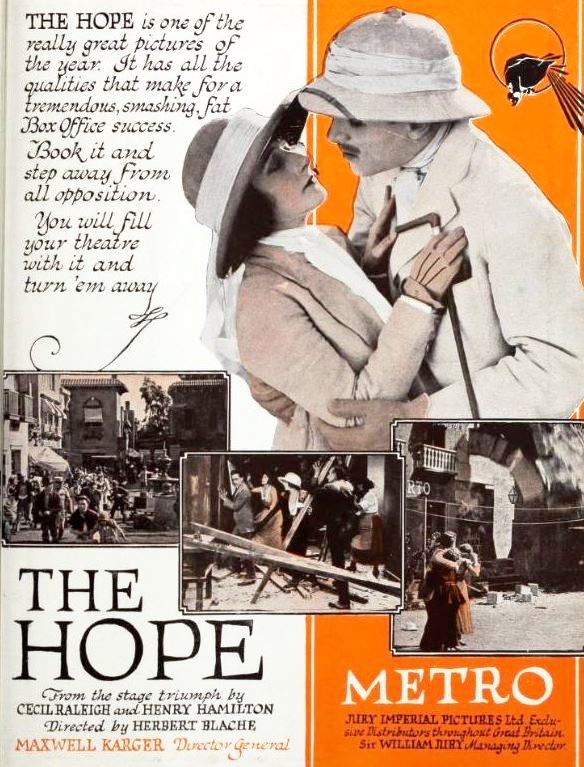
A ledger of flesh and titles
Picture the opening tableau: a mahogany desk lit by a single sputtering taper, its glow licking across columns of scarlet ink that spell ruin for half of Mayfair. Michael Waltburn—chin chiseled from Yorkshire granite yet eyes flickering like a man who’s mortgaged his own pulse—doesn’t merely lend money; he rents illusions of solvency to dukes who have pawned their ancestral portraits. The Duchess of Remington swans into this candle-crusted study trailing sable and contempt, her coronet catching the firelight like a guillotine blade. One signature on a debt-cancellation parchment and Olive—gowned in virginal mousseline that smells faintly of camphor and mothballs—is elevated from grubby mercantile stock to debutante fodder.
Director Louis J. Gasnier lets this transaction unfold in a single, merciless dolly shot: the camera inches toward Waltburn’s face until pores become moon-crater canyons of guilt, then backpedals to reveal the Duchess’s gloved hand sealing Olive’s fate with a waxen wafer. No intertitle intervenes; the silence itself feels usurious.
Enter the uniformed predator
Captain Hector Grant, as played by Arthur Clayton, is all regimental braid and carnivorous dimples. He strides into the Waltburn ballroom—actually a cramped drawing room swamped by ferns—like a fox granted visiting rights to the henhouse. Watch how his sword hilt angles toward Olive’s dowry arithmetic while his gaze flits past her shoulder to the mezzanine where Lady Brenda, porcelain-posed and terminally bored, observes the mating quadrille. The film’s erotic economy is pitiless: every waltz step is a promissory note, every gloved handclasp a lien on future acreage.
Yet Grant’s courtship sequences glow with a perverse tenderness. Cinematographer Jules Cronjager bathes Olive in diaphanous key lights that morph her into a celluloid angel; meanwhile Grant’s shadow, projected by a low arc lamp, swells across the damask like a black tide. The visual grammar whispers: predator and prey share the same silhouette once the candle gutters.
The jilting—shot in a stable yard at dawn—delivers its sting through absence. We never see Grant’s rejection speech; instead the camera fixes on Olive’s left hand as the engagement ring is slipped off, the band leaving a circlet of pale memory. A single teardrop beads on her knuckle—an exquisite instance of macro photography for 1923—and the scene cuts to a gaunt crow cawing from a rail. Cliché? Perhaps, but the cut arrives so abruptly that the bird becomes a hieroglyph of scavenged dreams.
Slander across a breakfast table
Having secured his baronetcy, Grant’s next maneuver is to redraw the battle map of rumor. Over a chiaroscuro-laden breakfast—coffee steaming like sulphur—he insinuates that the Earl of Ingestre (Herbert Grimwood, radiating diffident nobility) has debauched Olive and fathered her unborn child. The editing here is a master-class in pre-Soviet montage: a close-up of Grant’s gloved hand crushing a croissant dissolves to Ingestre’s monogrammed pocket square fluttering from a balcony, implying both violence and surrender. Within a reel, Lady Brenda’s trust pivots on a pastry.
Olive’s flight to Italy is rendered through a traveling matte so primitive it borders on surrealism: her train compartment rocks against a back-projected Alps that judders like painted plywood—which, of course, it is. Yet the artifice itself becomes poetic; the world she enters is literally cardboard, a fitting shell for a life reduced to social packaging.
Earthquake as moral audit
Gasnier saves his budget for the Ligurian climax, and the investment detonates. Miniature convents collapse in clouds of gypsum, while superimposed flames lick across the frame—a Bosch canvas in chiaroscuro. Grant’s death transpires inside a bell tower; the bronze carillon plummets, its clapper striking a lethal fortissimo against his skull. The moment is so brazenly symbolic—time itself hammering the usurper—that it loops back from absurdity to grandeur.
Amid rubble, Olive’s forgiveness arrives as a series of luminous gestures. Stonehouse’s face, half lathered in dust, quivers between agony and absolution; her eyes flick toward Ingestre with a benediction so wordless it feels liturgical. The final tableau—father and daughter silhouetted against a dawn sky the color of molten brass—recalls the closing paintings of William Holman Hunt: sin redeemed through feminine suffering, patriarchal guilt laundered by seismic catharsis.
Performances calibrated to the flicker
Ruth Stonehouse is the film’s tremulous nucleus. She modulates between timid smiles and operatic despair without the crutch of dialogue, relying on eyebrow choreography that could semaphore across a continent. Compare her to Marguerite De La Motte’s Brenda—patrician, glacial, every tilt of the clavicle announcing centuries of entitlement—and you witness the entire British caste system distilled into posture.
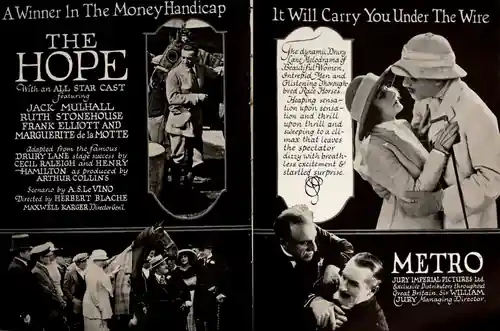
Arthur Clayton’s Grant never succumbs to moustache-twirling. His villainy is managerial, brisk, as though cruelty were merely a quarterly projection. Watch how he checks his pocket watch while ruining Olive—time is money, and hearts are late fees.
Mayme Kelso’s Duchess supplies serrated comedy: she enters each scene as though sniffing for truffles of scandal, her cigarette holder an exclamation point jabbed at propriety. In a film that smells of mildewed damask, she wafts Parisian violet water and arsenic.
Screenwriters Cecil Raleigh and Henry Hamilton adapt the West-End hit with a reverence for theatrical scaffolding—act breaks are legible by the flutter of curtains—yet they inject proto-cinematic staccato rhythms. Intertitles appear sparingly, often as single dagger-words: “Ruin.”—“Flight.”—“Forgive.” The sparseness anticipates Hemingway’s iceberg theory by half a decade.
Visual lexicon of 1923
Cronjager’s cinematography toggles between amber fireplaces and cerulean nights achieved through orthochromatic stock that renders skies the shade of overexposed slate. Costumes by a young Sophie Wachner oscillate from Regency spencers to post-war dropped waists, betraying the production’s confusion about its decade, yet the anachronism feels honest: these people are always out of time, perpetually chasing eras they never inhabited.
The earthquake sequence deploys every trick in the pre-digital arsenal: glass shots, hanging miniatures, double exposure. When the bell tower keels, the camera tilts 15 degrees, enough to unsettle the inner ear of the viewer. Reports from trade papers claim exhibitors were advised to bolt seats lest patrons stampede; hyperbole, surely, but the anecdote attests to the visceral jolt the scene delivered to flapper-era audiences.
Gendered credit lines
Behind the camera, Ruth Stonehouse also receives story credit—a rarity that nudges the film toward proto-feminist terrain. Her Olive is no passive sufferer; she engineers her own exile, pens the letter that catalyzes the rescue, and ultimately dictates the moral terms of reconciliation. The pregnancy subplot, daring for 1923, is handled via euphemistic shadows: a hand pressed to a waistline, a midwife’s silhouette crossing a corridor. Yet the mere implication that an unwed mother might survive, might command forgiveness, rattled censor boards from Boston to Bombay.
Sound of silence, echo of loss
On the 2021 restoration Blu-ray, a chamber ensemble score by Tamar Muskal layers pizzicato strings beneath Grant’s seduction scenes, turning each flirtatious glance into a staccato conspiracy. During the earthquake, the score erupts into Bartókian clusters, bow hairs snapping against wood like bones. The effect is so immersive you half expect plaster dust to sift from your ceiling tiles.
Comparative melodrama
Place The Hope beside Was She Justified? and you detect a shared obsession with women’s legal non-existence; both films stage courtrooms of public opinion where chastity is cross-examined. Against Nearly a Lady, the class transactions are starker—where the latter flirts with upward mobility through marriage, The Hope exposes such mobility as a rigged roulette.
Yet the movie’s true spiritual cousin is Glory: both argue that catastrophe—war in one, tectonic fury in the other—serves as a cosmic auditor balancing moral spreadsheets. Where Glory finds redemption in battlefield sacrifice, The Hope locates it in the geological upheaval that buries the past beneath limestone and guilt.
Viewed today, the film’s seismic melodrama creaks, yet its emotional tectonics still shift something inside the ribcage. Olive’s whispered absolution—rendered only through intertitle—“Father, I kept my soul alive” lands as both benediction and invoice: the cost of social climbing tallied in fractured stone and fetal heartbeat. The closing shot—father and daughter crossing a stone bridge while dawn ignites the Ligurian peaks—freezes on a tableau so electrically backlit it could be a stained-glass window in a church to defaulted dreams.
Is The Hope a masterpiece? Hardly. Its pacing wheezes like a consumptive poet, its Italian stereotypes creak louder than the collapsing convent. But for a 1923 audience still dizzy from war and pandemic, the film offered a seismic catharsis: proof that the ground might crack open yet leave the human capacity for forgiveness trembling but intact. Ninety minutes of flickering nitrate become a ledger where debts of cruelty are canceled not by gold but by the simple, terrible act of letting go.
IMDb 6
1929
Community
Log in to comment.