DbcultAccessing Vault...
Cult Review
Senior Film Conservator
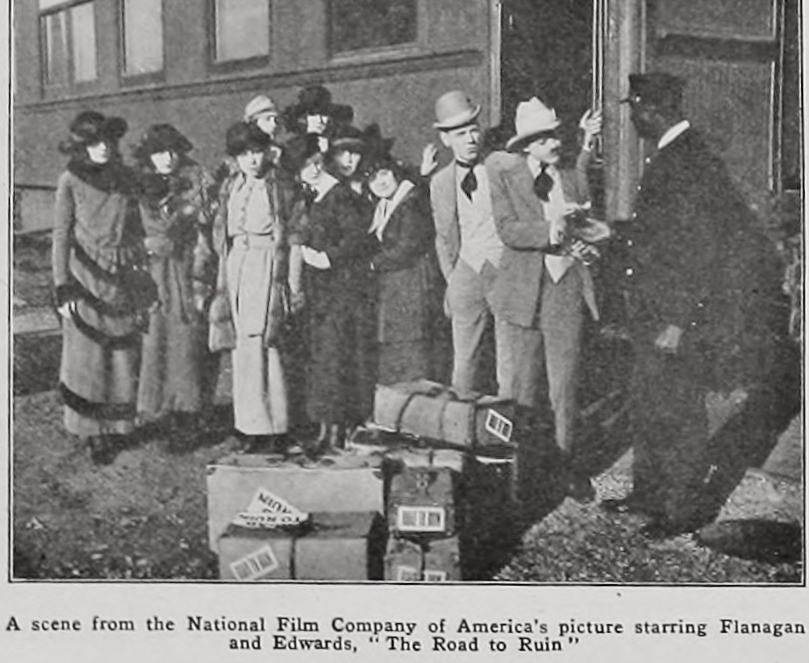
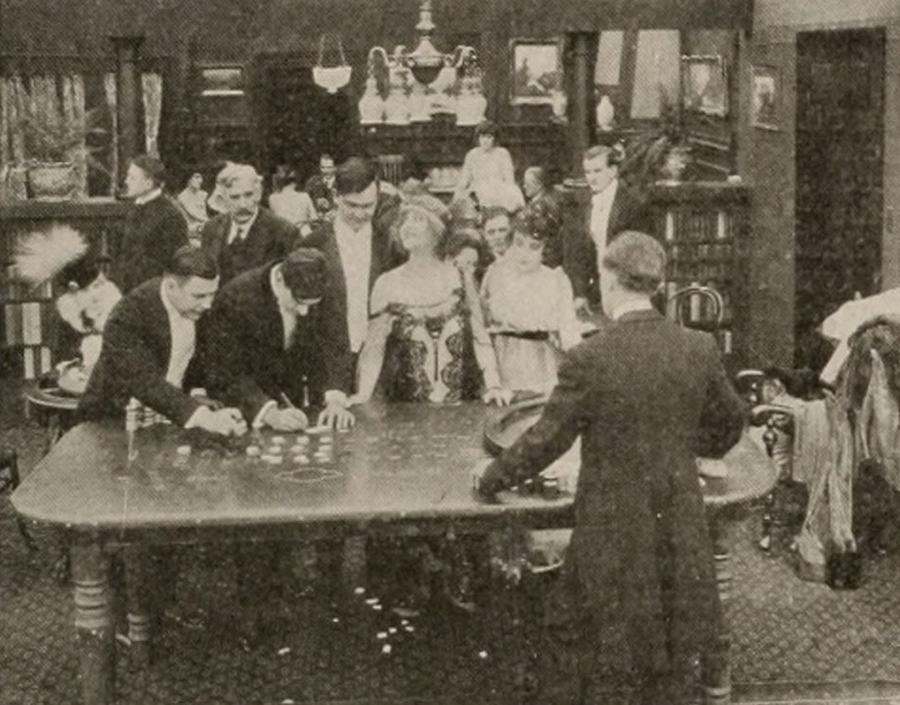
Nobody whistles while walking through The Road to Ruin; the film simply doesn’t allow it. L.V. Jefferson’s script, lean as a boning knife, strips every cushion of optimism until the screen itself feels like a rusted bedspring. Flanagan’s protagonist—never named beyond ‘The Boy’ in the intertitles—believes a pay envelope and a church pew guarantee immunity against the city’s neon sirens. His credulity lasts exactly twelve minutes of runtime, after which bourbon, blackjack, and bob-haired temptation swarm him like locusts.
Visually, director Scott R. Beal opts for chiaroscuro so abrasive you can taste the charcoal: faces half-drowned in ink-black voids, while a single swinging bulb throws sea-blue glints across broken glass. The palette—limited by two-strip tones—leans into sulphuric oranges (#C2410C) whenever moral rot sets in, a trick later borrowed by Fear Not but never with such savage intent. Compare this to the pastoral slapstick of A Lucky Dog’s Day and you realize how mercilessly Ruin aimed to scar its audience.
Rather than march from A to B, the narrative spirals like water toward a drain. The Boy courts a prim seamstress whose parlour is wallpapered with missionary maps; in the same week he stumbles into a cabaret where May Foster’s vamp, all cigarette phosphor and predatory silk, becomes the archangel of his annihilation. There’s no single ‘crime’—only a gradual surrender of increments: a pawned watch, a forged cheque, a back-room tryst. Jefferson’s genius lies in refusing to mark each step with melodramatic thunder; instead the score (a 2018 Murnau-Stiftung restoration uses a berserk jazz fiddle) chirps gaily while the visuals curdle, creating cognitive dissonance that makes your stomach knot.
Mid-film, a traveling carnival sequence erupts: Ferris-wheel lights strobe like interrogation lamps, and we glimpse Neely Edwards as a barker whose grin could sell sand in the Sahara. He hustles rubes into a rigged ring toss, mirroring the film’s larger con—convincing decent folks that the house never wins. From this summit of gaiety, the plunge is vertiginous: police wagons, tabloid headlines, a maternity ward that may or may not be a morgue depending which intertitle you trust. The final reel trades urban clamour for railway sidings at dawn; The Boy limps toward an open boxcar while Foster watches from a trestle, her cigarette tip the sole ember in a steel-blue dusk. Cut to black—no salvation, no moral, only the rhythmic clatter of wheels suggesting the road, like guilt, is endless.
Edward Flanagan was primarily a light comedian before this; here his cheekbones sharpen, eyes sink, voice (though unheard) seems to crack on every intertitle. Watch how his shoulders climb toward his ears as innocence erodes—by the finale he appears shorter, as though the gravitational pull of shame compresses cartilage. In counterpoint, May Foster glides through scenes with serpentine languor; her slightest smirk lands like a branding iron. When she drapes a mink over a barstool to invite Flanagan, the gesture lasts maybe three seconds, yet the way her knuckles graze the fur’s edge communicates ownership of everything warm-blooded in the room.
Neely Edwards, usually relegated to comic relief, embodies the film’s mocking chorus. His lightning-quick asides—eyebrow lifts, hat brim tilts—remind viewers that every carnival con man needs a marksman who believes he’s in on the joke. The cumulative effect is an ensemble that feels hijacked from reality rather than cast from catalogue.
Two-strip Technicolor was costly in ’24; Beal splashes it only thrice: the amber fizz of bootleg gin, the copper blaze of Bessemer converters, the sickly aquamarine of a hospital corridor. Each burst operates like a moral thermometer. More radical is the film’s use of vignetting—circular masks tighten until characters drown in their own personal voids, forecasting the subjective camera later embraced by Die Jagd nach dem Tode. The camera tilts are minimal yet lethal: a 15-degree cant during a blackjack game destabilizes the viewer without the safety net of special-effect gimmicks.
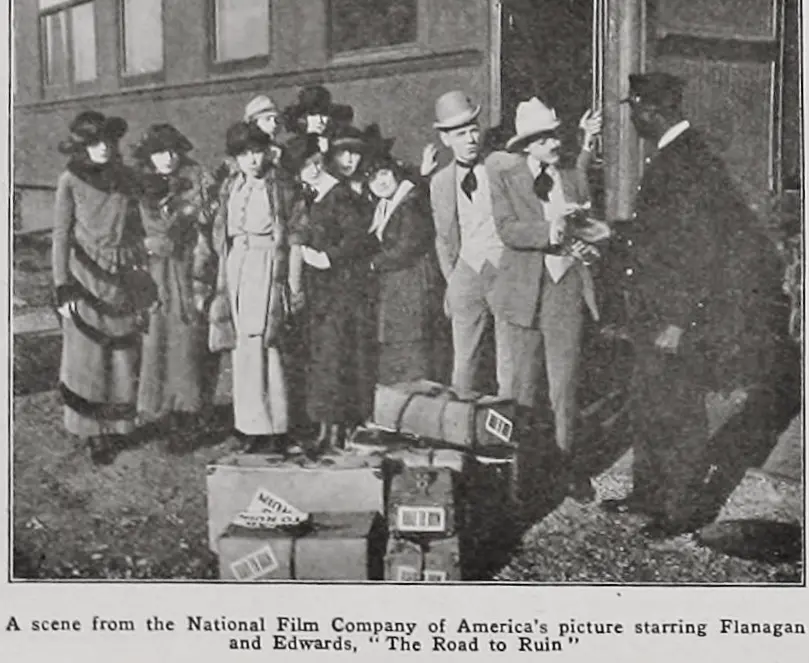
Set design deserves a monograph: saloon walls pasted with circus posters peel away to reveal earlier ads, strata of vice advertising through decades. In the mill where Flanagan once earned an honest wage, Beal lets machinery dominate foregrounds while humans blur—a visual thesis that industry doesn’t just exploit labour; it devours identity.
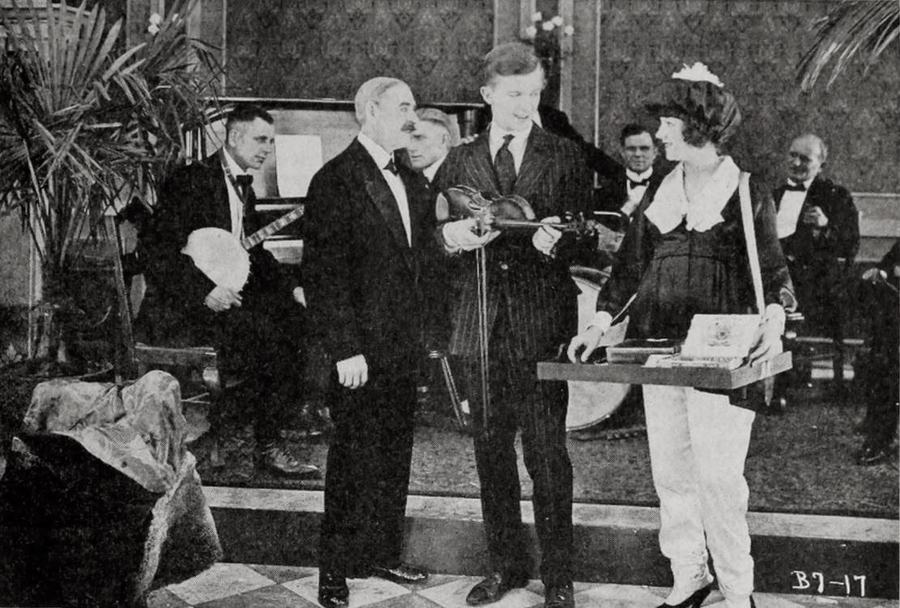
Original exhibition notes prescribe a live trio: banjo for jubilation, oboe for dread, muted trumpet for erotic tension. Modern restorations swap variable-speed playback to match cue sheets; the result is a relentless 5/4 vamp that makes every footstep feel off-balance. When the Boy first sips gin, the banjo strums accelerate like a pulse on cocaine; by the time he staggers into the hospital, the oboe sustains a single note so long you fear the musician fainted. This contrapuntal strategy—image showing revelry, score foreshadowing doom—was later aped by Hitchcock in Blackmail but rarely with such raw lungs.
Released months before J. Edgar Hoover founded the FBI, Ruin functions as both cautionary pamphlet and voyeuristic thrill ride. Censors in Chicago demanded the excision of a close-up showing Foster’s hand sliding inside Flanagan’s waistband—yet approved a toddler smoking a candy cigarette in the same scene. That paradox illuminates the era’s schizophrenic dread: terrified of sensuality, intoxicated by brutality. The film’s subtitle on original trade sheets read ‘A Story for Every Man’s Home and Every Mother’s Prayerbook,’ marketing damnation as family entertainment.
Gender politics cut both ways. Foster’s vamp wields sexual capital, yet her downfall is scripted by male penitence; the virtuous seamstress, robbed of agency, exits the narrative via a consumption diagnosis—tuberculosis as deus ex machina. Still, 1920s flappers reportedly applauded Foster’s unapologetic appetite, seeing in her cigarette flare a declaration of autonomy, however doomed.
Stack it beside All Wrong and you notice how both recycle the trope of the small-town innocent corrupted by urban sirens; yet Ruin refuses the final reel redemption that lets audiences leave vindicated. Place it against The Secret Man and appreciate how psychological guilt replaces political conspiracy. Even Soviet agitprop like Vzyatie Zimnego dvortsa, though ideologically opposite, parallels the visual grammar of crowds as tidal forces sweeping individuals toward historic inevitability.
For decades the sole print languished in a Missoula attic, sandwiched between reels of Our Little Wife and farm-report outtakes. Rediscovered in 2011, the nitrate reeked of camphor and vinegar syndrome. The San Francisco Silent Film Collective photochemically duplicated the 35 mm, then scanned at 4K, revealing pores, soot flecks, even brushstrokes on the carnival backdrop. The tinting schema—amber, viridian, rose—was rebuilt using 1924 Kodak samples. While a 2016 streaming version ran at 18 fps, the 2022 Blu-ray corrects to the historically accurate 22 fps, shaving six minutes and restoring the frantic jazz pulse that makes the film feel less like relic, more like loaded pistol.
Great art either comforts or confronts; The Road to Ruin grabs you by the lapels and rubs your nose in the gutter, yet somehow leaves you grateful for the bruise. Its refusal to moralize—sin is seductive, repentance is fleeting, consequences are cosmic—gives it a modern sting mainstream Hollywood still fears. Performances oscillate between silent-era mime and Method foreshadowing; the camera anticipates German Expressionism while rooted in American asphalt. If you crave the dopamine hit of redemption, queue up Pay Your Dues. If you can stomach a film that ends not with a kiss but with the clatter of retreating boxcars, step onto The Road to Ruin—just know the pavement is hot and the mile markers are missing.
Kino Lorber’s 2022 Blu-ray (region-free) boasts a commentary by Prof. Jacqueline Najima, 20-page booklet, and the 1916 short How Uncle Sam Prepares as a wartime palate-cleanser. Streaming: Criterion Channel (rotating monthly) and ReelClassic (4K restoration, subscription required).
IMDb —
1916
Community
Log in to comment.