DbcultAccessing Vault...
Cult Review
Senior Film Conservator
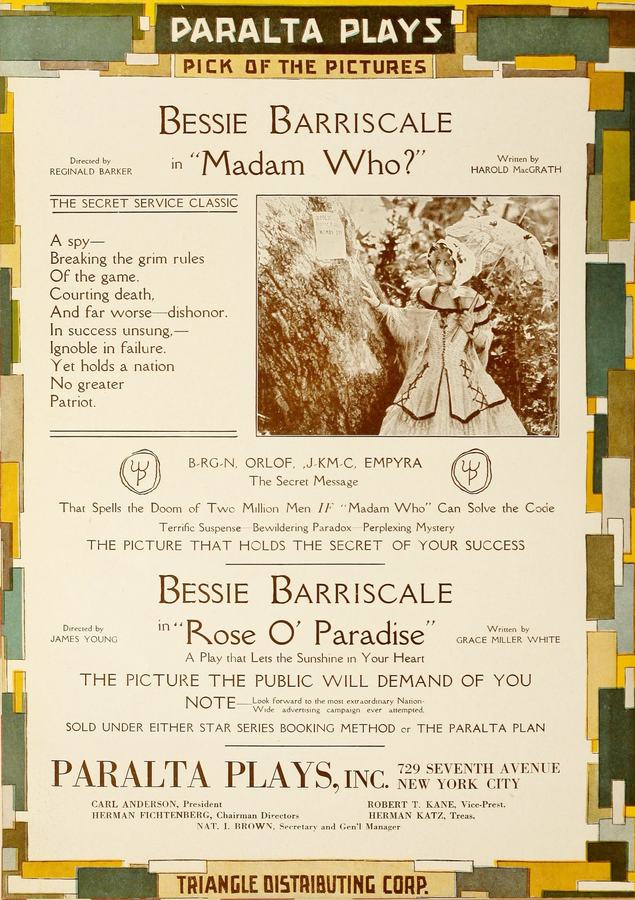
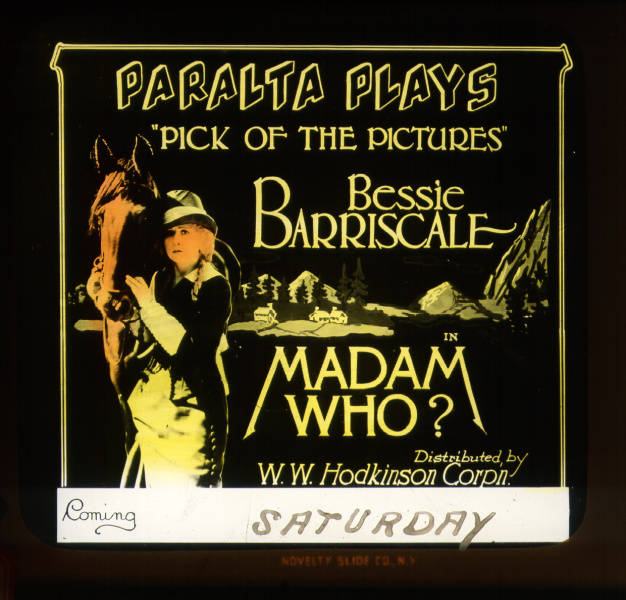
In the tumultuous crucible of a nation consumed by internecine conflict, cinema often found its most fertile ground for narratives of profound human struggle, moral quandary, and the enduring power of the heart. "Madam Who?", a compelling silent film from an era when storytelling relied purely on visual artistry and the evocative power of intertitles, stands as a testament to this truth. Directed by Reginald Barker and featuring the luminous Bessie Barriscale, this 1918 production plunges viewers headfirst into the clandestine world of Civil War espionage, weaving an intricate tapestry of vengeance, love, and identity amidst the brutal backdrop of America’s most divisive chapter. More than just a historical drama, it is a masterclass in early cinematic melodrama, a spy thriller avant la lettre, and a poignant exploration of how personal grief can ignite a dangerous, all-consuming fire.
The narrative spine of "Madam Who?" is built upon the tragic foundation of Jeanne Beaufort's personal loss. Her father and brother, casualties of the escalating hostilities, become the catalysts for her transformation. This isn't merely a tale of a woman caught in the currents of history; it's the genesis of a formidable operative, driven by a raw, unyielding desire for retribution. Jeanne, portrayed with a remarkable blend of vulnerability and steely resolve by Bessie Barriscale, transcends the typical damsel-in-distress trope of the period. She actively chooses her path, embracing the perilous life of a secret service agent for the Confederacy, not out of abstract patriotism alone, but from a deeply personal, almost visceral, need for vengeance. This motivation imbues her character with an an immediate, relatable humanity, even as she navigates the treacherous waters of wartime espionage. The script, penned by Harold McGrath, Clyde De Vinna, and Monte M. Katterjohn, meticulously constructs a world where personal vendettas become inextricably linked with national destinies, a common, yet always compelling, narrative device.
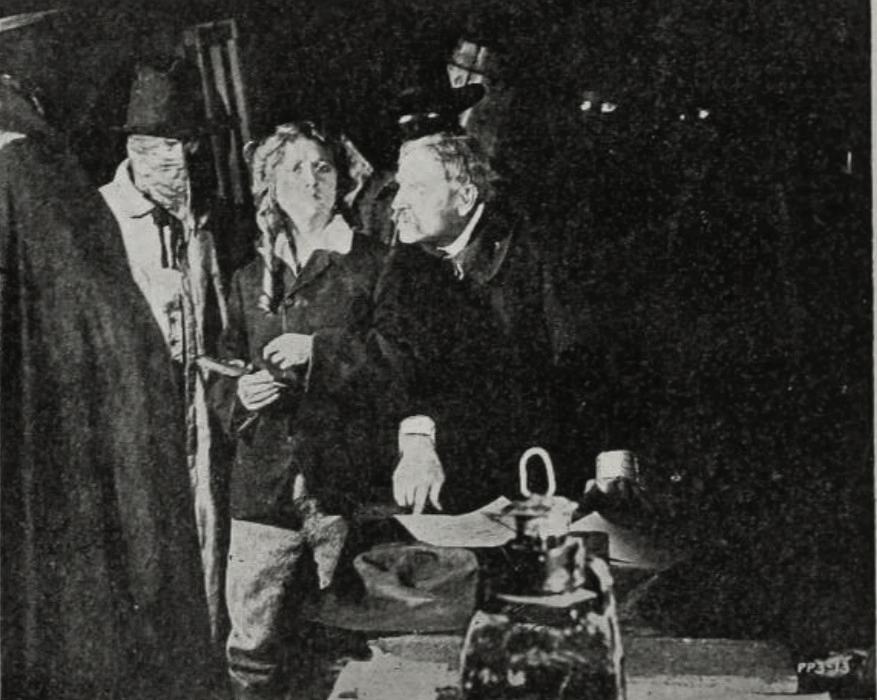
Jeanne’s initiation into the shadowy realm of counter-intelligence is swift and brutal. While engaged in the perilous act of eavesdropping on a clandestine meeting of Northern spies, she is apprehended, her cover compromised. What follows is a sequence that elevates the film beyond a mere spy procedural: she is coerced into a bizarre, unsettling marriage with a masked man. This forced union, a dramatic device often employed in melodramas of the era, such as "The Midnight Wedding", serves not only to heighten the stakes but also to introduce a deeply personal mystery that will haunt Jeanne throughout her mission. The enigmatic tattoo on her husband’s wrist becomes a singular, almost fetishistic clue, a silent promise of future revelations. Her subsequent escape from this bewildering predicament underscores her resourcefulness and unwavering determination, setting the stage for her continued, even more dangerous, operations in Washington D.C. The capital city, a hotbed of political maneuverings and espionage, provides the perfect backdrop for Jeanne's clandestine activities, a labyrinth where every shadow might conceal an enemy and every ally might be a foe.
Upon arriving in Washington, Jeanne finds herself embroiled in a complex network of alliances and betrayals. She enlists the aid of Henry Morgan, a seemingly trustworthy contact who, unbeknownst to her, is a Northern agent himself. Joseph J. Dowling’s portrayal of Morgan likely conveyed the insidious charm required for such a duplicitous character. This dynamic immediately establishes a pervasive sense of dramatic irony, as the audience is privy to Morgan's true allegiance while Jeanne remains dangerously oblivious. This narrative technique, reminiscent of the intricate plotting found in films like "Intrigue", amplifies the suspense, making every interaction between Jeanne and Morgan fraught with unspoken tension. Her very life, and the success of her mission, hangs precariously on her inability to discern friend from foe. The tension is palpable, a silent ticking clock counting down to an inevitable, explosive confrontation.
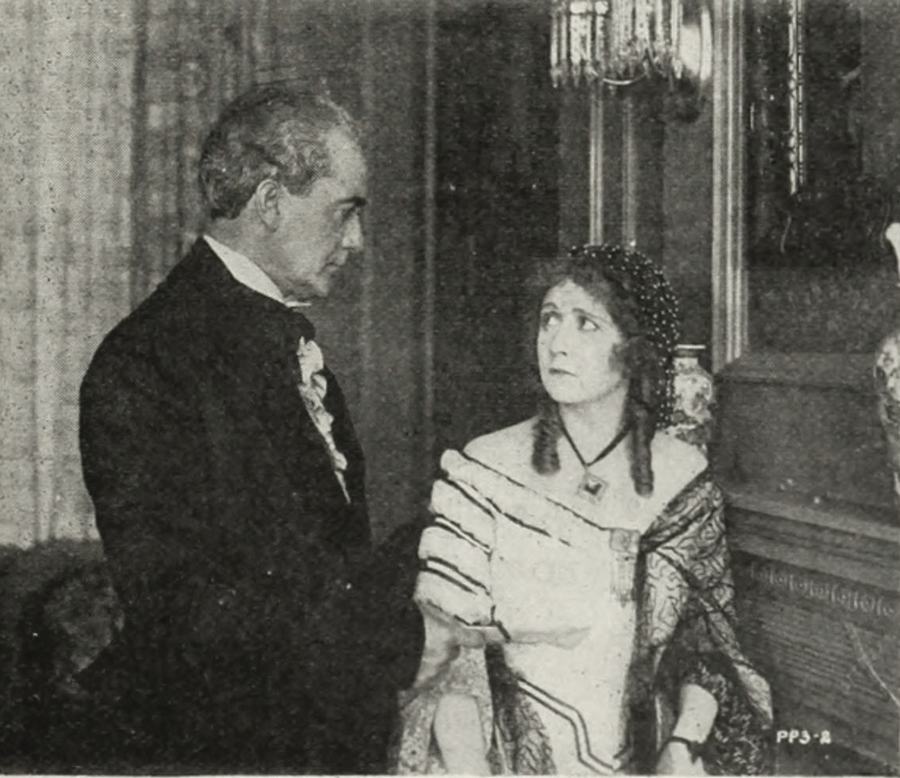
Amidst the moral ambiguities and existential threats, "Madam Who?" introduces an element that irrevocably complicates Jeanne's mission: love. She finds herself unwillingly, almost tragically, drawn to John Armitage, a Northern officer. Edward Coxen, in the role of Armitage, must have exuded the charm and integrity necessary to capture the heart of a woman sworn to oppose everything he represents. This forbidden romance is the emotional core of the film, a stark counterpoint to the political machinations. It forces Jeanne to confront the profound ethical dilemma of her situation: how can she reconcile her personal quest for vengeance against the North with her burgeoning affection for a Northerner? This internal conflict, a powerful theme explored in countless war narratives, resonates deeply here, adding layers of psychological complexity to Barriscale's performance. It is a love born of circumstance, tested by loyalty, and ultimately, destined to challenge the very foundations of her identity and purpose. The film deftly avoids simplistic solutions, instead allowing the emotional turmoil to simmer, mirroring the broader national anguish.
The delicate tightrope Jeanne walks inevitably frays. In her pursuit of vital documents, her identity as a Confederate agent is discovered. This moment of exposure, a common trope in spy thrillers, is handled with a sense of urgency and desperation that propels the narrative forward at a dizzying pace. Forced to flee Washington D.C., she makes a harrowing escape to Richmond, the beleaguered capital of the Confederacy. This flight is not merely a physical journey but a symbolic retreat, a return to the heart of her cause, but also a retreat from the personal entanglements that now threaten to consume her. The stakes are higher than ever, as her life, and potentially the success of her mission, hang in the balance. The visual storytelling of silent cinema, relying on dramatic chase sequences and expressive acting, would have made this segment particularly gripping, underscoring Jeanne's isolation and vulnerability.
Richmond becomes the arena for a series of devastating revelations. Here, the threads of Jeanne's complicated life converge with tragic inevitability. Henry Morgan, her seemingly helpful confidante and the Northern agent, is dramatically revealed to be none other than the masked man from her forced wedding – the bearer of the peculiar wrist tattoo. This stunning twist, a true hallmark of intricate melodramatic plotting, transforms Morgan from a mere antagonist into a deeply personal betrayer, a figure whose deception has permeated every aspect of her life since their first encounter. The ensuing struggle with "Parson" John Kennedy, a character whose precise role in this confrontation adds another layer of historical intrigue and perhaps a touch of moral ambiguity, results in Morgan's death. This climactic moment serves as a painful catharsis, severing the ties of a forced, unwelcome past, but also highlighting the brutal cost of espionage and the intertwined nature of personal and political conflict. The emotional impact of this scene, relying heavily on the expressive power of silent film actors, would have been immense, marking a pivotal turning point for Jeanne.
As Richmond succumbs to the ravages of war, ablaze in a fiery inferno that symbolizes the South's imminent collapse and the end of an era, Jeanne finds herself once again in peril. It is here, amidst the chaos and destruction, that John Armitage reappears, not as an enemy, but as her savior. This heroic act solidifies their bond, transforming their forbidden romance into a beacon of hope against the backdrop of national tragedy. The burning city, a powerful visual metaphor, signifies not just destruction but also purification, a clearing away of the old order for the birth of something new. The war's end brings with it a collective exhaustion, a desire for peace, and for Jeanne and John, an opportunity to transcend the bitter divisions that once separated them. Their decision to marry after the war, "forgetting their differences," is a poignant statement on reconciliation and the enduring power of love to bridge even the deepest chasms. It’s a resolution that offers a glimmer of optimism, much needed after the relentless tension and sorrow. This theme of finding unity amidst division resonates with the broader American narrative post-Civil War, offering a cinematic echo of the national healing process, much like the calls for unity in post-WWI cinema.
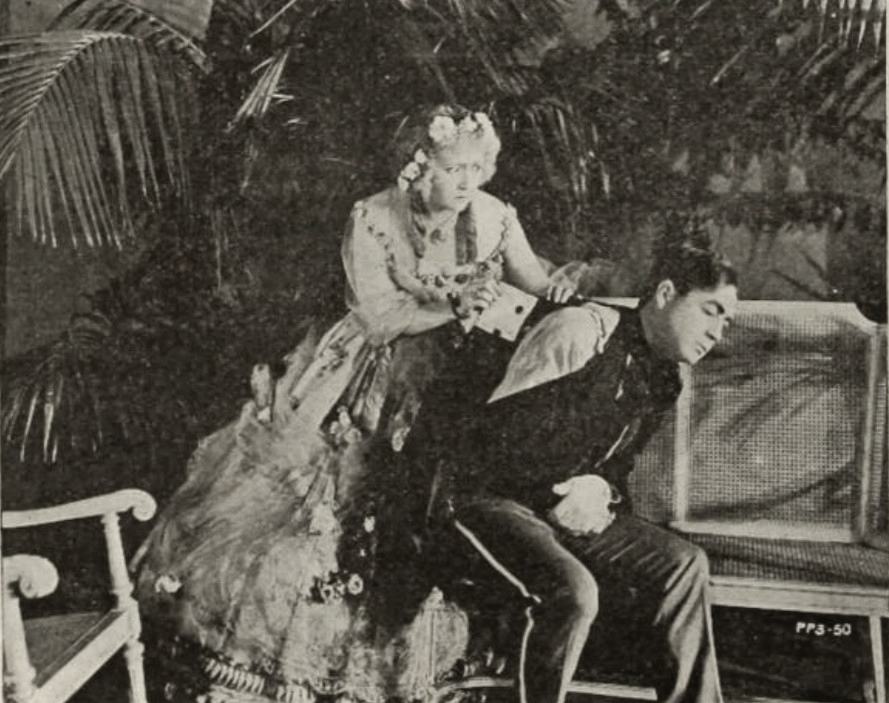
The success of a silent film, particularly one with such a complex narrative and deep emotional currents, rests almost entirely on the shoulders of its performers. Bessie Barriscale, as Jeanne Beaufort, delivers a performance that is both nuanced and powerful. Her expressive face and deliberate gestures would have conveyed the intricate emotional landscape of a woman torn between duty, vengeance, and an unexpected love. Barriscale’s ability to project inner turmoil and outer resolve without uttering a single word is a testament to her skill and the unique demands of silent acting. She crafts a character who is not merely a pawn of circumstance but an agent of her own destiny, albeit one constantly buffeted by the tides of war and personal betrayal. Her portrayal ensures that Jeanne remains a compelling, sympathetic figure throughout her arduous journey.
Edward Coxen, as the earnest Northern officer John Armitage, complements Barriscale's intensity with a portrayal of steadfast honor and growing affection. His character represents the possibility of reconciliation, a gentle counterpoint to the film's pervasive themes of conflict and betrayal. The chemistry between Barriscale and Coxen, crucial for the believability of their forbidden romance, must have been subtly yet powerfully conveyed through their interactions and reactions. Joseph J. Dowling, in the pivotal role of Henry Morgan, would have been tasked with embodying both outward charm and underlying menace, making his eventual reveal as the masked husband all the more impactful. The ensemble cast, including David Hartford, Howard Hickman, Fanny Midgley, and Eugene Pallette, each contributed to the rich tapestry of supporting characters, grounding the larger-than-life narrative in believable human interactions. Their collective performances, guided by the scriptwriters Harold McGrath, Clyde De Vinna, and Monte M. Katterjohn, ensured that the intricate plot points were not only understood but felt deeply by the audience. The writers crafted a story that, despite its melodramatic flourishes, maintained a strong sense of internal logic and emotional consistency, a remarkable feat for a film of this period.
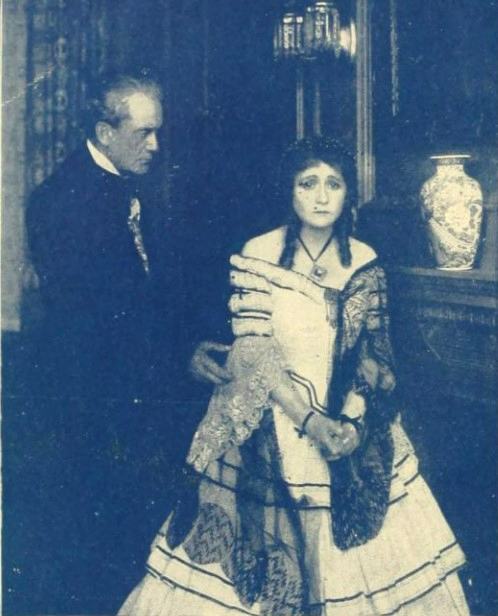
Beyond the performances, "Madam Who?" showcases the evolving cinematic language of its time. The direction by Reginald Barker would have employed techniques to build suspense, convey large-scale conflict, and focus on the intimate emotional beats. The use of intertitles, crucial for exposition and dialogue in silent films, would have been carefully balanced with visual storytelling, allowing the actors' expressions and the mise-en-scène to communicate much of the narrative. The depiction of Washington D.C. as a hotbed of spies and Richmond in flames would have required impressive set designs and special effects for the era, contributing significantly to the film's immersive quality. The film's ability to blend genres – historical drama, spy thriller, and romance – speaks to the ambitious storytelling prevalent in early cinema. It doesn't shy away from the brutal realities of war, yet it simultaneously champions the enduring human capacity for love and forgiveness, making it a nuanced piece of early American filmmaking.
Thematically, "Madam Who?" explores profound questions of identity, loyalty, and the moral compromises demanded by war. Jeanne's journey is a constant negotiation between her personal grief and her national duty, between her role as an avenging angel and a woman falling in love. The film suggests that while war may tear nations apart, individual human connections can sometimes transcend these artificial boundaries. The resolution, with Jeanne and John marrying, is not merely a happy ending but a symbolic gesture of healing and unity, reflecting a nascent hope for post-war America. This message of reconciliation, while perhaps idealized, offers a powerful counter-narrative to the destruction and hatred that define the conflict, echoing similar sentiments found in other post-war artistic expressions. This aspirational ending distinguishes it from more cynical portrayals of wartime relationships, offering a vision of enduring hope.
"Madam Who?" is more than a historical curio; it is a vibrant example of early cinematic storytelling that manages to be both thrilling and emotionally resonant. Its intricate plot, compelling characters, and ambitious themes ensured its relevance in its own time and offer valuable insights into the popular entertainment of the late 1910s. For modern audiences, it serves as a fascinating window into the techniques and narrative conventions of silent film, demonstrating how powerful stories could be told without spoken dialogue. It reminds us that fundamental human emotions – love, loss, vengeance, forgiveness – are timeless, and that the struggle to reconcile personal desires with societal expectations is a universal experience, regardless of the era. Much like the enduring appeal of a film such as "A Fool There Was", which captivated audiences with its intense emotional drama, "Madam Who?" delivers a narrative that grasps at the heartstrings while engaging the intellect with its spycraft and political intrigue.
The film’s exploration of a female protagonist taking an active, dangerous role in a national conflict was particularly forward-thinking for its time. Jeanne Beaufort is not just a passive observer but a dynamic force, shaping her own destiny even as she is caught in the maelstrom of war. This active agency, combined with the complex emotional landscape she navigates, makes her a compelling figure who transcends the typical gender roles of the period. While some might draw parallels to the dramatic moral quandaries found in films like "Temptation", "Madam Who?" grounds its ethical dilemmas in the tangible, high-stakes world of espionage, elevating the personal stakes to national significance. The narrative's ability to maintain suspense through multiple twists and reveals, culminating in a dramatic, fiery climax, speaks volumes about the sophisticated storytelling capabilities of its writers and director.
In conclusion, "Madam Who?" is a remarkable cinematic artifact that offers far more than a simple period drama. It is a richly layered narrative of intrigue, personal sacrifice, and the enduring power of love amidst the most devastating of circumstances. The film successfully blends the thrilling elements of a spy story with the profound emotional resonance of a romance, all set against the monumental backdrop of the American Civil War. Bessie Barriscale's performance, coupled with the skillful direction and intricate writing, ensures that Jeanne Beaufort’s journey remains captivating from her initial quest for vengeance to her ultimate reconciliation. For aficionados of early cinema, historical dramas, or simply a well-told story of a heart divided, "Madam Who?" offers a compelling and deeply satisfying experience. It stands as a powerful reminder that even in the absence of spoken dialogue, the silent screen could convey stories of immense complexity and emotional depth, leaving an indelible mark on the viewer's imagination.
IMDb —
1915
Community
Log in to comment.