DbcultAccessing Vault...
Cult Review
Senior Film Conservator
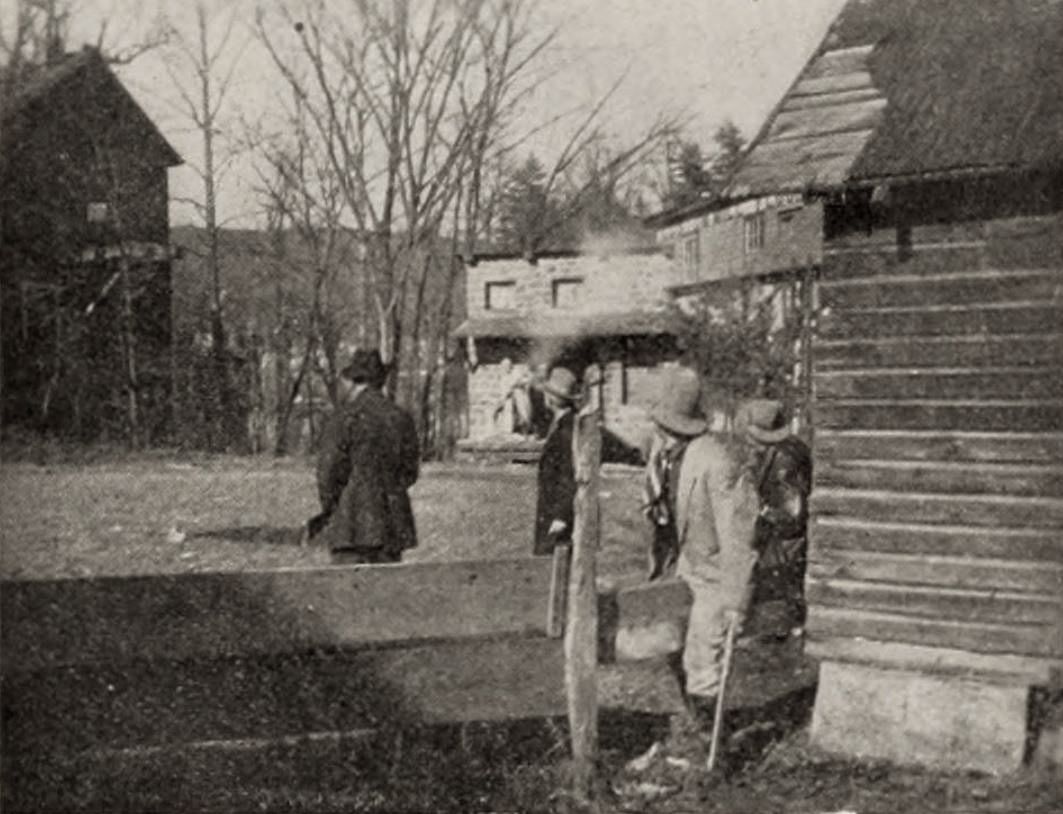
Stepping back into the cinematic annals of the early 20th century, we encounter a film that, despite its vintage, pulses with the timeless heart of human drama: Hazel Kirke. Released in an era when motion pictures were still finding their voice and defining their narrative grammar, this adaptation of Steele MacKaye’s celebrated 1880 play delivers a potent dose of melodrama, exploring themes of love, duty, betrayal, and ultimate redemption with an earnestness that transcends its silent origins. It’s a narrative tapestry meticulously woven with threads of societal expectation, personal sacrifice, and the often-cruel hand of fate, presenting a compelling tableau of human frailty and resilience against the backdrop of a rigid moral landscape.
At the core of Hazel Kirke lies the eponymous heroine, portrayed with a captivating blend of innocence and burgeoning strength by the formidable Pearl White. White, renowned for her daredevil exploits in action serials, reveals a surprising dramatic depth here, imbuing Hazel with a vulnerability that makes her plight profoundly palpable. Hazel is a figure caught in the unforgiving crosscurrents of circumstance. Her father, Dunstan Kirke (Allan Murnane), a miller whose livelihood is as rustic and vulnerable as the old mill itself, owes a profound debt to Squire Rodney (Edward O'Connor). This isn't merely a financial obligation, but a life-altering one: Rodney's timely intervention saved the Kirke family from financial ruin, a kindness repaid with the chillingly transactional promise of Hazel's hand in marriage upon her return from schooling. This pre-arranged union, a common trope in melodramas of the era, immediately establishes the tragic trajectory of Hazel’s journey. She is, in essence, a pawn in a patriarchal game, her personal agency seemingly secondary to the economic survival and honor of her family. The film masterfully sets up this initial conflict, hinting at the profound emotional turmoil that such a binding promise, devoid of true affection, will inevitably unleash upon her unsuspecting heart.
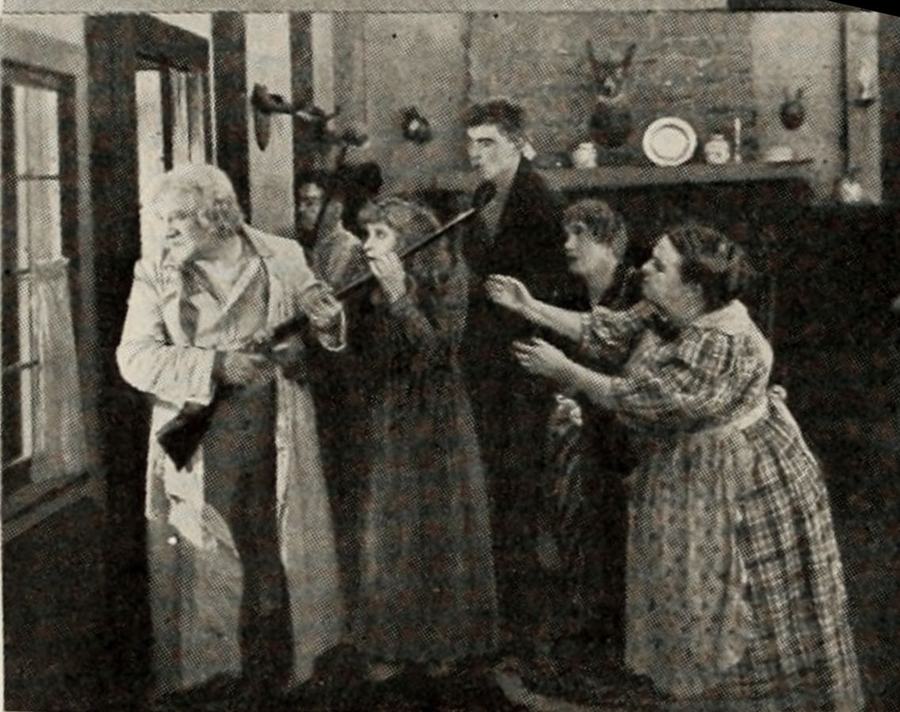
However, destiny, as it often does in these grand narratives, has other, more passionate plans. Towards the twilight of her educational sojourn, Hazel encounters Arthur Carringford (Bruce McRae), a man whose charm and aristocratic bearing stand in stark contrast to the grounded, if somewhat imposing, figure of Rodney. The film employs a classic narrative device to bring them together: a hunting accident near the Kirke mill confines Arthur to its humble quarters for several weeks. It is during this period of enforced intimacy that a genuine, undeniable connection blossoms between Hazel and Arthur. Their stolen glances, hushed conversations, and the silent understanding that passes between them are beautifully rendered through the nuanced, often subtle, performances of White and McRae, who manage to convey a depth of emotion even within the constraints of silent film acting. This budding romance is not merely a subplot; it is the incandescent catalyst that ignites the entire tragic chain of events, a testament to the power of forbidden love to disrupt the most carefully laid plans. The quiet intensity of their developing bond feels reminiscent of the burgeoning, yet often doomed, affections seen in films like The Pride of Jennico, where societal expectations clash violently with personal desire, or the fraught class distinctions that complicate love in Rose of the Rancho.
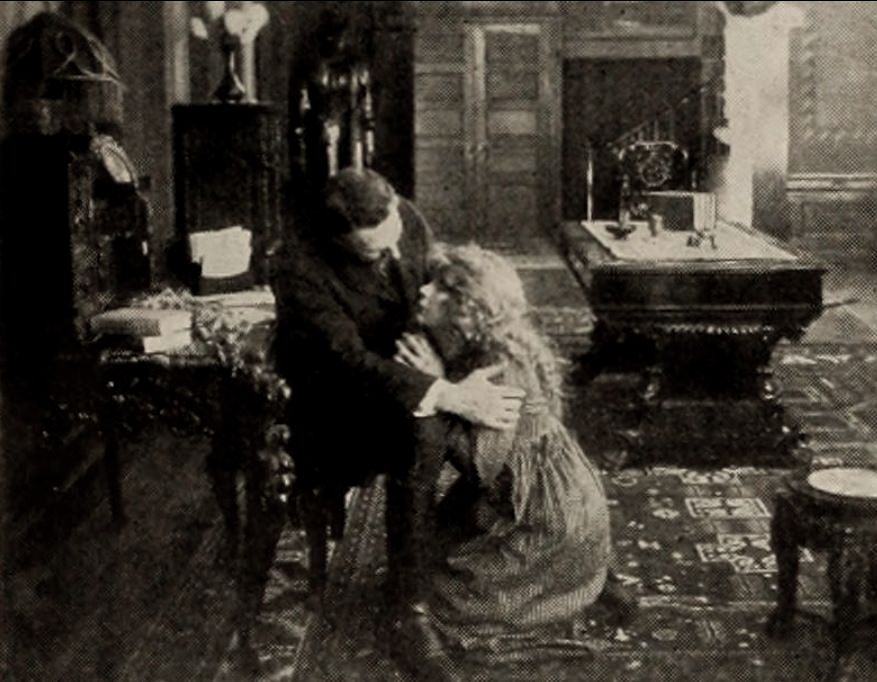
Upon her return home, Hazel, caught between an unbreakable oath and a burgeoning passion, dutifully renews her promise to Rodney. But the heart, once awakened to true love, cannot be easily subdued by duty alone. The illicit nature of her feelings for Arthur is soon brutally exposed when Dunstan and Rodney witness an embrace between the young lovers. Dunstan's furious denunciation is a pivotal, gut-wrenching moment, a visceral outpouring of patriarchal rage and wounded honor that casts Hazel and Arthur out into an uncertain world. This scene, steeped in dramatic tension, highlights the rigid moral codes of the era and the devastating consequences for those who dared to defy them, particularly women. Dunstan’s initial “blindness” to Hazel’s true feelings, even before his physical affliction, is a poignant foreshadowing of the profound emotional and spiritual darkness he will later experience.
The narrative then shifts to the Machiavellian machinations of Arthur's mother, Mrs. Carringford (Kate Mayhew), a character whose aristocratic pride and desperate financial anxieties drive her to truly desperate measures. Desperate to salvage the family fortune, which her late husband had squandered, she schemes to marry Arthur to her ward, Maude, an heiress already beloved by the unassuming Pittacus Greene (Creighton Hale). The intricate web of deceit spun by Mrs. Carringford, involving Pittacus and Arthur's valet, to dissuade Arthur from his union with Hazel, is a masterclass in melodramatic villainy. The valet, believing the upcoming ceremony to be a mere charade—a cruel joke at Hazel's expense—cynically procures a “minister” from a saloon. This act of calculated manipulation underscores the moral decay lurking beneath the veneer of polite society, where appearances and social standing often trump genuine human feeling. This deception, so cruel in its intent, is a dark mirror to the more innocent, yet equally impactful, deceptions explored in films like Gretna Green, though with far more tragic and immediate consequences for Hazel's emotional well-being.
The revelation of the fake marriage is a gut-wrenching moment, a shattering blow to Hazel’s fragile hope. Mrs. Carringford, arriving during Arthur's absence, delivers the crushing news to Hazel, utterly devastating her world. Pearl White’s portrayal of Hazel’s distraction and anguish is profoundly moving; her silent screams and gestures of despair echo the audience’s own profound empathy. Hazel’s subsequent flight is a desperate act of a woman stripped of her dignity and hope, a poignant moment that resonates with the raw emotional vulnerability depicted in other silent era tragedies, such as the desperate flight of characters in Through the Valley of Shadows. The immediate consequence of this cruelty is equally devastating: Mrs. Carringford, panic-stricken upon Arthur’s return and faced with the unintended horror of her scheme, succumbs to a fatal heart attack. This swift retribution adds a layer of moral complexity, suggesting that even the architects of deceit are not immune to its repercussions. The suddenness of her demise, a common melodramatic device, serves to heighten the stakes and propel the narrative towards its dramatic, redemptive climax.
Arthur's desperate search for Hazel forms the poignant final act of the film. His journey, fraught with guilt and a fervent desire for rectification, leads him to a small church where he encounters the very parson who “married” them. In a surprising and morally intricate twist, the parson reveals his true identity as a man of principle, secretly working in the slums disguised as a “tough,” a testament to his commitment to genuine good work beyond the confines of conventional piety. This character, initially a pawn in a cruel game, becomes an unexpected agent of truth and a symbol of redemption, adding an intriguing layer of moral ambiguity and complexity to the narrative. It’s a moment that subtly challenges preconceived notions about appearance versus reality, echoing perhaps the hidden virtues found in the most unlikely places, much like the moral awakenings often depicted in films like The Darkening Trail.
As Arthur and the parson ride towards the mill, hoping to find Hazel, the audience is confronted with another tragic consequence of Dunstan's earlier denunciation: his terrible grief and rage have rendered him sightless. This physical manifestation of his emotional torment provides a powerful visual metaphor for his profound blindness to his daughter's true happiness and the suffering his rigid adherence to tradition had caused. The film builds to a breathtaking climax at the icy millpond, where Arthur heroically rescues Hazel from its frigid embrace, pulling her back from the brink of despair and a watery grave. This dramatic rescue underscores Arthur’s unwavering commitment and the ultimate triumph of his love over the forces that sought to tear them apart.
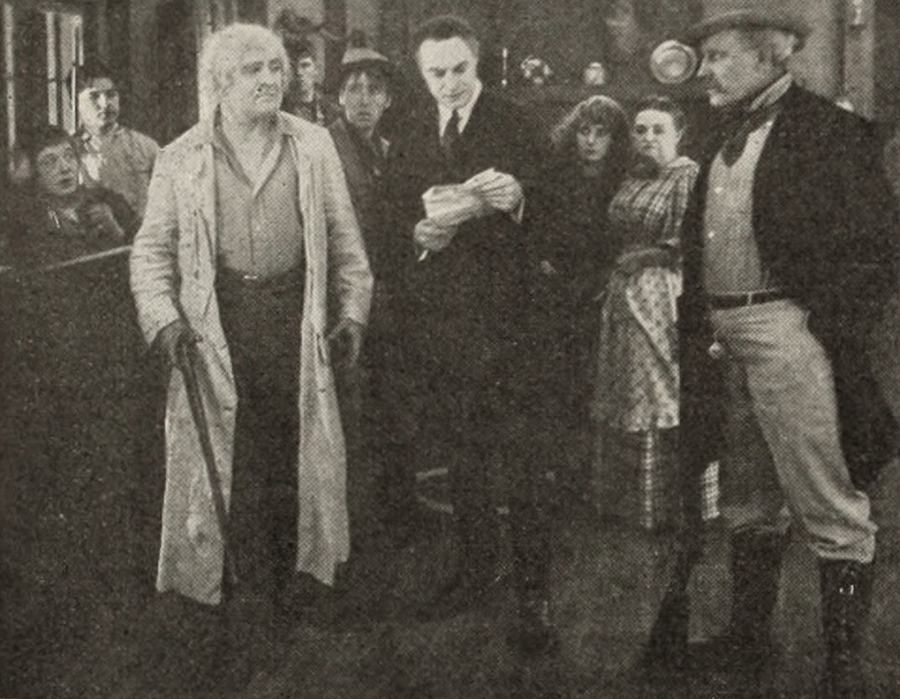
The subsequent reunion before Dunstan, now tragically blind but spiritually awakened by his suffering, is the emotional crescendo of the film. His parental blessing, given in his sightless state, signifies a profound act of forgiveness and acceptance, a hard-won peace after a torrent of sorrow. It's a powerful moment of catharsis, where the weight of past transgressions is lifted, and love, purified by suffering, is finally allowed to triumph. This redemptive arc, where profound personal sacrifice leads to a deeper understanding and familial reconciliation, is a hallmark of the finest melodramas, leaving the audience with a sense of emotional fulfillment despite the preceding turmoil.
The cast of Hazel Kirke delivers performances that, while characteristic of the silent era's often theatrical style, convey a surprising depth of character and emotional resonance. Pearl White, as mentioned, moves beyond her action-heroine persona to deliver a nuanced portrayal of a woman caught in an impossible bind. Bruce McRae’s Arthur is suitably earnest, embodying the conflicted hero caught between familial duty and genuine affection, his internal struggle often conveyed through subtle shifts in posture and expression. Allan Murnane’s Dunstan is a force of nature, his transformation from rigid patriarch to heartbroken, sightless father being particularly affecting and demonstrating the power of silent acting to convey profound emotional journeys. The supporting cast, including Mary Martin, Kate Mayhew, Creighton Hale, Edward O'Connor, Riley Hatch, Frances White, and Florence Edney, all contribute to the rich tapestry of this dramatic narrative, ensuring that each character, no matter how small, plays a vital role in the unfolding tragedy and eventual triumph.
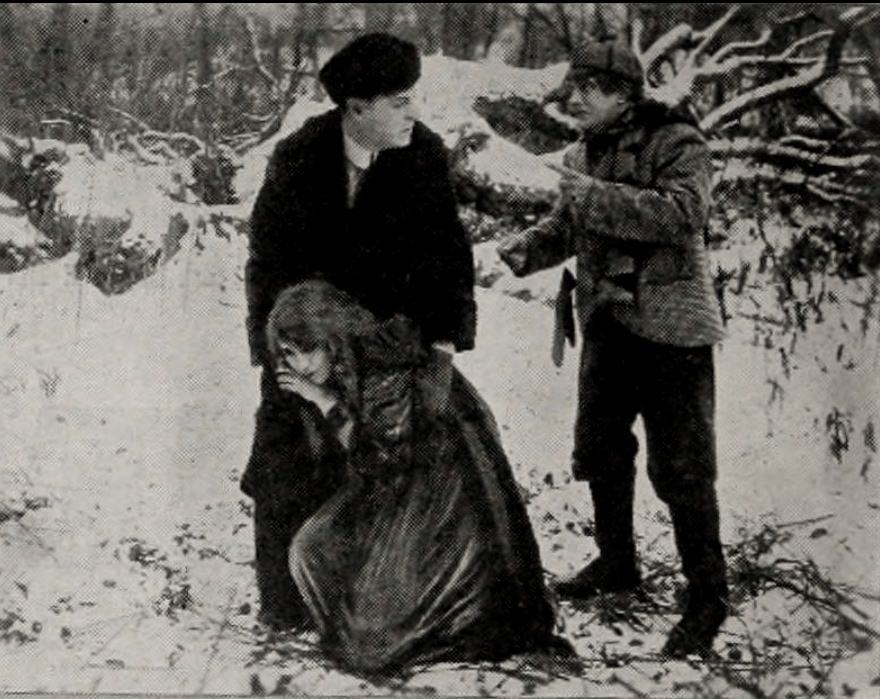
Steele MacKaye's original play, from which this film is adapted, was a sensation in its time, lauded for its dramatic intensity and moral complexity. The cinematic version thoughtfully translates its core emotional power to the screen, leveraging the nascent visual language of film to amplify its dramatic impact. The visual storytelling, though lacking the sophisticated camera work and editing of later periods, effectively communicates the heightened emotions and dramatic shifts required by the genre. The judicious use of close-ups to capture facial expressions, the sweeping gestures common in silent acting, and the carefully composed frames all work in concert to draw the viewer intimately into Hazel’s plight. The director’s understanding of how to use visual metaphor, such as the symbolic representation of Dunstan’s internal turmoil through his physical blindness, is particularly striking.
In a landscape of early cinema often dominated by serialized adventures and light comedies, Hazel Kirke stands out as a serious dramatic endeavor. It is a film that, despite its age, continues to speak to universal themes of love, sacrifice, and the enduring human spirit. Its examination of class divides, the suffocating grip of societal expectations, and the redemptive power of forgiveness remains as relevant today as it was over a century ago. For enthusiasts of early cinema, or those simply seeking a compelling story told with heartfelt conviction, Hazel Kirke offers a profound and emotionally resonant experience. It reminds us that even in the nascent stages of filmmaking, the power of storytelling to move, to provoke, and to inspire was already fully realized, cementing its place as a significant piece of cinematic heritage. The film's ability to tackle such complex emotional landscapes with the tools of its time is commendable, making it a valuable study for anyone interested in the evolution of dramatic narrative on screen. It truly is a testament to the fact that compelling human stories transcend technological limitations, much like the enduring appeal of the classic narratives found in A Fool There Was or The Man on the Box, which also navigated the turbulent waters of passion and societal constraint. The film's unwavering focus on the human heart, its capacity for both great love and profound error, is what ultimately elevates it beyond a mere historical curiosity into a piece of enduring art, deserving of continued appreciation and study.
IMDb —
1916
Community
Log in to comment.