DbcultAccessing Vault...
5.2/10
Senior Film Conservator
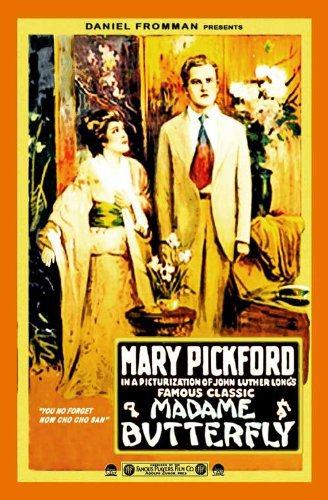
A definitive 5.2/10 rating for a film that redefined the boundaries of cult cinema. Madame Butterfly remains a cornerstone of transgressive art.
In the nascent days of cinematic storytelling, when the silver screen was still finding its voice, certain narratives emerged with such potent emotional resonance that they transcended the limitations of the silent medium. Among these, Madame Butterfly, the 1915 adaptation of John Luther Long's poignant tale, stands as a monumental achievement, a testament to the power of visual pathos. Directed by Sidney Olcott and starring the incomparable Mary Pickford, this film plunges viewers into a world of cultural collision, unrequited devotion, and ultimately, heart-wrenching despair. It's a journey into the delicate intricacies of a love story doomed by casual indifference and an unwavering, yet naive, faith. The film, a silent epic in its own right, masterfully navigates the treacherous waters of cross-cultural romance, laying bare the profound consequences of misunderstanding and the brutal cost of a promise casually made and cruelly broken. It’s a narrative that, despite its century-old vintage, continues to resonate with a chilling prescience, reflecting on themes of exploitation, the Western gaze, and the immutable power of the human heart to hope against all odds.
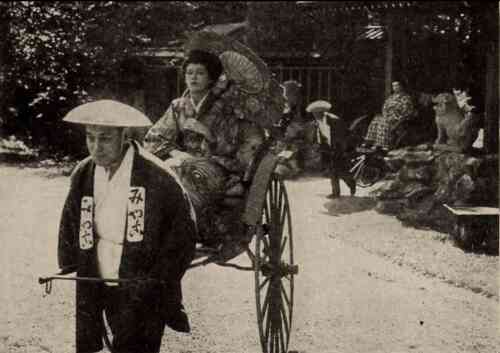
At the very core of Madame Butterfly's enduring impact is Mary Pickford's utterly captivating portrayal of Cio-Cio-San, the young geisha who becomes the titular 'Butterfly'. Pickford, often lauded as 'America's Sweetheart', here sheds her more common persona to embody a character of profound vulnerability and unwavering conviction. Her performance is a masterclass in silent acting, conveying a vast spectrum of emotion through subtle gestures, expressive eyes, and a posture that shifts from girlish innocence to stoic, heartbreaking resolve. We witness her transformation from a hopeful, blushing bride, utterly enchanted by the promise of American love, to a woman hardened by years of waiting, yet still clinging to a fragile thread of belief. Pickford's Cio-Cio-San is not merely a victim; she is a figure of immense strength, her loyalty an almost divine quality, making her eventual demise all the more tragic. She navigates the complex emotional landscape of cultural alienation and personal betrayal with an authenticity that transcends the lack of spoken dialogue. Every tilt of her head, every flutter of her fan, every tear that glistens in her eyes speaks volumes, etching her character indelibly into the viewer's consciousness. Her ability to convey such profound depth of feeling without uttering a single word is a testament to her genius and the expressive potential of early cinema.
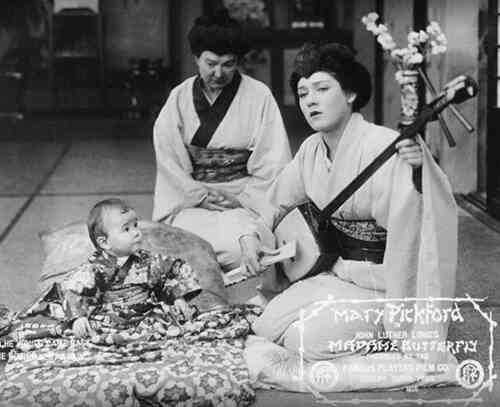
The silent era demanded a different kind of acting, one that relied heavily on pantomime, facial expressions, and body language to communicate the inner turmoil and joy of characters. Pickford, with her delicate features and innate theatricality, excelled in this regard. Her Cio-Cio-San is a study in contrasts: outwardly fragile like a butterfly, yet possessing an inner steel forged by an unshakeable belief in love and honor. Her scenes of anticipation, where she scans the horizon for Pinkerton's ship, are particularly poignant, building a sense of dread and sympathy that culminates in the crushing realization of his betrayal. This isn't just acting; it's a profound empathy channeled through the lens, allowing the audience to feel the full weight of her abandonment and the irreversible course of her fate. Pickford’s performance is a cornerstone of the film, elevating it from a simple melodrama to a deeply moving exploration of human frailty and the tragic consequences of cultural insensitivity.
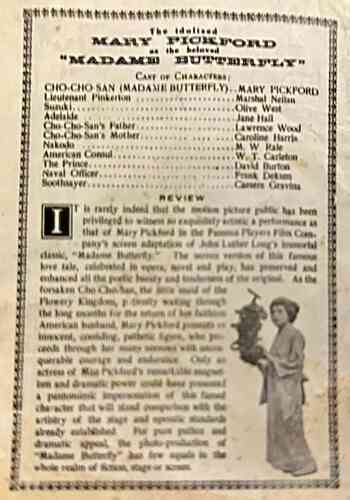
In stark contrast to Cio-Cio-San's boundless devotion is Lieutenant B.F. Pinkerton, portrayed with an unsettling blend of charm and callousness by Marshall Neilan. Pinkerton represents the quintessential colonial figure: entitled, dismissive of local customs, and ultimately, self-serving. His 'marriage' to Cio-Cio-San is framed as a temporary diversion, a convenient arrangement for his time in Nagasaki, easily discarded upon his return to America. The film subtly yet powerfully critiques this casual exploitation, highlighting the devastating impact of such indifference on those who invest their entire being in the relationship. Pinkerton's character embodies a form of cultural imperialism, where the traditions and feelings of the 'other' are deemed inconsequential. He is not overtly malicious, which makes his actions all the more chilling; his cruelty stems from a lack of genuine understanding and a profound inability to acknowledge the weight of his promises. His eventual return, not to reclaim his 'wife' but to take their child with his American spouse, is the ultimate act of betrayal, a stark illustration of the power imbalance between their worlds. The film's brilliance lies in its ability to portray Pinkerton not as a mustache-twirling villain, but as a man whose thoughtless actions unleash an unstoppable wave of tragedy, a chilling reflection of real-world historical dynamics. The portrayal of his eventual, albeit belated, remorse feels less like redemption and more like a final, inadequate acknowledgment of the havoc he has wrought, underscoring the irreversible damage of his initial casualness.
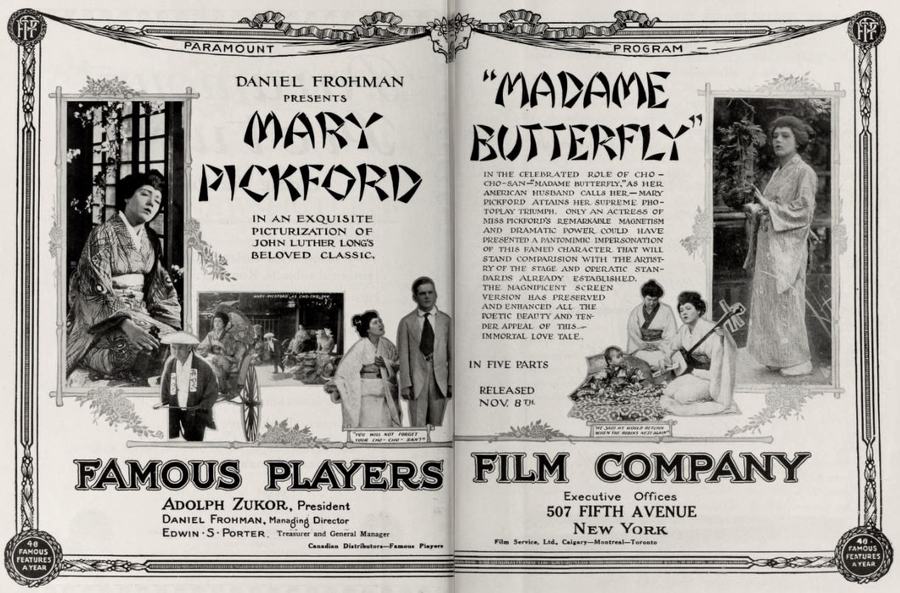
Beyond the individual characters, Madame Butterfly is a profound exploration of cultural clash and the tragic consequences that often arise when disparate worlds collide. Cio-Cio-San's complete immersion in Pinkerton's world – her abandonment of her ancestral religion, her family, and her societal standing – underscores the depth of her commitment and the extent of her sacrifice. This act of profound self-renunciation is met with disdain from her own community and ultimately, betrayal from the very man for whom she gave everything. The film critiques the exoticism of the 'Orient' prevalent in Western narratives of the time, showing how such romanticized notions often masked a deeper disregard for the humanity and agency of non-Western individuals. Her unwavering faith in Pinkerton's return, despite years of silence, becomes a poignant symbol of hope against despair, a hope that is ultimately shattered by the harsh realities of his Western values and his pre-existing commitment. The narrative deftly weaves themes of honor, duty, and the devastating impact of colonialism on personal lives. Cio-Cio-San’s final, desperate act is not merely a response to heartbreak, but a reclaiming of her honor, a final, defiant assertion of her agency in a world that has stripped her of everything else. This act of ultimate sacrifice, while tragic, imbues her character with a profound dignity, transforming her from a passive victim into an active participant in her own destiny, however grim that destiny may be.
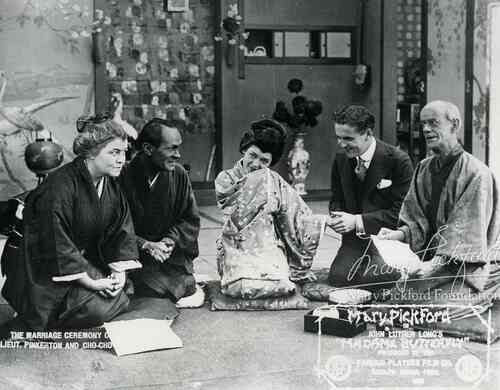
The visual language of Madame Butterfly is remarkably sophisticated for its time. Sidney Olcott's direction, coupled with the cinematography, creates a world that is both visually stunning and emotionally resonant. The use of elaborate sets, authentic costumes, and evocative lighting transports the audience to Nagasaki, immersing them in the film's exotic yet tragic setting. Close-ups are employed strategically to highlight the nuanced emotions on Pickford's face, drawing the viewer into her internal world. Long shots establish the grandeur of the Japanese landscape and the isolation of Cio-Cio-San's small home, a poignant contrast to the vastness of the ocean that separates her from Pinkerton. The pacing of the film, deliberate and measured, allows for the emotional weight of each scene to fully register. Intertitles, sparingly used but impactful, provide necessary exposition and highlight key dialogue, acting as a lyrical bridge between the visual narrative and the audience's understanding. The film’s aesthetic choices are not merely decorative; they are integral to its storytelling, enhancing the themes of cultural beauty, personal sacrifice, and the crushing weight of expectation. The visual metaphors—like the constant depiction of the sea, simultaneously a path for Pinkerton’s return and a symbol of the vast, insurmountable distance between them—are masterfully integrated, enriching the narrative tapestry without ever feeling heavy-handed. Every frame is composed with an artist's eye, ensuring that even in silence, the story unfolds with breathtaking clarity and emotional depth.
Madame Butterfly arrived in a pivotal year for cinema, 1915, the same year as D.W. Griffith's controversial but groundbreaking The Birth of a Nation. While Griffith's epic pushed boundaries in terms of scale and narrative complexity, Madame Butterfly carved its own niche through an unwavering focus on intimate human tragedy. It demonstrated that silent cinema could convey profound emotional depth and explore complex societal issues without resorting to overt spectacle. Its success paved the way for other 'exotic' romances and dramas, though few achieved its delicate balance of melodrama and genuine pathos. One might draw comparisons to films like The Lotus Dancer (1926) in its exploration of cross-cultural relationships and the allure of the 'other', though Madame Butterfly arguably delves deeper into the tragic consequences rather than just the romance. Similarly, while films like Der fremde Vogel (1911) might touch upon themes of foreignness and alienation, Madame Butterfly distinguishes itself through its specific focus on the irreversible damage caused by cultural insensitivity and a colonial mindset. It stands in stark contrast to the more action-oriented or overtly propagandistic films of the era, such as The War Correspondents (1915) or War Is Hell (1914), by centering its narrative entirely on the internal world of its protagonist and the devastating emotional fallout of betrayal. Even in comparison to contemporary dramas like The Bargain (1915), which explores moral dilemmas, Madame Butterfly’s moral core is more deeply embedded in its cultural critique and the tragic inevitability of its premise. The film's influence can be seen in the enduring popularity of the story itself, which continues to be adapted across various art forms, a testament to its universal themes. It’s a seminal work that not only showcased the burgeoning artistry of silent film but also etched a timeless, heartbreaking story into the annals of cinematic history, ensuring its place as a classic beyond mere historical curiosity.
A century later, Madame Butterfly remains a deeply affecting cinematic experience. Its themes of cultural misunderstanding, the fragility of promises, and the devastating power of unrequited love are as relevant today as they were in 1915. The film serves as a poignant reminder of the enduring human capacity for both profound devotion and casual cruelty. It asks us to consider the weight of our actions, the impact of our cultural biases, and the responsibility that comes with wielding power over another's heart. Mary Pickford's performance alone makes the film worth revisiting, a luminous testament to her talent and the expressive potential of the silent screen. But beyond her star power, the film offers a powerful, timeless narrative that transcends its historical context, speaking to the universal human condition. It is a cautionary tale, a work of art, and a significant piece of cinematic heritage that continues to flutter, delicately yet powerfully, in the collective memory of film enthusiasts. Its tragic beauty is a stark reminder that some stories, even without spoken words, can resonate with an intensity that echoes across generations, leaving an indelible mark on the soul. The legacy of Madame Butterfly is not just its historical significance but its continued ability to stir profound emotion, challenging viewers to confront the uncomfortable truths about love, loss, and the eternal clash of worlds.

IMDb 6.9
1930
Community
Log in to comment.