DbcultAccessing Vault...
Cult Review
Senior Film Conservator
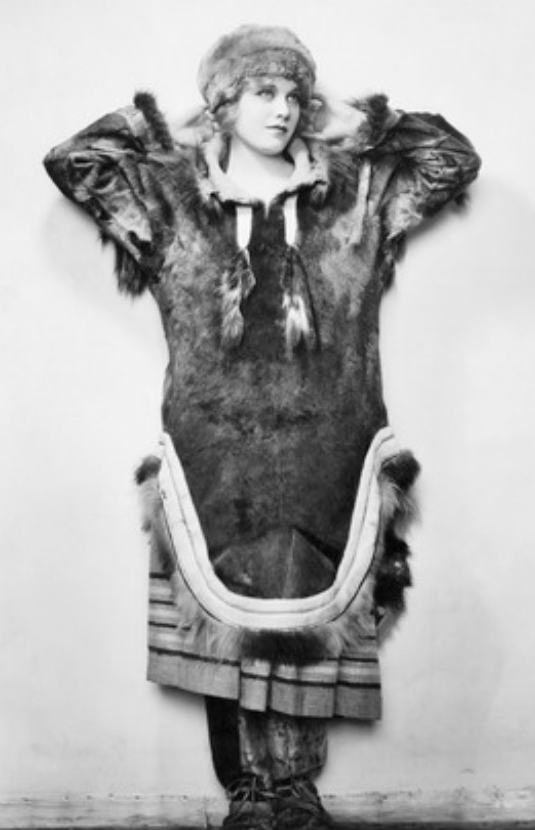
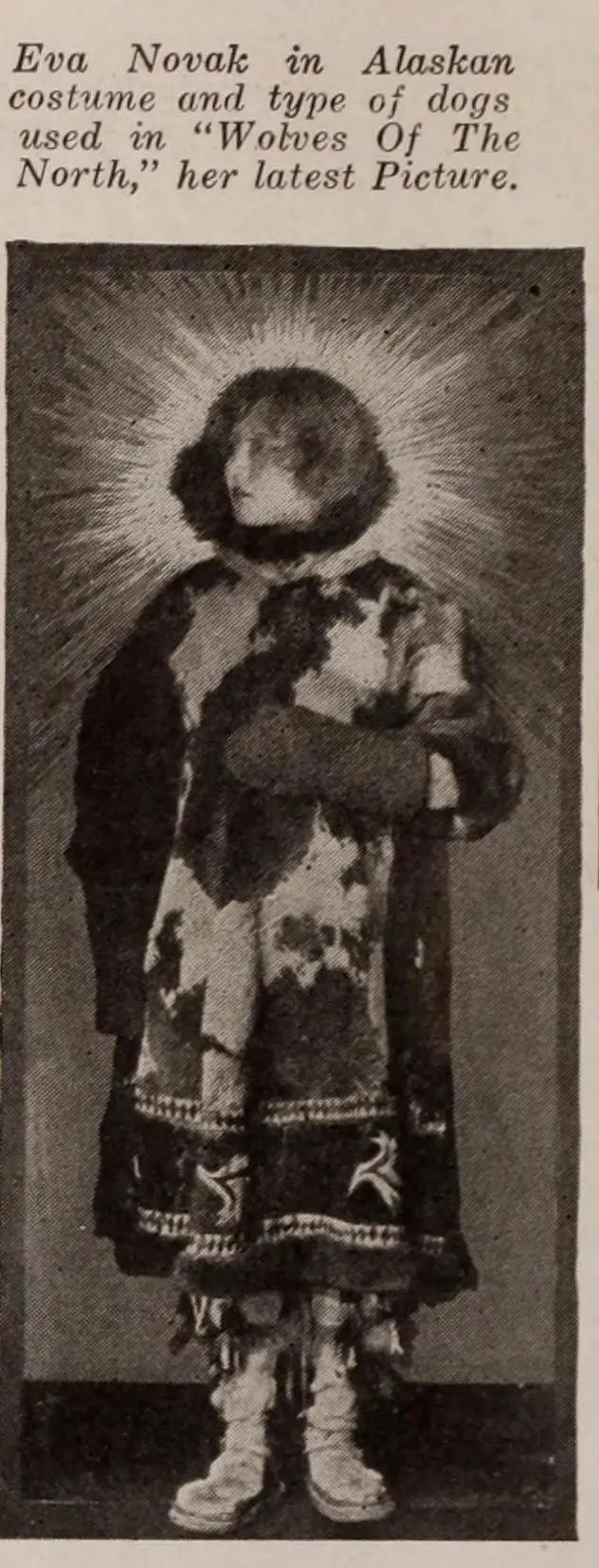
Wolves of the North (1930), directed by Wallace Clifton and Norman Dawn, is a relic of pre-Code Hollywood that dares to probe the fissures between cultural preservation and human instinct. Set in the Alaskan interior, where the aurora borealis glows like a celestial warning, the film’s narrative orbits the fraught relationship between Aurora Norris (Millie Impolito) and Wiki Jack Horn (Starke Patteson), a union that crystallizes the tension between intellectual order and the anarchic pull of the wild. The film’s aesthetic and thematic DNA is palpably indebted to the era’s fascination with "primitive" cultures as both exoticized spectacle and moral cautionary tale, yet its execution is far more nuanced than the pulp melodramas it occasionally resembles.
The narrative unfolds in three acts: a rigidly structured academic society, a violent rupture (an avalanche that obliterates Aurora’s conventional ties), and a descent into the sublimity of the untamed. Professor Norris (Percy Challenger), a figure of dour pedagogy, serves as the film’s reluctant gatekeeper to the Eskimo traditions of Unalik. His daughter Aurora, however, is less a participant in her father’s ethnographic mission than a cipher for the audience’s gaze. Her initial marriage to David Waters (Clyde Tracy), a man whose "weak character" is telegraphed through his passive demeanor and lack of physicality, is rendered with the detached irony of a Greek tragedy. Their romance, devoid of passion, is a social contract—Aurora’s compliance to the domestic ideals of the time. Yet the film’s true drama commences with the arrival of Wiki Jack Horn, a character whose name itself is a palimpsest of European mispronunciation and cultural appropriation.
Wiki, portrayed with feral charisma by Patteson, is the antithesis of David’s effete fragility. His presence in the film is a destabilizing force, his every glance at Aurora a challenge to the patriarchal norms the Norris family embodies. The cinematography—bathed in the stark whites and blues of Alaskan winters—mirrors Aurora’s internal landscape as she shifts from a state of intellectual curiosity about Wiki to a visceral, almost feral attraction. When David perishes in the avalanche, the film’s tone pivots from social realism to mythic allegory. Aurora’s subsequent submission to Wiki’s "overpowering love" is not framed as a triumph of the primitive over civilization but as a tragic surrender to the inescapable. The film’s final act is a masterclass in visual metaphor: Aurora, once the observer of Eskimo culture, becomes its participant, her pale skin now indistinguishable from the snowscapes that envelop her.
Themes: The Illusion of Control
At its core, Wolves of the North interrogates the hubris of cultural preservation. Professor Norris’s studies, meticulously documented in the film’s early scenes, are revealed to be exercises in futility—his notes, like the Western worldview they represent, are obliterated by the forces of nature and desire. The film’s pre-Code audacity is evident in its treatment of Aurora’s agency: she is not a victim of Wiki’s "overpowering love" but an active participant in her own transformation. This complexity is rare for a film of its era, which often relegated female characters to passive archetypes. Aurora’s journey is one of self-annihilation and rebirth, a narrative arc that resonates with the existential crises explored in later works like Comin’ Thro’ the Rye (1923), where youthful rebellion against societal constraints takes a darker turn.
Performances: Charisma vs. Convention
Millie Impolito’s portrayal of Aurora is a study in restraint and release. In the film’s first half, her expressions are tightly controlled, her gestures precise—a manifestation of the repressed womanhood her role demands. When the avalanche strikes, however, Impolito’s performance shifts to something raw and unfiltered, her physicality mirroring the chaos of the landscape. Starke Patteson, as Wiki, is a revelation. His delivery is neither savage nor romanticized but deeply human, his gaze lingering on Aurora with a mixture of longing and menace that transcends the clichés of the "noble savage" trope. The chemistry between the two actors is the film’s emotional core, their scenes together charged with a tension that feels both intimate and epic.
Clyde Tracy’s David, though given little to work with, is a textbook example of the era’s "weak man" archetype. His character’s death is both literal and symbolic, a narrative device that clears the path for Aurora’s metamorphosis. Percy Challenger’s Professor Norris is a more layered figure, his obsession with documenting Eskimo culture revealing a man desperate to impose order on a world that resists categorization. The supporting cast, including Barbara Tennant as a skeptical local and Herbert Heyes as a conflicted missionary, add texture to the film’s exploration of cultural collision.
Visual and Aesthetic Language
The film’s use of Alaskan landscapes is nothing short of transcendent. The icy vistas, juxtaposed with the warm hues of the Norris family’s cabin, create a visual dialectic between isolation and community, fragility and endurance. The cinematography by Eagle Eye (a pseudonym for the era’s anonymous contributors) is stark yet poetic, with long takes that emphasize the vastness of the setting. In one particularly striking sequence, Aurora walks toward the camera through a blizzard, her figure shrinking into the horizon—a visual metaphor for her erasure into the wilderness.
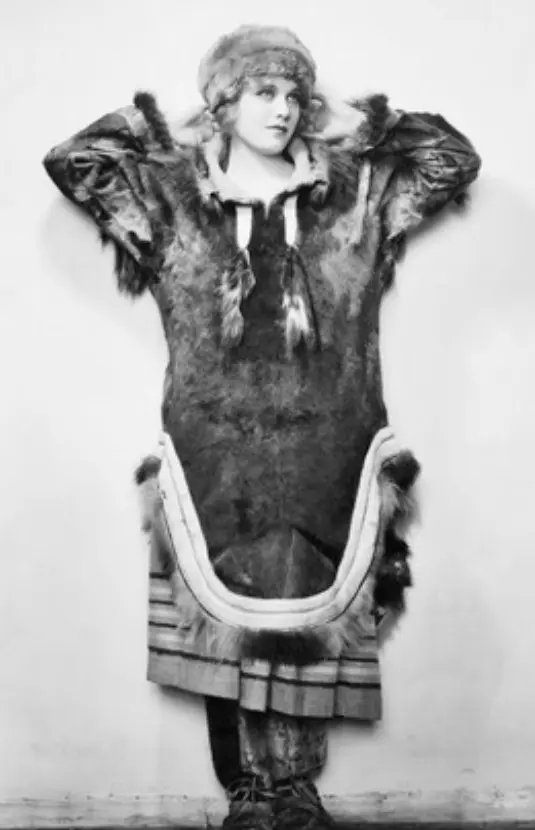
The score, sparse and haunting, amplifies the film’s melancholic undertones. The use of traditional Eskimo chants, though anachronistic, underscores the film’s ethnographic ambitions. While these choices risk exoticizing the culture they depict, the film’s commitment to authenticity in its settings and costuming (credit to costume designer Barbara Tennant) lends it a credibility that transcends its era’s limitations.
Wolves of the North shares thematic DNA with Cleopatra (1934), particularly in its portrayal of a woman’s subjugation to and subversion of patriarchal systems. However, where Cleopatra leans into historical grandeur, Wolves is grounded in the visceral immediacy of its setting. The film’s preoccupation with cultural boundaries also echoes The Struggle Everlasting (1920), a silent film that similarly grapples with the clash between modernity and tradition, though Wolves is more introspective in its approach.
The film’s exploration of forbidden love and societal transgression finds a thematic echo in Martha’s Vindication (1926), where a woman’s defiance of social norms leads to both personal triumph and tragedy. Yet Wolves distinguishes itself through its focus on cultural dislocation—a theme absent in the more domestically oriented melodramas of the period.
Though Wolves of the North is a product of its time, its themes of cultural dissonance and personal transformation remain strikingly resonant. The film’s unflinching portrayal of Aurora’s agency in her own reinvention challenges the viewer to reconsider the boundaries of consent and complicity. In an era where debates over cultural appropriation and indigenous representation dominate discourse, the film’s nuanced handling of these issues—even with the limitations of 1930s Hollywood—offers a fascinating case study.
For modern audiences, the film’s aesthetic and narrative risks are both its greatest strength and its most glaring weakness. The occasional reliance on ethnographic stereotypes—Wiki’s portrayal as a "primitive" lover—clashes with the emotional complexity of Aurora’s journey. Yet it is precisely this tension that makes the film compelling: it is a document of its era’s contradictions, a work that both reflects and critiques the very systems it attempts to depict.
Wolves of the North is a film that defies easy categorization. It is a pre-Code drama, an ethnographic study, and a psychological portrait of a woman unmoored from her social moorings. Its greatest achievement lies in its ability to balance the grandeur of its setting with the intimate turmoil of its characters. While it may not achieve the same narrative polish as She Couldn't Grow Up (1925), its raw emotional force and visual poetry render it an enduring artifact of early Hollywood’s experimental phase.
For those seeking a deeper understanding of how pre-Code cinema navigated the fraught terrain of cultural representation and personal freedom, Wolves of the North is an essential, if imperfect, primer. It is a film that demands to be seen not as a relic but as a precursor to the more sophisticated explorations of identity and autonomy that would define cinema in the decades that followed.
IMDb —
1933
Community
Log in to comment.