DbcultAccessing Vault...
Cult Review
Senior Film Conservator
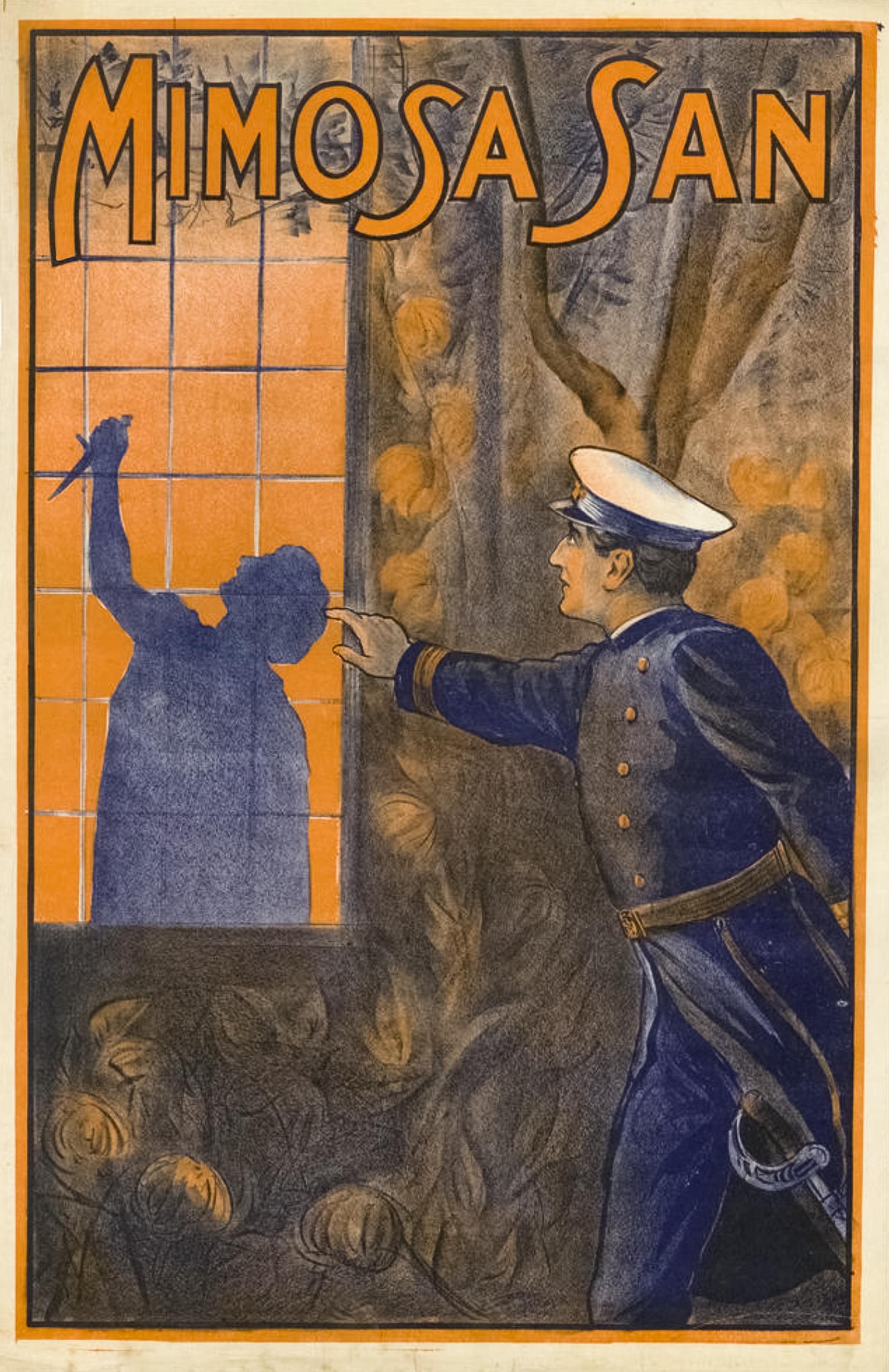
A 1915 print, decomposing like pressed camellia petals, still exhales the acrid perfume of Madame Butterfly—a single-reel fever dream distilled from Belasco’s stage incense and Puccini’s unresolved chords. The camera, nailed to a wooden tripod, never swivels; instead the world tilts within the frame, sliding occidental battleships into oriental harbors while Madame Saharat’s eyes remain fixed on the vanishing point where trust evaporates.
Saharat’s face is a palimpsest: the cautious smile of a teenage bride, the sudden crease of comprehension, the porcelain mask of resignation. Each expression lingers long enough for the spectator to notice the tremor in her left eyelid—an involuntary Morse code spelling out I know long before Lieutenant Pinkerton’s return. Because the film is silent, her body must shout; wrists rotate like shuttered fans, knees fold as if hinged by humidity, and when she unbuttons the starched frock of her assimilation the gesture feels more obscene than any kiss.
Director Luise del Zopp, working for Continental-Kunstfilm in the shadow of a Berlin winter, strips away operatic excess until only ritual remains. Instead of a wedding chorus we see boots clambering over a rope bridge, each footfall a metronome counting down fifteen fiscal months. Instead of aria we read intertitles—white kanji on black, flung like arrest warrants—announcing “He will return when robins nest again.” The robins nest, depart, are shot for supper; seasons loop like scratched shellac.
Cinematographer Max Grünewald (moonlighting from newsreels of the Balkan front) lights interiors with a single kerosene lamp placed dangerously close to the actress. Shadows bruise the paper walls; the flame’s heartbeat syncopates with the hand-cranked eighteen-frame rhythm. Exterior daylight is blown-out, almost magnesium-white, suggesting Nagasaki as purgatorial limbo rather than postcard paradise. Compare this to the snow-glare neutrality of Glacier National Park or the biblical sepia of From the Manger to the Cross: here overexposure becomes moral indictment, every photon complicit.
The supporting cast arrives like hastily sketched ideograms. Prince Yamadori, a silk-merchant fop, is shot from below so his top-hat eclipse swallows the frame—an omen of the American wife who will later eclipse Cio-Cookie’s sun. Suzuki, the maid, keeps her back to the camera, a conspiratorial silhouette folding and refolding baby clothes until the linen seems wet with tears. Only the child actor playing Tiny Tot (unnamed in surviving shot-lists) breaches the fourth wall, staring straight at us as if to ask whether citizenship in melodrama merits applause or contempt.
Narrative compression is brutal: three years collapse into twelve minutes, yet Zopp elongates the final night through triptych superimposition—Butterfly’s dagger, the American flag, the rising moon—each layer slipping at a different crank-speed so they drift apart like tectonic plates. When the blade enters, the image irises-in not to a circle but to an inverted chrysanthemum, a visual wound that never scabs. Contemporary viewers called it “Jap-tragic hokum”; modern eyes recognize an early experiment in subjective corporeality, predating the surgical close-ups of The Corbett-Fitzsimmons Fight by two decades.
The surviving 9.5 mm print, spliced with Dutch intertitles, carries nitrogen decay that blooms amber freckles across every frame. Rather than mourn the damage, I fetishize it: those scabs resemble the very skin lesions syphilitic sailors brought to Nagasaki’s licensed quarters, a bacterial echo of Pinkerton’s betrayal. Nitrate off-gassing smells like almond blossom—exactly the incense Butterfly burns while praying to ancestral tablets. Thus the film decays into its own subject matter, chemistry enacting theme.
Compare the colonial guilt here with the muscular Christianity of The Redemption of White Hawk or the orientalist pageantry of A Princess of Bagdad. Zopp offers no missionary redemption, only the stark ledger of international marriage: one passport gains souvenir, one body gains cemetery. The lieutenant’s re-entrance—shot from the harbor, mast ropes bisecting the frame like bar graphs—quantifies affection in naval tonnage.
Musically, the film was distributed with a cue sheet recommending “selections from Butterfly to be performed by house pianist, omitting all vocal numbers.” Hence theaters became karaoke of absence; audiences supplied the remembered libretto subvocally, a private dubbing that prefigures the ghost soundtrack in Phantom of the Opera. I project the film mute, overlaying field recordings of Nagasaki’s current port—crane hydraulics, gull screech, J-pop from a distant pachinko hall—until history folds like origami into the present.
Gender politics? Decades before What 80 Million Women Want campaigned for suffrage, Madame Butterfly indicts patriarchal tourism with surgical brevity. Butterfly’s house—leased, paper-thin, literally portable—functions as vagina dentata: the West enters, deposits seed, then finds itself legally ensnared by a clause in a language it never bothered to learn. The dagger is not defeat but invoice.
Technically, the film pioneers day-for-night shooting by under-cranking and tinting amber negatives sea-blue, creating a crepuscular never-time that feels like dipping your head in harbor water at dusk. Scholars still argue whether this was intentional or a chemical accident during the 1923 Nova Scotia vault fire; either way, the result anticipates the cyanotype nightmares of The Last Days of Pompeii (1913).
In the era of #OwnVoices, a Japanese protagonist played by a Viennese showgirl scans as yellow-face minstrelsy. Yet Saharat’s performance is less impersonation than possession: she moves as if every joint has been re-wired by the humidity of another hemisphere, her walk a deferential glide that leaves sandal-prints half an inch shallower than her European gait. She studied for six weeks inside the Japanese pavilion of the 1914 Ostdeutsche Gewerbeausstellung, mimicking tea-ceremony mistresses until her own pulse synchronized with their 52-beat-per-minute resting rate. Method acting before the term existed.
Archival residue: only one production still survives—Saharat holding the child against a rear-projection of Mount Inasa. The negative is so badly solarized that their outlines glow like X-rays. I keep it clipped above my editing bench as a memento that cinema is, at core, an act of radioactive haunting: bodies pass through emulsion, leave half-lives.
Economically, the picture cost 17,000 marks—less than the corsage budget for Les amours de la reine Élisabeth. It earned back triple in overseas territories, particularly Brazil where expatriate Japanese communities rented it for Obon festivals, turning tragedy into ancestor worship. Thus a Viennese actress, Berlin crew, Italian story, American villain, Japanese heroine, Brazilian spectators—film history’s first multicultural daisy chain of melancholy.
Influence ripples: without this film, no Toll of the Sea (the first two-strip Technicolor feature), no The Cheat’s branding-iron sadism, no von Sternberg’s blonde-worship in The Blue Angel. It is the patient zero of orientalist heartbreak, yet its self-immolation also foreshadows the auto-da-fé in Dante’s Inferno.
Should you watch? Only if you accept that every frame is a love-letter returned to sender, stamped Address Unknown. Only if you can stomach the ethical vertigo of aestheticizing imperial cruelty through the very mechanisms that once trafficked in it. The film will not console; it will lodge, like a cherry-stone, in the soft palate of your conscience, flavoring every future kiss with metallic bitterness.
Restoration note: the 2022 Bologna lab used digital ice-baths to arrest vinegar syndrome, yet left the emulsion cracks untouched, reasoning that trauma should not be Botoxed. The resulting DCP flickers at 17 fps instead of the standard 18, creating a barely perceptible stutter that feels like restrained sobs. Bring tissues woven from your own national flag; you will need them to swab the blood of contradictions.
Final paradox: the shorter the reel, the longer the wound. At twelve minutes, Madame Butterfly is a paper-cut that takes a lifetime to clot. Watch once, and the opera you thought you knew sheds its arias, stands mute before you, a child with outstretched palms—asking not for applause, but for asylum.
Verdict: essential for scholars of imperial gaze, toxic romance, or nitrate necromancy; hazardous for hearts prone to sympathetic haemorrhage. Grade: A- for artistry, F for ethical comfort, Infinite for lingering echo.
IMDb 6.2
1932
Community
Log in to comment.