DbcultAccessing Vault...
6.2/10
Senior Film Conservator
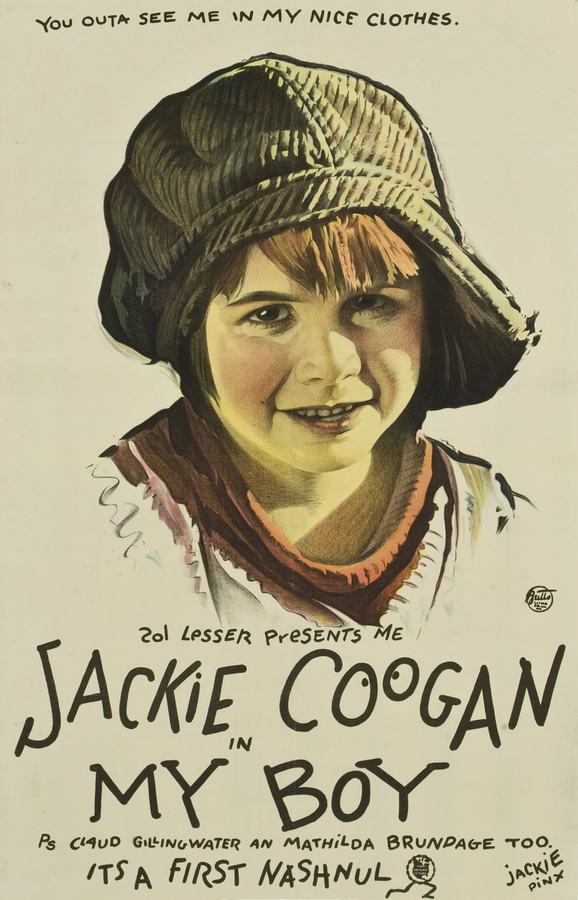
A definitive 6.2/10 rating for a film that redefined the boundaries of cult cinema. My Boy remains a cornerstone of transgressive art.
In the grand tapestry of early American cinema, few figures loom as large or as heartbreakingly small as Jackie Coogan. Following his seismic impact alongside Chaplin, Coogan’s 1921 vehicle My Boy serves as a profound testament to the power of silent pantomime. The film does not merely tell a story; it captures a transient moment in history where the gates of Ellis Island represented both the threshold of hope and the maw of bureaucratic despair. Unlike the sprawling narratives found in The Pool of Flame, this is an intimate, localized character study that draws its strength from the micro-expressions of its lead performers.
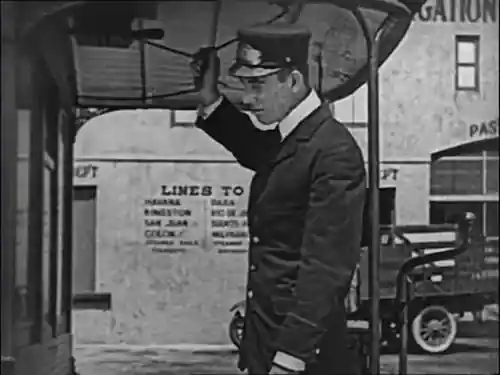
The opening sequences at Ellis Island are masterfully staged by directors Victor Heerman and Albert Austin. There is a palpable sense of kinetic anxiety as the camera weaves through the throngs of immigrants. Here, the young protagonist becomes a ghost in the machine, a flicker of movement among the static lines of the processing center. His escape is not an act of rebellion but one of survival, a theme that resonates deeply when compared to the societal critiques embedded in Ignorance. The cinematography utilizes high-contrast lighting to accentuate the grime of the New York waterfront, creating a visual language that feels almost documentarian in its honesty.

Claude Gillingwater’s portrayal of Captain Bill is a masterclass in the 'grumpy old man with a heart of gold' archetype, yet he avoids the clichés that would later plague this trope. He is a man discarded by the industrial world, a relic of the sailing era who finds his reflection in a discarded child. Their interactions are devoid of the theatrical excess often found in films like En Aftenscene. Instead, we see a subtle, evolving chemistry. Gillingwater’s Captain Bill is physically burdened by his failures, his shoulders slumped under the weight of an empty wallet and a looming eviction notice. When Coogan enters his life, the shift in his physicality is subtle—a slight straightening of the spine, a softening of the gaze that suggests a rekindled purpose.
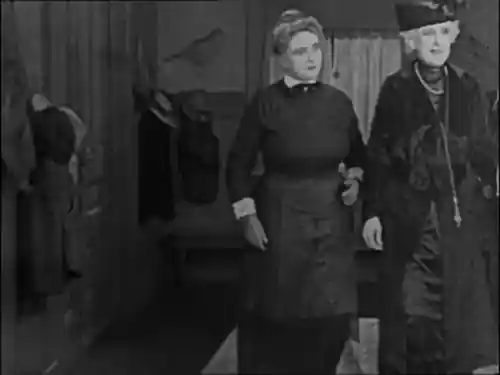
Jackie Coogan’s performance remains one of the most sophisticated examples of child acting in the history of the medium. He possesses an uncanny ability to hold the frame, commanding attention not through precociousness, but through a startlingly adult sense of gravity. In My Boy, he is required to navigate a spectrum of emotions from abject terror to playful resilience. His interactions with the supporting cast, including Mathilde Brundage and Frank Hayes, provide the necessary friction to keep the plot moving, but it is his solo moments—staring out at a city that doesn't want him—that linger in the mind. This level of emotional transparency is rarely seen even in more dramatic works like Her Silent Sacrifice.

The writing credit, shared by Victor Heerman, Max Abramson, and Shirley Vance Martin, suggests a rigorous refinement of the story’s emotional beats. The narrative structure is deceptively simple, yet it manages to weave in complex themes of national identity and social safety nets. While a film like The American Way might lean into overt patriotism, My Boy questions the efficacy of the 'melting pot' when the heat is turned too high for the vulnerable. The dialogue intertitles are used sparingly, allowing the visual storytelling to carry the narrative weight, a technique that stands in stark contrast to the exposition-heavy Children of Destiny.
The setting of the film—a dilapidated apartment that feels more like a cage than a home—serves as a primary character. The production design emphasizes the scarcity of the era. We see the peeling wallpaper, the flickering candles, and the meager portions of food that highlight the characters' proximity to starvation. This gritty realism predates the neo-realist movements by decades. It shares a certain DNA with The Mail Order Wife in its depiction of domestic struggle, yet it elevates the material through its central paternal bond. The threat of the 'law' is ever-present, personified by immigration officials who are not portrayed as villains, but as indifferent cogs in a machine—a much more terrifying prospect.
When examining My Boy alongside its contemporaries, its restraint becomes its most striking feature. Where Toys of Fate relies on melodramatic twists of destiny, Heerman’s film relies on the organic progression of a relationship. Even the comedic interludes, likely influenced by the writers' backgrounds in slapstick, feel grounded in the character's reality. There is a sequence involving a search for work that recalls the frantic energy of A Bunch of Keys, but here the stakes are life and death rather than mere farce. The film manages to balance the whimsy of childhood with the crushing reality of the adult world, a feat that Just Peggy attempts with far less gravitas.
As the film reaches its crescendo, the resolution avoids the easy path of a deus ex machina. While there is a sense of closure, it is tempered by the knowledge of the hardships already endured. The cinematography in the final act becomes more expansive, moving away from the tight, suffocating interiors to the broader vistas of the city, symbolizing a newfound freedom. This transition is handled with more grace than the abrupt tonal shifts in The Stain in the Blood. Coogan’s face, in the final frames, is no longer just that of a victim, but of a survivor.
In conclusion, My Boy is a vital piece of cinematic history that demands modern reappraisal. It bypasses the superficiality of flapper-era romps like Flappers and Friskies and the detective tropes of Sleepy Sam, the Sleuth to deliver a universal message about the human need for connection. It is a film that understands the language of silence perfectly, proving that a single tear on a child’s cheek can be more eloquent than a thousand lines of dialogue. For those who appreciate the intersection of social history and pure emotional storytelling, this film is an essential experience. It stands as a beacon of empathy in an often cold world, much like the light at the end of a long maritime voyage, or the fleeting joy found in De la coupe aux lèvres. To watch it is to be reminded of the fragility of our social structures and the enduring strength of the human spirit.
The technical restoration of such films is paramount, as the nuance in Gillingwater’s performance and the specific textures of the 1920s New York sets are easily lost to time. In My Boy, every shadow tells a story, and every ray of light through a dusty window represents a prayer. It is a work of high lexical diversity in its visual form, speaking volumes through its composition and its heart. It remains, over a century later, a towering achievement in the art of the silent screen.
IMDb —
1923
Community
Log in to comment.