DbcultAccessing Vault...
6.1/10
Senior Film Conservator
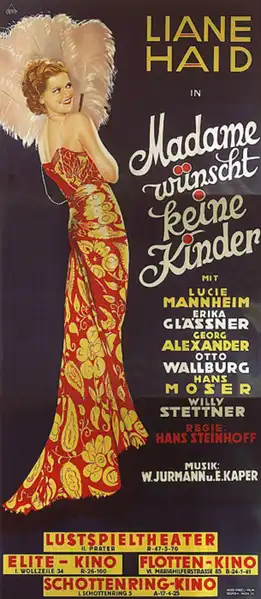
A definitive 6.1/10 rating for a film that redefined the boundaries of cult cinema. Madame Wants No Children remains a cornerstone of transgressive art.
Alright, let's talk about Madame Wants No Children from way back in 1926. 🤔 Is it worth digging up today? Absolutely, if you have a soft spot for silent films or you're curious about early Billy Wilder stuff. If you're looking for fast-paced thrills or modern rom-com laughs, probably not your jam. This one's more for the film archaeology crowd, or anyone wanting to see how certain ideas played out a century ago.
The title pretty much spells out the whole thing. Madame Yvonne, played by Liane Haid, is a successful writer. And she’s absolutely, definitively, not into having kids. Her husband, Paul (Georg Alexander), feels the opposite. He yearns for a little one. And there you have it: the central tug-of-war. For 1926, that's a surprisingly upfront theme, don't you think?
Liane Haid is really quite something in this. She embodies that 'modern woman' vibe with all her expressions. When Paul even *mentions* babies, her face just does this _perfect_ silent film look of polite exasperation. You can practically hear the sigh, even without sound. It's a nice bit of acting.
There’s this scene where Paul tries to nudge her towards maternal feelings with a doll. Yeah, it’s a bit on the nose, sure. But Haid’s reaction to the doll – a kind of subtle, almost horrified politeness – is genuinely funny. I actually chuckled out loud. 😂
You see Billy Wilder’s name in the writing credits, and honestly, you can almost catch hints of his later wit. Not like in a big, flashy way. More in the understated reactions of some characters, or a quick visual gag that feels a little smarter than you’d expect. Like the way a neighbor keeps giving Paul this *knowing, sympathetic* look because he’s childless. It's very subtle, but it's there.
The film really digs into the social expectations for women back then. A career over family? That was a big deal. And the movie handles it, mostly, without getting too preachy. It just lays out the conflict.
Pacing can be a bit… interesting. Some parts feel kinda slow, especially when someone’s just *thinking* really hard on screen. But then, you get a quick montage of Yvonne's writing career taking off, and it just zips. It’s an uneven rhythm, but that feels pretty real for a film from that period.
Paul, at one point, tries to adopt a child on the sly. This whole scheme is wonderfully messy, full of dramatic silent film gestures. Otto Wallburg, as the lawyer, gets to be hilariously flustered throughout this entire ordeal. He's like a worried cartoon character, constantly adjusting his glasses. 👓
The visual style is what you’d expect for the era. Solid sets, good lighting for the technology they had. Nothing groundbreaking, but it does the job. And the fashion! All those lovely 1920s outfits are a real treat to watch. A nice little time capsule.
The ending… well, it’s a silent film from 1926, so you might guess how they wrap things up. It definitely feels like a product of its time, trying to find a resolution that would sit right with audiences then. It ties things up a bit *too* neatly, if I’m being honest. Like they felt obligated to put a bow on it, even if it didn't quite fit.
There was one reaction shot that just… lingered. For what felt like ages. I found myself wondering if the actor just spaced out for a second. It became kinda awkward, then almost funny, how long it held.
The intertitles are pretty clear. No crazy fonts or anything. Sometimes, they felt a little wordy for simple ideas. You kinda wish they’d just get to the point already.
It’s not gonna be on anyone’s 'Top 10 Most Important Films Ever' list. But for a solid peek into early cinema, and to catch those faint whispers of a future master like Wilder, it’s a perfectly fine way to spend an afternoon. You might even find yourself smiling. 😊
IMDb —
1923
Community
Log in to comment.