DbcultAccessing Vault...
7.6/10
Senior Film Conservator
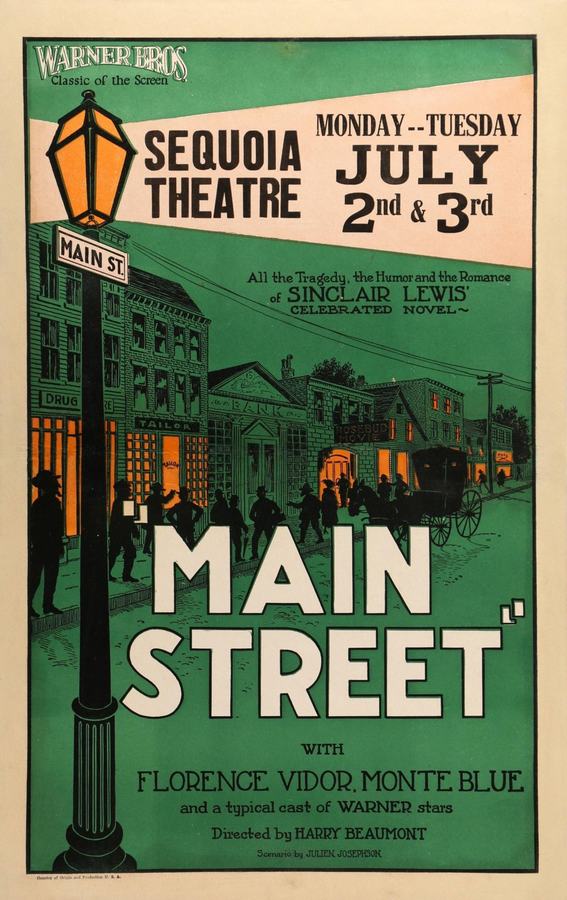
A definitive 7.6/10 rating for a film that redefined the boundaries of cult cinema. Main Street remains a cornerstone of transgressive art.
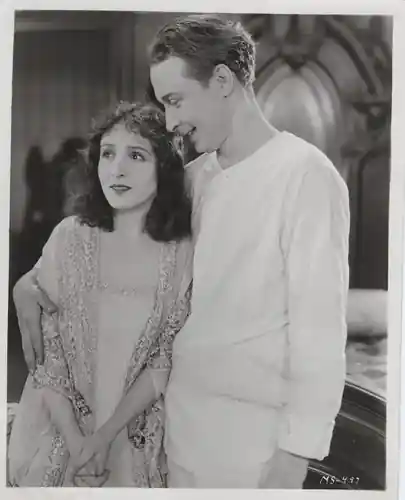
When the silent era’s Main Street opens, the camera lingers on a tableau of endless cornfields, weather‑worn storefronts, and a clock tower that seems to tick in perfect synchrony with the town’s collective heartbeat. It is a visual ode to stagnation, a place where every sunrise mirrors the last. Into this tableau steps Carol Milford, portrayed with an ethereal poise that feels both inevitable and disruptive. Her arrival is not announced by fanfare; it is signaled by the soft rustle of a new dress against the dusty road, a subtle shift that instantly reorients the town’s visual axis.
Anne Schaefer embodies the matriarchal figure whose authority is both revered and feared, while Noah Beery delivers a brooding performance that hints at repressed ambition. Robert Gordon’s portrayal of the earnest clerk becomes a study in quiet desperation, and Alan Hale, ever the charismatic presence, provides a foil to the town’s otherwise measured tempo. The ensemble, including Florence Vidor’s luminous eyes and Louise Fazenda’s comic timing, creates a mosaic of personalities that collectively respond to Carol’s influence in distinct, often contradictory ways.
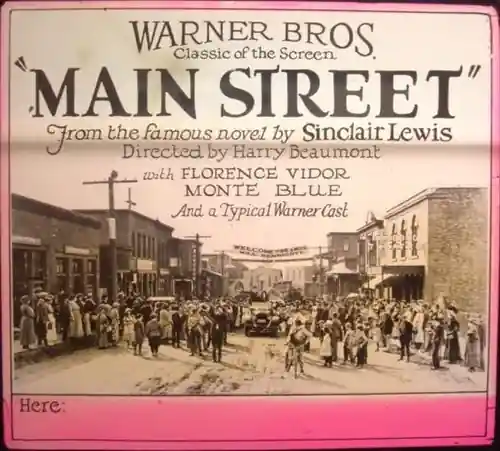
The film’s inciting incident is deceptively simple: a carriage pulls up, a door swings open, and Carol steps onto Main Street. Yet this moment initiates a chain reaction reminiscent of Sinclair Lewis’s literary examinations of provincial life, a connection underscored by the screenwriter Julien Josephson’s fidelity to the source material’s social commentary. Men who have long been satisfied with the predictability of harvest cycles find themselves measuring their own worth against the allure of a woman who appears to embody both modernity and mystery. Women, on the other hand, interpret Carol’s confidence as a mirror reflecting their own suppressed longings, prompting a subtle, yet palpable, shift in the town’s gender dynamics.
As the narrative progresses, the camera captures a series of vignettes: a heated argument in the general store, a clandestine meeting behind the church’s stained‑glass windows, and a quiet moment of contemplation on a wind‑blown porch. Each vignette is meticulously composed, employing chiaroscuro lighting that accentuates the inner turmoil of the characters. The film’s pacing, while deliberately measured, never lapses into monotony; instead, it mirrors the slow burn of societal change, allowing the audience to feel the weight of each unspoken decision.
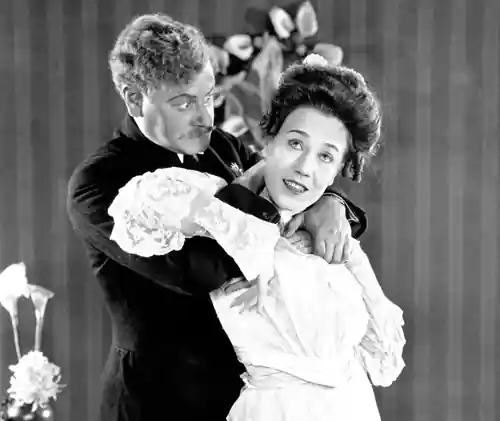
At its core, Main Street interrogates the tension between individual yearning and communal expectation. Carol’s presence acts as a catalyst that forces each resident to confront an uncomfortable truth: the life they have cultivated may be a comfortable illusion rather than a genuine expression of self. This thematic strand finds echo in other silent-era dramas such as The Little Intruder and The Secret Game, both of which explore the ripple effects of an outsider’s intrusion on a closed community.
Moreover, the film subtly critiques the gendered expectations of the 1920s Midwest. While the men grapple with the erosion of their patriarchal authority, the women negotiate the paradox of admiration and resentment toward Carol. This duality is captured in a lingering close‑up of a young housewife’s face, half‑lit by the amber glow of a lantern, her eyes reflecting both admiration and a dawning sense of possibility.
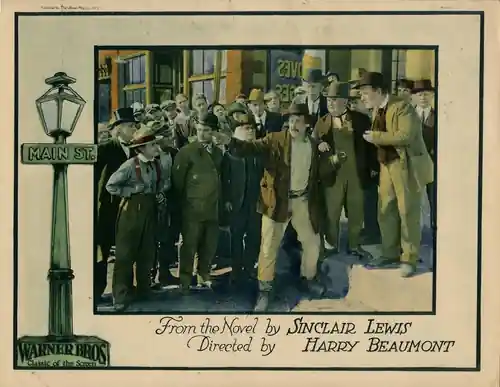
Director’s use of composition is nothing short of masterful. The recurring motif of the town’s clock tower—its hands frozen at noon—serves as a visual reminder of the temporal stagnation that pervades Gopher Prairie. When Carol walks past, the camera subtly tilts, suggesting a shift in perspective that aligns the audience with her outsider status. The interplay of shadows and light, particularly in scenes set within the church’s nave, creates a chiaroscuro that underscores the moral ambiguity of the characters’ choices.
One cannot overlook the film’s soundless yet expressive intertitles, which are rendered in a crisp, sea‑blue typeface reminiscent of the town’s river that borders the prairie. These intertitles not only convey dialogue but also provide poetic commentary, enriching the narrative with a lyrical quality that compensates for the absence of audible speech.
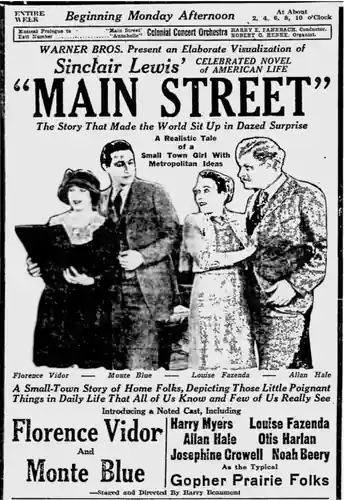
Anne Schaefer’s portrayal of the town’s matriarch is a study in restrained power. Her eyes, often narrowed against the glare of the sun, convey a depth of judgment that words could never articulate. Noah Beery, meanwhile, oscillates between stoic resolve and fleeting vulnerability, particularly in a scene where he watches Carol from the far end of the town square, his silhouette framed against the setting sun.
Florence Vidor’s brief but impactful appearance provides a counterpoint to Carol’s allure; Vidor’s character, a schoolteacher bound by duty, represents the path not taken. Their brief interaction—an exchange of glances over a stack of textbooks—encapsulates the film’s central conflict: the choice between comfort and transformation.
When placed alongside contemporaneous works such as The Upstart and The Midnight Man (1919), Main Street distinguishes itself through its emphasis on social critique rather than pure melodrama. While The Upstart revels in the archetype of the self‑made man, Main Street interrogates the very notion of self‑making within a community that resists change.
Furthermore, the film’s narrative restraint echoes the thematic subtlety found in East Lynne (1922), where personal desire collides with rigid social mores. Both films employ visual symbolism to articulate internal conflict, a technique that modern audiences may find refreshingly sophisticated.
More than a century after its debut, Main Street remains resonant. Its exploration of how a single individual can destabilize entrenched norms speaks to contemporary conversations about cultural diffusion, gender dynamics, and the tension between tradition and progress. The film’s subtle critique of conformity anticipates later cinematic movements that foreground the individual’s struggle against collective expectations.
For scholars of early American cinema, the film offers a fertile ground for examining how silent storytelling can convey complex sociopolitical commentary without reliance on dialogue. The meticulous set design, period‑accurate costumes, and nuanced performances combine to create an immersive tableau that invites repeated viewings.
In summation, Main Street is not merely a period piece; it is a timeless meditation on the ripple effect of an outsider’s presence within a closed system. Its artistry lies in its ability to weave visual elegance with thematic depth, delivering a narrative that feels both historically grounded and universally applicable. Whether one approaches the film as a study in silent‑era technique, a sociological case study, or simply as an engaging drama, it rewards the viewer with layers of meaning that unfold long after the final frame fades to black.
Keywords: Main Street 1923 review, silent film analysis, Carol Milford, Gopher Prairie, Sinclair Lewis adaptation, classic cinema critique

IMDb 7
1921
Community
Log in to comment.