DbcultAccessing Vault...
4.4/10
Senior Film Conservator
A definitive 4.4/10 rating for a film that redefined the boundaries of cult cinema. Mummy's Nightmare remains a cornerstone of transgressive art.
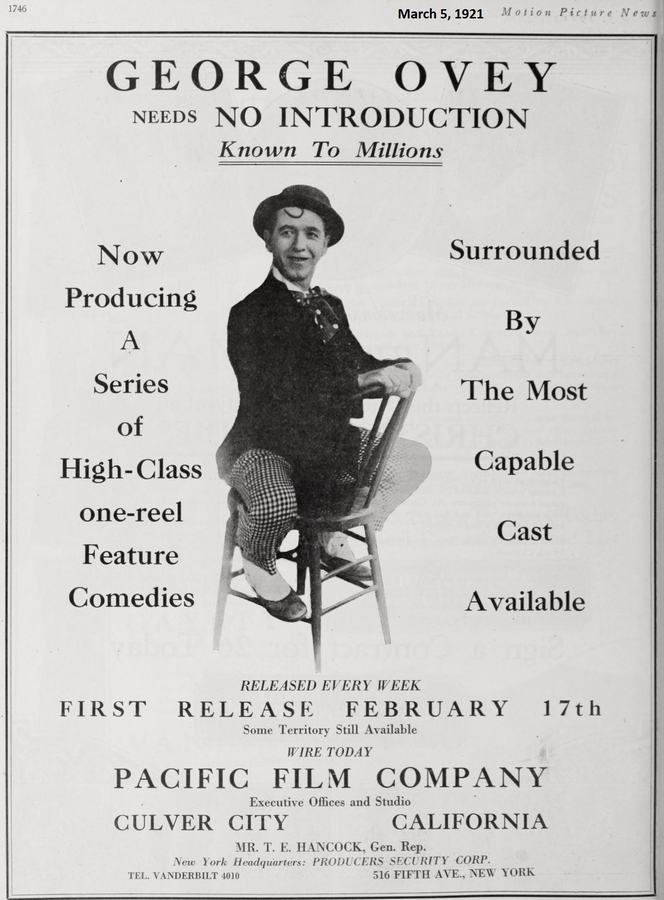
The year 1921 was a watershed moment for the cinematic apparatus, a period where the short-form comedy was beginning to shed its infantile skin and embrace a more sophisticated, albeit still chaotic, narrative structure. In the midst of this evolution, Mummy's Nightmare emerged as a quintessential example of the Christie Film Company’s output—a production that leveraged the physical prowess of George Ovey and the dependable comedic timing of Vernon Dent to craft a farce that feels both of its time and strangely prophetic of the screwball genre to come.
At its core, the film operates on a principle of escalating displacement. We begin with a domestic conflict that mirrors the anxieties found in Crazy to Marry, where the matrimonial aspirations of the youth are thwarted by the neurotic gatekeeping of the elder generation. The father in Mummy's Nightmare is not merely a character; he is a force of stasis, attempting to halt the natural progression of courtship by shipping his daughter off to a boarding school. This setting, a common trope also explored in contemporary works like Silk Stockings, serves as the perfect pressure cooker for the impending absurdity.
The pivot point of the narrative—the theft of the mummy and the subsequent human substitution—introduces a layer of the grotesque that was surprisingly popular in silent shorts. Unlike the more somber explorations of guilt found in German expressionist imports such as ...der Übel größtes aber ist die Schuld, Mummy's Nightmare treats the 'living dead' as a purely mechanical gag. The 'mummy' (a man in disguise) becomes a prop, a piece of furniture that breathes, blinks, and occasionally flees, creating a dissonance that drives the film’s second act into a fever pitch of physical comedy.
George Ovey, often overshadowed by the giants like Chaplin or Keaton, displays a remarkable elasticity here. His performance lacks the pathos of Sunnyside, but it compensates with a raw, unadulterated energy. Ovey’s 'Merry' character was built on a foundation of perpetual motion, and in the context of a boarding school overrun by a 'haunted' relic, his wide-eyed reactions provide the necessary emotional anchor for the audience. He navigates the frame with a frantic grace, his movements often mirroring the jerky, staccato rhythm of the hand-cranked cameras of the era.
The chemistry between Ovey and Vernon Dent is palpable. Dent, who would later become a staple of the Three Stooges shorts, provides a grounding presence. While Ovey is the lightning, Dent is often the rod, absorbing the impact of the situational irony. Their interactions remind one of the sharp social satire found in The Liar, though Mummy's Nightmare opts for a more visceral, less dialogue-heavy approach to humor.
One cannot discuss this film without acknowledging the cultural zeitgeist of the early 1920s. The world was gripped by 'Egyptomania,' a fascination with the archaeological discoveries in the Valley of the Kings. This film subverts that fascination, turning a symbol of ancient majesty into a vessel for low-brow hijinks. It’s a fascinating contrast to the more serious or melodramatic treatments of exoticism seen in The Yellow Traffic or the sweeping historical vistas of Scarlet Days.
In Mummy's Nightmare, the 'mummy' is a catalyst for the breakdown of social order. The boarding school, an institution of discipline and refinement, is revealed to be a fragile facade. When the 'mummy' begins to move, the faculty and students alike descend into a primal state of panic. This thematic thread—the thin veil between civilization and chaos—is a recurring motif in silent cinema, often seen in rural comedies like The Village Sleuth.
The cinematography in Mummy's Nightmare, while utilitarian, makes excellent use of depth of field to stage complex gags. The chase sequences through the school corridors are choreographed with a precision that rivals the rhythmic editing of It Pays to Advertise. There is a specific shot—a POV-style glimpse of the mummy’s hand emerging from the sarcophagus—that utilizes shadow and light in a way that feels almost proto-horror, a technique that would be refined decades later but here serves as a punchline rather than a scream.
Furthermore, the film’s pacing is relentless. Unlike the languid, atmospheric pacing of international features like Brazil's O Que Foi O Carnaval de 1920!, Mummy's Nightmare is built on a series of rapid-fire vignettes. Each scene serves to escalate the stakes, moving from the daughter's romantic frustration to the father's anger, then to the thieves' desperation, and finally to the school's total collapse into anarchy.
When placed alongside Ain't Love Grand?, also released in 1921, we see two different approaches to the 'frustrated lover' narrative. While the latter leans into the sentimentality of the era, Mummy's Nightmare remains stubbornly cynical. It suggests that the only way to navigate a world governed by overbearing fathers and opportunistic criminals is through a commitment to the absurd. This cynicism is echoed in the darker undertones of The Food Gamblers, though Mummy's Nightmare hides its bite behind a layer of slapstick dust.
The film also shares a DNA with the ensemble-driven dynamics of The Waybacks or the social observation of Sisters of the Golden Circle. However, it distinguishes itself by its commitment to the 'man-as-object' trope. By turning a human being into an Egyptian artifact, the film comments on the dehumanizing nature of both the educational system and the criminal underworld. It is a world where everyone is a pawn, and only those who can improvise—like our 'living mummy'—survive the night.
As we look back at Mummy's Nightmare from a century's distance, it stands as more than just a relic of a bygone era. It is a testament to the durability of the farce. The themes of overprotective parenting, the failure of institutional security, and the sheer unpredictability of human nature remain as relevant today as they were in 1921. While it may not possess the tragic grandeur of Barranca trágica, its value lies in its unpretentious pursuit of the laugh.
The Christie Comedies often aimed for a middle-ground between the high-octane stunts of Sennett and the character-driven narratives of Roach. Mummy's Nightmare hits this sweet spot perfectly. It is a film that rewards the attentive viewer with subtle visual cues while satisfying the casual observer with broad, effective physical comedy. In the pantheon of silent shorts, it deserves a place of honor—not just as a historical curiosity, but as a vibrant, breathing piece of cinematic machinery that still functions with remarkable efficiency.
In conclusion, for those seeking to understand the transition of comedy from the primitive to the structured, this film is essential viewing. It encapsulates the frantic energy of the post-war world, where the old rules were being rewritten by a generation that found humor in the most unlikely of places—even in the cold, dry heart of an ancient tomb.
IMDb —
1936
Community
Log in to comment.