DbcultAccessing Vault...
6.9/10
Senior Film Conservator
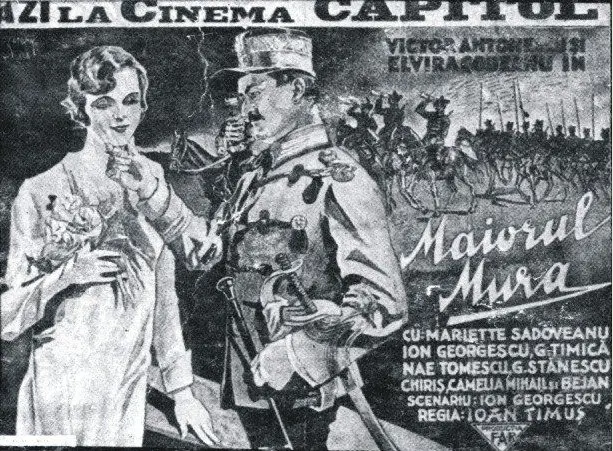
A definitive 6.9/10 rating for a film that redefined the boundaries of cult cinema. Maiorul Mura remains a cornerstone of transgressive art.
Is this film worth watching today? Short answer: Yes, but primarily as a historical curiosity for those who value the DNA of European comedy. This film is for the archival enthusiast who enjoys seeing the foundations of national cinema being poured; it is definitely not for the modern viewer who requires high-fidelity sound or complex, multi-layered character arcs.
Maiorul Mura is a frantic, sometimes exhausting, but undeniably charming relic of the silent era. It represents a moment when Romanian cinema was trying to find its voice by mimicking the successful slapstick formulas of the West while injecting a local, satirical flavor. It is a film that lives and dies by its energy.
1) This film works because the physical performance of George Timica provides a masterclass in silent-era facial geometry and comedic timing.
2) This film fails because the matrimonial premise, while initially clever, is stretched thin across a narrative that occasionally loses its sense of direction in the second act.
3) You should watch it if you have an interest in the early works of Jean Georgescu or want to see how 1920s Eastern European society parodied its own obsession with status and wealth.
The plot of Maiorul Mura is built on a foundation of pure, unadulterated greed. When the nobleman Amedeu dies, he doesn't just leave money; he leaves a challenge. The idea of a "matrimonial clause" is a classic trope, seen in various forms in films like Married Alive, but Georgescu handles it with a specific, frantic urgency. The two men who are eligible for the million-lei inheritance are not friends; they are unwitting competitors in a race where the finish line is a wedding chapel.
This setup allows for a series of escalating comedic set pieces. We see the protagonists attempting to woo women with a desperation that borders on the grotesque. There is a specific scene involving a misunderstood proposal in a crowded parlor that perfectly encapsulates the film's tone. The dialogue intertitles are sharp, but the real story is told through the widening eyes and sweating brows of the lead actors. It is a film about the anxiety of poverty and the absurdity of the laws that govern wealth.
It works. But it’s flawed. The pacing in the middle section feels like a series of sketches rather than a cohesive journey. However, the sheer momentum of the final third, as both men realize they are in a literal sprint to the finish, saves the experience from becoming a mere museum piece.
Jean Georgescu, who would go on to become a titan of Romanian cinema, shows his early promise here. You can see the influence of French avant-garde and American slapstick. Unlike the more somber tones found in El amor, el deber y el crimen, Georgescu leans into the kinetic. He uses the camera not just to record, but to emphasize the frantic nature of the search. The framing is often tight, trapping the characters in their own domestic disasters.
Take, for instance, the way Georgescu shoots the exterior village scenes. There is a sense of space that feels authentic, contrasting with the claustrophobic interiors where the legal drama unfolds. The cinematography, handled with the limited technology of 1928, manages to capture the textures of the period—the heavy fabrics, the ornate furniture, and the dusty roads. It reminds me of the visual clarity found in The Common Law, though with a much more frantic editorial pulse.
One surprising observation is how the film treats the female characters. While they are technically the "prizes" in this race, Marieta Sadova and Elvira Godeanu play their roles with a knowing cynicism. They aren't just passive objects; they are observers of the male madness. This adds a layer of social commentary that prevents the film from being a one-note joke about gold-digging.
If you are looking for a deep, emotional experience, look elsewhere. But if you want to understand the roots of cinematic comedy, Maiorul Mura is essential. It is a bridge between the theatrical traditions of the 19th century and the emerging language of film. The performances are loud, the stakes are high, and the resolution is satisfyingly ironic. It’s a snapshot of a world that was rapidly changing, caught between old-world nobility and modern-world materialism.
When compared to international contemporaries like The Ace of Cads, Maiorul Mura feels less polished but more energetic. It lacks the Hollywood sheen but makes up for it with a raw, theatrical vitality. The film is a testament to the fact that the desire for wealth and the comedy of errors that follows it are universal themes, whether in a New York penthouse or a Romanian village.
George Timica is the undisputed star here. His performance is a whirlwind. In one scene, where he realizes he has a rival for the inheritance, his transition from smug confidence to sheer panic is a highlight of the film. It’s the kind of performance that doesn't need sound; his body language speaks volumes. He reminds me of the physical agility seen in Trolley Troubles, though grounded in a much more grounded, human reality.
The supporting cast, including the legendary Elvira Godeanu, provides a solid backstop to Timica's antics. Godeanu, in particular, brings a level of grace that provides a necessary contrast to the surrounding chaos. The chemistry—or lack thereof, which is the point—between the potential couples is what drives the humor. It’s a film about people who don't belong together trying to force a union for the sake of a bank account.
"The film treats marriage not as a romantic goal, but as a finishing line in a high-stakes sprint, making it more of a sports movie than a romance."
Maiorul Mura is a fascinating, if slightly uneven, piece of cinematic history. It captures a specific moment in time where the world was transitioning into modernity, and the old rules of nobility were being challenged by the new rules of capital. While it may not have the universal acclaim of some of its Western contemporaries, it possesses a unique charm and a relentless energy that makes it worth the watch for any serious cinephile.
It isn't a masterpiece, but it is a vital step in the evolution of a national cinema. It’s loud, it’s frantic, and it’s unashamedly commercial. It reminds us that even in 1928, the promise of a million lei was enough to turn any man into a fool. And in the world of Jean Georgescu, there is nothing more entertaining than a fool with a deadline.
For those who enjoyed the societal critiques in Social Hypocrites or the identity-swapping humor of The Prince and the Pauper, this film offers a similar, albeit more localized, pleasure. It is a reminder that while technology changes, the absurdity of human greed remains constant. Watch it for the history, stay for the comedy, and appreciate the craft of a director who was just beginning to change the landscape of his country’s art form.
IMDb —
1920
Community
Log in to comment.