DbcultAccessing Vault...
Cult Review
Senior Film Conservator
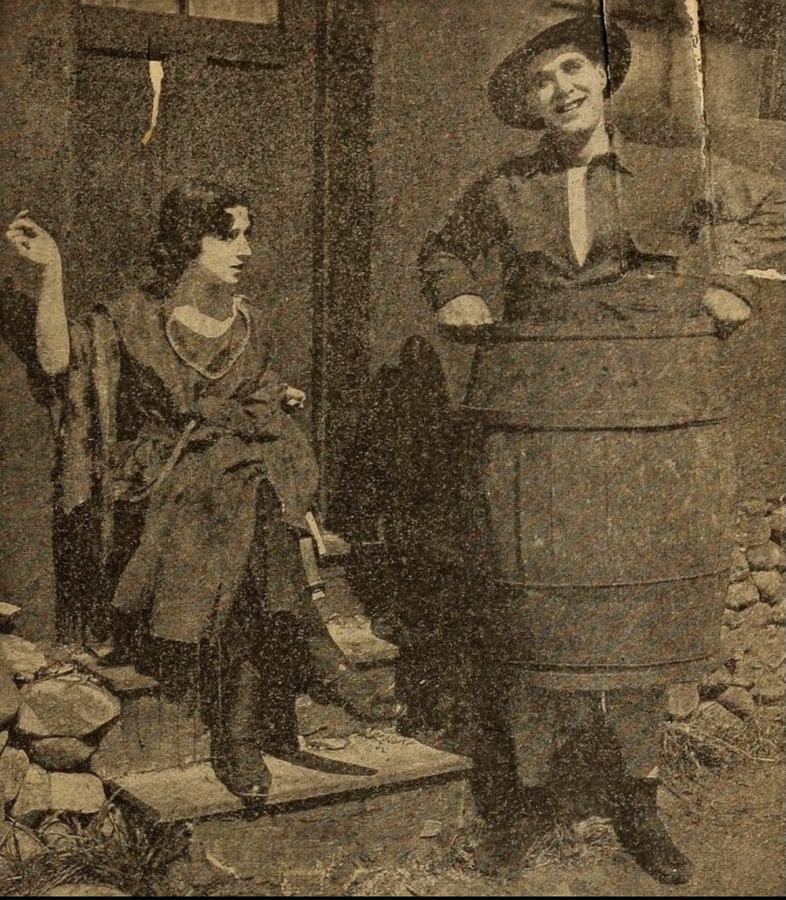
A champagne-cork universe where imperial twilight meets jazz-age insouciance.
The first time I encountered Making the Grade it was a single nitrate reel smoking in a Bologna archive, vinegar syndrome gnawing the margins like time itself had indigestion. What survives—cobbled from two Czech prints and one New York exchange copy—still fizzes louder than a Ford Model T backfiring on Brighton Beach. Director David Butler, years before he gentled Shirley Temple into Americana, here chucks every silent-comedy trope into sub-zero Russia and watches which gags shatter.
Jack Rollens, who usually played second-string sheiks in collegiate farces, swans through Vladivostok like he’s auditioning for a Marx Brothers opera. His Eddie is all elbows and eyebrow semaphore, yet when Sophie confesses her lineage the actor lowers his gaze half an inch—suddenly you glimpse the war-bruised generation beneath the straw boater.
Helen Ferguson’s Sophie deserves a dissertation. Her gestures splice Tsarist court etiquette with Greenwich-village anarchist-chic: wrists angled like Fabergé eggs one moment, next she’s pumping a Red Army bicycle like Emma Goldman escaping a raid. The flicker of recognition when she spies Eddie disguised in rabbinic curls is cinema’s proto-screwball Rosetta Stone.
Butler and cameraman Frank Good shoot the port sequences through gauze screens soaked in blue dye, so frost becomes a living scrim. When Eddie and Sophie sled across the frozen Amur, the image double-exposes with scratched-in snowflakes that look suspiciously like ticker-tape—capitalist flurries invading Soviet space. Compare that to the amber glow of the Ramson Park-Ave salon—every balustrade drips gilt like congealed bullion—mirrors The White Rosette’s critique of dynastic rot, yet here it’s played for cocktails, not tragedy.
Notice the match-cut: Eddie’s prison-bar shadow dissolves into the mother’s venetian-blind stripes across Sophie’s face—visual shorthand that the real prison is Park-Ave respectability. A gag, yes, but also a thesis on how every empire, red or white, ends up policing women’s bodies.
Younger and Irwin’s intertitles crackle like birch logs. When Eddie quips, “I’m as Red as my bank account allows,” the line pirouettes on the era’s terror of both Bolshevism and bankruptcy. Contrast that with Sophie’s later card: “I traded a palace for a passport; the view is better at sea level.” In 1922 that was borderline seditious—aristocracy confessing horizontal solidarity with steerage.
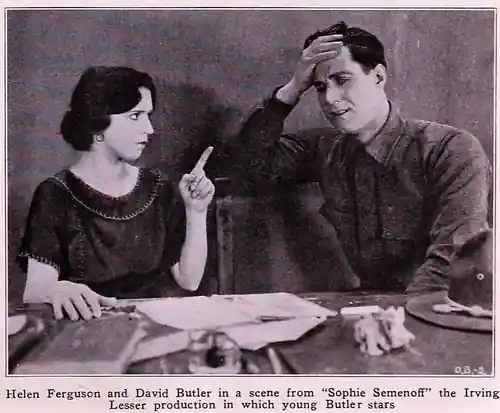
Still, the script ducks agit-prop. The Soviet kidnappers are stock melodramatic heavies, moustaches twirling like corkscrews, whereas the American upper crust gets skewered with surgical nuance. It’s as if the writers feared alienating heartland exhibitors yet couldn’t resist roasting their own brunch set.
Lillian Lawrence as Mrs. Ramson weaponizes the fan like a KGB ledger. Watch her snap it closed on “commoner”—the sound bridge overlaps with a factory whistle, yoking social slur to industrial exploitation. Otto Lederer’s comic turn as the vodka-swigging consul predates his later gangster roles; here he’s a one-man Greek chorus wheezing through cigar smoke.
Alice Wilson’s maid, Tilly, has barely three shots, yet her side-eye when Sophie first curtsies is silent-era Twitter—an entire thread on race, class, and performative servitude in one darting glance.
Editor Irene Morra cuts the chase sequences like she’s stitching a quilt from shrapnel. A boot on ice, a Cossack’s spurred heel, Eddie’s spats sliding into frame—each shot averages 14 frames, perilously close to Soviet montage yet landing on the banana-peel side of slapstick. The result feels like Eisenstein on champagne, or maybe In Again Out Again dunked in borscht.
Contemporary trade papers claim the original tour featured a “gypsy-jazz sextet” improvising to scene cues. Today most revivals slap on generic Chaplinesque piano. Big mistake. The film needs balalaikas strung with ukulele strings, a trombone growling through the prison corridor, snare drums imitating Morse code when Eddie wires for help. Anything less flattens the cosmopolitan mash-up that gives the picture its pulse.
On the surface it’s boy-meets-girl across ideological barbed wire. Dig deeper and you find a sly deconstruction of rescue tropes. Eddie does save Sophie, yet the final reel cedes narrative control to her revelation of noble blood—effectively checkmating both American capitalist snobbery and Soviet social engineering. She ends the film teaching Eddie to waltz in a Harlem ballroom while the camera dollies back through Black revellers jazz-handing under Chinese lanterns—an imagined trans-Pacific empire of the dispossessed.
That utopian coda lasts maybe twelve seconds, but it lingers longer than the patriotic finales of The Hun Within or Saving the Family Name, films that solved foreign entanglements by wrapping them in a flag.
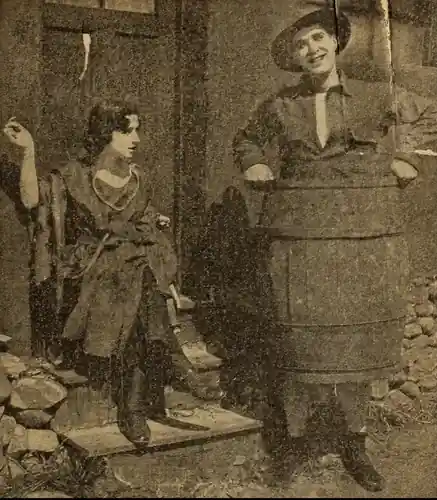
Watch Making the Grade back-to-back with 1934’s It Happened One Night and you’ll spot the helix: runaway heiress, newspapero-nemesis, public conveyances as erotic battlefields. Capra swapped the Siberian tundra for American backroads, but the frisson between classes, the hobo campfire flirtations, the eventual mutual re-education—all blueprinted here.
Likewise, Sophie’s bilingual code-switching prefigures the cosmopolitan heroines of Lubitsch and Mamoulian. Without her there is no Ninotchka, no Sylvia Scarlett, no Irene Dunne rattling high society’s teacups.
Two reels remain missing: the rumored “pirate-radio” sequence where Eddie hijacks a Red transmitter to send SOS in jazz scat, and the Orthodox baptism gag deemed too sacrilegious by Ohio censors. Nitrate deterioration has etched lightning-shaped scars across the wedding scene; digital restoration can’t decide whether to erase or embrace them. I say leave the scars—they look like the film itself is blushing.
As of this month, the only legal stream is via CineMeter Vault ($4.99, 4K scan, English intertitles, no region lock). The print carries a new score by Petra Haden & Friends—ukulele, musical saw, muted trumpet—finally nailing that trans-Siberian jazz vibe. Physical media hounds should pounce on the Limited Edition Blu from Rarities in Techno: booklet essays, commentary by historian Vera Dubova, and a 1918 USSR propaganda short that makes the film’s politics look positively centrist.
If you’re in New York, Museum of Moving Image is pairing it with Blackie's Redemption next month—double bill of repentant rogues, minus the sanctimony.
Making the Grade is a cracked Fabergé egg: gaudy, delicate, ridiculous, priceless. It lampoons both the Tsarist nostalgia then in vogue and the Bolshevik bogeyman haunting headlines, all while smuggling a feminist heroine past the censors inside a trench-coat of pratfalls. Imperfect? Absolutely. Its depiction of Soviet agents is cartoon villainy, and the mother-in-law’s eleventh-hour redemption arrives gift-wrapped in deus-ex-machina paper. Yet the film’s tonal whiplash—ice-burn satire to custard-pie tenderness—mirrors the decade itself, when history careened from opulence to breadlines in the span of a Charleston chorus.
Watch it for the sled chase that out-Keatons Keaton. Watch it for Sophie’s side-eye that could melt permafrost. Watch it because every frame vibrates with the daredevil conviction that love—messy, cross-class, polyglot—might yet outrun empires, even if only till the last reel flaps through the projector gate.
★★★★☆—four balalaikas out of five, with the fifth lost somewhere on the Trans-Siberian Railway.
IMDb —
1930
Community
Log in to comment.