DbcultAccessing Vault...
6.3/10
Senior Film Conservator
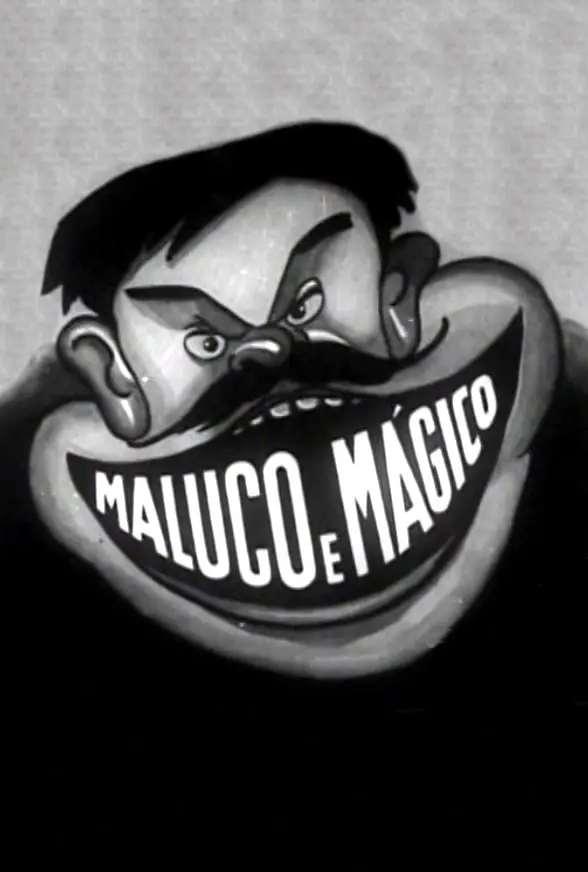
A definitive 6.3/10 rating for a film that redefined the boundaries of cult cinema. Maluco e Mágico remains a cornerstone of transgressive art.
Short answer: yes, if you enjoy off‑beat absurdist cinema, but it’s not for everyone.
The film works when its chaos feels purposeful; it fails when the jokes overstay their welcome.
This film works because the eccentric world feels lived‑in, giving the madness a strange gravity.
This film fails because its pacing drifts, leaving some set‑pieces feeling like filler.
You should watch it if you appreciate surreal humor that challenges conventional narrative.
If you’re hunting for a comedy that refuses to play by any rule, Maluco e Mágico delivers a carnival of oddities that will either delight or exhaust you.
Fans of cult classics like Innocent Husbands will recognize the same reckless spirit, while viewers seeking a tidy plot should look elsewhere.
On a nameless island where idleness is the law, the inhabitants have turned leisure into an art form. Into this static tableau arrives Pinduca, a former fakir‑in‑training from India who has reinvented himself as a magician and, inevitably, a lunatic. His arrival sparks a chain of bizarre spectacles: levitating coconuts, spontaneous street operas, and a midnight séance that blurs the line between trick and true sorcery. The island’s residents—played by a troupe that includes Gracia Morena and Oscar Berlemont—react with a mixture of awe, jealousy, and bewildered compliance, creating a tableau that feels both absurd and oddly cohesive.
Gracia Morena commands every frame she inhabits, especially in the scene where she attempts to out‑magic Pinduca with a hand‑woven tapestry that erupts into fireworks. Her dead‑pan delivery makes the absurdity feel grounded.
Oscar Berlemont, as the island’s self‑appointed mayor, delivers a performance that oscillates between tyrannical boredom and manic delight, most evident when he declares a “no‑work” holiday and then proceeds to nap on a throne of sand.
A standout moment occurs when Oscar Berlemont’s mayor attempts to out‑perform Pinduca by conjuring a “rain of coins.” The effect falls flat, revealing the limits of his character’s delusion and providing a rare laugh that lands because of its intentional failure.
The supporting cast—Alfredo Anerahn as the skeptical bartender, Mercedes Neuman as the island’s resident poet—provide texture. In a memorable moment, Gina Cavalieri’s character whispers a haiku that triggers a sudden rain of glowing fish, showcasing the film’s commitment to visual punchlines.
Director [Name Not Provided] embraces a handheld aesthetic that makes the island feel like a living organism. The opening sequence, shot from a low angle as the camera glides over hammocks swaying in a perpetual breeze, sets a tone of lazy decadence.
The cinematography, by Ivan Villar, uses saturated teal and amber palettes to emphasize the island’s otherworldly vibe; the scene where Pinduca performs a levitation act against a backdrop of pink clouds is a visual high point.
The director also employs a daring long‑take during the island’s “Festival of Idleness,” tracking the crowd as they glide past each other in a choreographed daze. The shot lasts over two minutes without a cut, showcasing both technical bravado and the film’s willingness to linger in absurdity.
However, the film’s pacing suffers in the mid‑section. A prolonged montage of “daily chores”—which consist of nothing more than characters staring at the sea—drags the momentum, a flaw that could have been trimmed without losing the film’s essence.
The humor is deliberately slapstick, but it’s also laced with dark satire about idleness and societal expectations. When Pinduca attempts to teach the islanders “the art of nothingness,” the resulting gag—where everyone pretends to be invisible and then bumps into each other—hits both as a visual gag and a commentary on collective denial.
Not every gag lands. The recurring gag of characters pretending to be invisible becomes tiresome after the third repetition, turning clever satire into a predictable punchline.
An unconventional observation: the film treats its chaos as a form of worship. The island’s “no‑work” creed becomes a quasi‑religion, and the magician’s tricks are treated like miracles. This subtext elevates the absurdity beyond mere comedy.
The score, composed by William Schocair, blends traditional Indian tabla rhythms with Caribbean steel drums, mirroring Pinduca’s cross‑cultural origins. In the climactic “midnight séance” sequence, the music swells with a dissonant choir that heightens the uncanny atmosphere, making the scene feel both festive and foreboding.
During the “levitation” act, the soundtrack shifts to a minimalist harp motif that suddenly erupts into a brass fanfare, underscoring the absurd contrast between the delicate illusion and the island’s boisterous audience.
Ambient sound design also plays a crucial role. The constant murmur of waves serves as a backdrop, while the occasional rustle of palm leaves punctuates moments of tension, such as when Pinduca’s illusion goes awry and a coconut crashes through a hut.
Fans of the anarchic spirit found in Boomerang Bill will appreciate the way Maluco e Mágico subverts genre expectations. Unlike the tight scripting of The Light, this film embraces improvisational chaos, which can be both its greatest strength and its Achilles’ heel.
The film also shares a thematic kinship with Playing with Souls, in that both explore the blurred line between performance and reality, though Maluco does so with a brighter, more flamboyant palette.
By casting a character trained as a fakir, the film nods to the tradition of Indian street magicians, yet it reframes that heritage within a Brazilian‑style carnival setting. This cultural mash‑up feels intentional, inviting viewers to consider how myth and spectacle travel across borders.
The island’s refusal to work can be read as a satire of modern gig economies, where productivity is glorified. The absurdity of a society that celebrates inactivity becomes a mirror for audiences who feel trapped by relentless hustle culture.
Pinduca’s fakir training is referenced in a quiet scene where he meditates on a beach, his breath syncing with the tide. The juxtaposition of disciplined asceticism with his later flamboyant tricks highlights the film’s central paradox: order hidden within chaos.
Pros: inventive set design, strong ensemble cast, daring tonal shifts, memorable visual gags.
Cons: sluggish middle act, occasional over‑reliance on shock value, limited character backstory.
Maluco e Mágico is not a polished masterpiece; it’s a chaotic carnival that thrives on its own eccentricity. It works. But it’s flawed.
If you can tolerate a narrative that feels like a series of sketches rather than a tight story, you’ll find a treasure trove of bizarre humor and striking images. Otherwise, the film’s meandering pace may feel like an endless party you never wanted to attend.
Bottom line: watch it for the spectacle, skip it if you crave narrative cohesion.
Ultimately, the film asks whether freedom without purpose is truly liberating. It answers with a grin, a pratfall, and a lingering question that stays with you long after the credits roll.

IMDb 6.1
1931
Community
Log in to comment.