DbcultAccessing Vault...
2.3/10
Senior Film Conservator
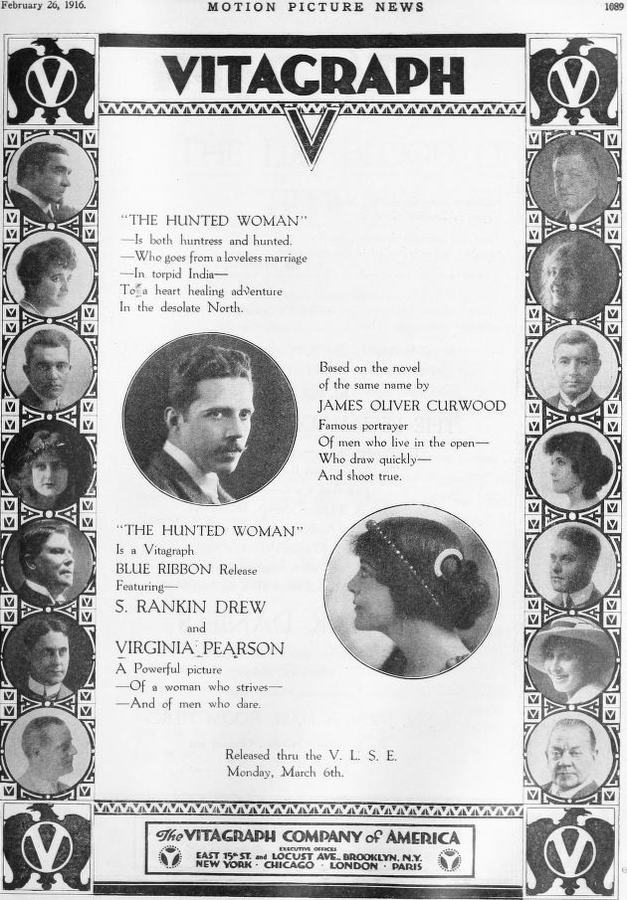
A definitive 2.3/10 rating for a film that redefined the boundaries of cult cinema. The Hunted Woman remains a cornerstone of transgressive art.
Imagine nitrate stock glowing like obsidian—within it, a woman hurtles from Calcutta chandeliers to cedar-smoke shanties where whiskey is measured by knuckles and marriage by gun barrels. The Hunted Woman, released in November 1916 and marketed with the tagline “A torrent of love and terror,” deserves resurrection not as antique curiosity but as proto-feminist noir, a film whose very emulsion seems salted with snowmelt and blood.
Director Charles L. Gaskill, better remembered for literary bodice-rippers than for mountain sagas, here fuses The Place Beyond the Winds’ frontier fatalism with the moral vertigo of Den sorte Varieté. The result is a hybrid creature: half gothic romance, half survival western, shot through with the same cosmic sadism that makes Hardy’s heroines flinch.
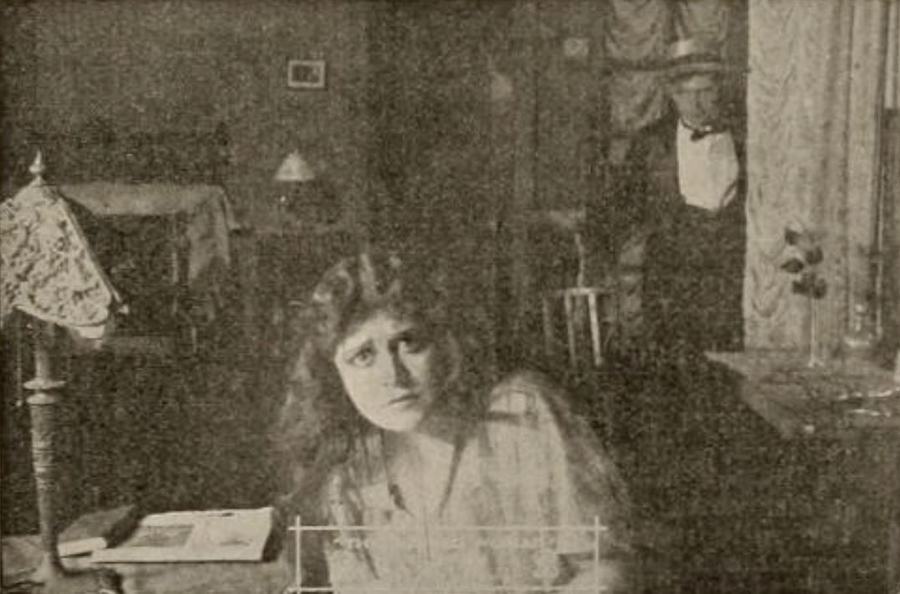
Virginia Pearson’s Joanne Grey enters swaddled in mourning crepe, cheekbones sharp enough to slice correspondence; her eyes already speak the language of exile. When she kneels to receive Fitzhugh’s ring—an onyx scarab more insect than jewel—Pearson lets her left hand tremble like a trapped sparrow while her right clutches the bedpost as though it were the last mast on a sinking ship. It is silent-era acting at its most electrically calibrated: no theatrical scrolls, just micro-shudders that a close-up drinks like absinthe.
Frank Currier’s Mortimer slithers into frame cloaked in imperial tweed, moustache waxed to dagger points. He never twirls it; instead he caresses it, as though reminding himself of weapons within reach. Currier playsMortimer not as moustache-twirling cad but as banal predator: the bureaucrat of cruelty, ledger-minded, who signs marriage certificates the way others sign death warrants.
The film’s true engine, however, is Denton Vane’s Bill Quade—half swagger, half frostbite. Quade’s first appearance is a silhouette against a kerosene dawn, shoulders eclipsing the sun like a gallows. Watch how Vane oscillates between jocular camp cook and rapacious wolf: he hums “Sweet Alice, Ben Bolt” while sharpening a blade, never acknowledging the dissonance. It is this off-key domesticity that chills deeper than snarling villainy.
Cinematographer Lucien Andriot lenses British Columbia as both Eden and abyss. Note the sequence where Joanne’s railcar crawls past yawning canyons: the camera tilts downward, revealing a river the color of oxidized copper far below, then cranes up to peaks still wearing winter like ermine. The cut is not merely scenic; it foreshadows the moral plunge awaiting her. Compare this to The Dead Alive, where landscape is backdrop; here it is prosecutor.
Inside Quade’s saloon, shadows are daubed umber by hanging lanterns; cigarette haze diffuses faces until they resemble masks in a sepulchral carnival. Gaskill blocks Joanne’s entrance so she appears to descend a staircase that leads nowhere, surrounded by miners whose eyes glint like struck matches. The spatial grammar screams entrapment long before dialogue cards confirm it.
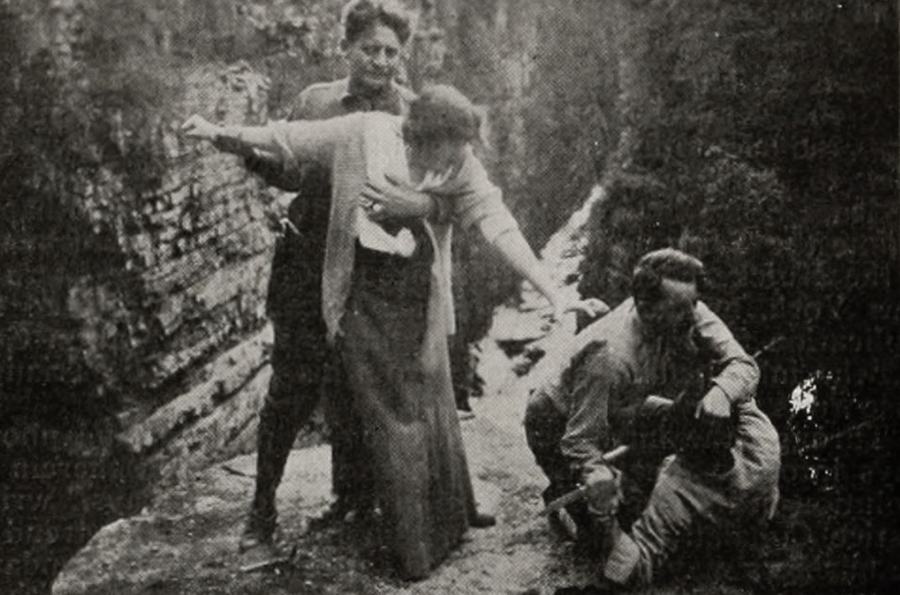
The central set-piece—entombment in a dynamite chamber—plays like subterranean opera. Intertitles shrink, letters quivering like the fuse itself. Aldrous and Joanne press palms against basalt, feeling distant thumps of detonators that never arrive, a silence more terrifying than thunder. Their whispered declarations, rendered in pantomime, gain erotic urgency precisely because the camera denies us lips; we read desire in the vein that flutters at Aldrous’s temple, in Joanne’s thumb tracing the lifeline of his palm.
When salvation comes—via snapped wire and McDonald’s Saint-Bernard bark—it feels less like divine mercy than like random physics. Curwood’s worldview: the universe is not moral, merely occasionally clumsy.
In 1916 women could not vote federally in the United States; their bodies were still battlegrounds for male legislation. The film weaponizes that context. Joanne’s flight is not from a cruel husband alone but from the institution that sanctifies his cruelty. When she signs the ledger at the railroad office, notice how her signature dwarfs the masculine scrawl above—an autographic rebellion. Gaskill lingers on this detail, letting the ink bleed through the page like a slow realization.
Even the dénouement—Mortimer’s corpse cooling on a glacier—doesn’t truly liberate her; liberation occurs earlier, inside the cavern when she chooses to love Aldrous despite legal fetters. The death certificate merely ratifies an autonomy she has already seized.
Harold Foshay’s John Aldrous risks bland gallantry, yet he shades the novelist with writerly detachment—note how he scribbles in a pocket notebook even while escorting Joanne through camp, as though annotating his own heroics for future revision. It is a sly admission that male chivalry is also narrative, curated for print.
Charles Wellesley’s Donald McDonald provides comic ballast without collapsing into buffoonery. His gapped grin and Gaelic lullabies humanize the frontier, reminding us that wilderness communities forge substitute kinships when churches are absent.
James Oliver Curwood’s source novel padded pages with backwoods taxonomy; scenarist Margaret Turnbull excises flora to foreground fauna—two-legged predators. The condensation sacrifices Curwood’s philosophical monologues but gains kinetic momentum. Compare A Good Little Devil, where fidelity to source stifles cinema; here, strategic infidelity liberates.
Track the recurrence of circles: the wedding ring, the lantern halo, the tunnel mouth, the full moon that backlights Quade’s pursuit. Each iteration tightens the noose of patriarchal ownership until the final circular pan around Joanne and Aldrous—now a shared horizon rather than a cage.
Color tinting in the 1917 re-release (now presumed lost) allegedly bathed night exteriors in cobalt, explosions in sulfur yellow, and intimate interiors in rose. Even in the surviving b/w print, one senses these chromatic ghosts; the mind colorizes dread.
Contemporary exhibitors were advised to accompany the cavern sequence with organ stops drawn to mimic subterranean wind, then sudden tympani for the landslide. Viewed today on digital platforms, the absence of standardized score restores primordial hush; each spectator becomes foley artist, hearing heartbeat in temple veins.
While Uncle Tom’s Cabin and Love Never Dies dominated box-office tallies of 1916, trade papers noted The Hunted Woman’s cult among women’s clubs who hailed its “divorce from marital tyranny.” The film prefigures the mountain-women narratives of The Quest (1921) and even the backwoods feminism of Severo Torelli’s alpine thrillers.
Unfortunately, like most of Pearson’s independent vehicles, prints languished. A 1932 Universal warehouse fire devoured the last known complete copy; fragments survive in a private Canadian archive—approximately 42 minutes, enough to reconstruct narrative arteries but not capillaries. What remains, though, aches with urgency: a time-capsule warning that a ring can be a shackle, that wilderness may offer more sanctuary than civilization.
Is The Hunted Woman a masterpiece? Perhaps not in the cathedral sense of Germania or the expressionist delirium of A Message from Mars. Yet its raw nerves, its refusal to sentimentalize either love or landscape, carve a notch in the viewer’s marrow. It is the rare film whose very incompleteness mirrors its protagonist’s fractured emancipation. Watch it—if you can scavange the fragments—and you may find yourself listening for distant dynamite, hearing in its silence the long echo of a woman rewriting her own myth.
Where to watch: As of 2024, no streaming service hosts a complete print. The Cinémathèque québécoise holds a 16mm reel; occasional archival screenings pop up at Pordenone and Toronto. Keep an eye on silent film forums—someone may post a fresh transfer before another century slips away.
IMDb —
1915
Community
Log in to comment.