DbcultAccessing Vault...
6.3/10
Senior Film Conservator
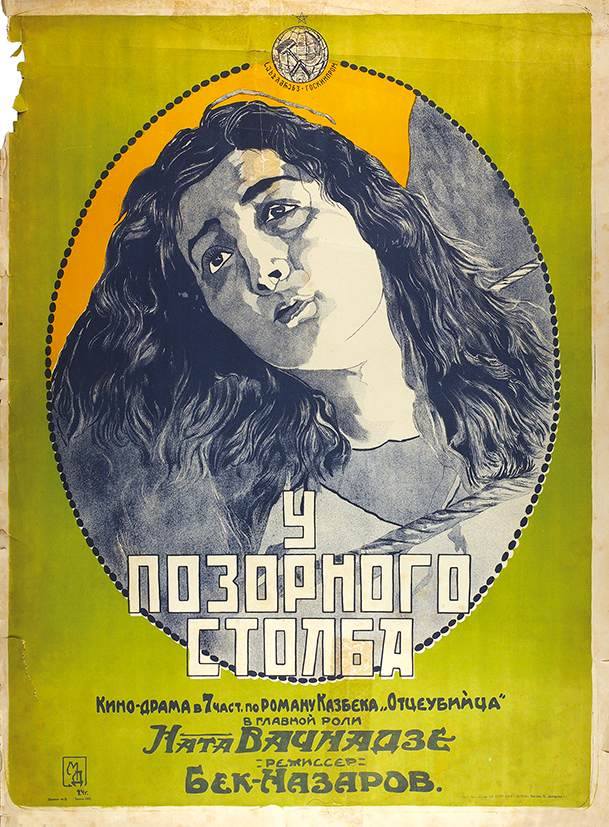
A definitive 6.3/10 rating for a film that redefined the boundaries of cult cinema. Mamis mkvleli remains a cornerstone of transgressive art.
To approach Mamis mkvleli (The Patricide) is to step into a crucible of early 20th-century cinematic ambition. Released in 1923, this Georgian silent film represents a pivotal moment where the raw aesthetic of the Caucasus met the sophisticated narrative structures of early Soviet-era filmmaking. Directed by the visionary Amo Bek-Nazaryan and based on the prose of Aleksandre Kazbegi, the film is far more than a simple melodrama; it is a sprawling, atmospheric indictment of feudal corruption and the fragility of innocence.
Amo Bek-Nazaryan, who would later become a cornerstone of Armenian and Georgian cinema, displays an uncanny ability to utilize the natural environment as a psychological extensions of his characters. Unlike the studio-bound artifice seen in contemporary Western productions like The Million Dollar Dollies, Mamis mkvleli breathes with the thin, cold air of the mountains. Every frame is saturated with a sense of place that is both breathtaking and claustrophobic.
The film’s visual language is strikingly modern for its time. Bek-Nazaryan employs deep focus and dynamic framing to emphasize the power dynamics between the characters. When Girgola, played with a menacing, bureaucratic coldness, enters the frame, the camera often lingers on the physical space he occupies, illustrating how his wealth and status squeeze the life out of the smaller, humbler figures around him. This is a far cry from the lighthearted antics of The Tale of a Wag; here, every movement feels heavy with the weight of impending doom.
At the heart of this storm is Nato Vachnadze, whose portrayal of Nunu remains one of the most haunting performances in silent film history. Vachnadze possessed a face that the camera simply adored—a mixture of porcelain fragility and a fierce, subterranean strength. Her Nunu is not merely a victim; she is the moral center of a world that has lost its compass. While other films of the era, such as Molly Go Get 'Em, treated their heroines with a certain flippant charm, Vachnadze’s performance is anchored in a visceral reality.
The chemistry between her and Vano Sarajishvili’s Iago is palpable, even through the grain of a century-old negative. Their love is depicted as a bucolic idyll, a brief respite from the harsh socio-political realities of their environment. However, this purity is exactly what makes the intervention of Girgola so repulsive. Girgola is not just a rival; he is a predator who views Nunu as a commodity to be acquired, much like the characters in the darker corners of The Naked Truth.
The screenplay, penned by Bek-Nazaryan and Aleksandre Kazbegi, delves deep into the rot of the old world. Girgola is already married, yet his obsession with Nunu is sanctioned by his wealth and the complicity of a society that values gold over blood. This thematic exploration of systemic injustice provides the film with a gravity that transcends its era. It shares a thematic kinship with The Lonely Road, where characters are forced to navigate paths dictated by societal expectations rather than personal desire.
The supporting cast, including Vaso Arabidze and Zakaria Berishvili, fill out this world with a grit that feels authentic. There is no polish here; the faces are weathered, the costumes are heavy with history, and the interactions are fraught with the tension of a society on the brink of collapse. The film captures the transition from a traditional mountain culture to a more modern, albeit more corrupt, administrative reality. It lacks the escapist whimsy of Oh, You Kid, opting instead for a searing honesty that remains uncomfortable to this day.
Technically, Mamis mkvleli is a marvel. The use of natural lighting to sculpt the features of the actors creates a chiaroscuro effect that rivals the best of German Expressionism. The mountain vistas are not merely backdrops; they are active participants in the narrative. When the characters are in distress, the landscape becomes jagged and threatening, reminiscent of the environmental storytelling in Kilauea Volcano, though focused on human rather than geological eruption.
The editing rhythm, too, deserves mention. Bek-Nazaryan understands the power of the close-up, using it to punctuate moments of internal crisis. While a film like Felix in the Bone Age relied on the frantic energy of animation, Mamis mkvleli finds its power in stillness. A single tear on Vachnadze’s cheek carries more narrative weight than a dozen title cards. This restraint is what elevates the film from a mere period piece to a timeless work of art.
In the broader context of 1923, Mamis mkvleli stands as a stark alternative to the burgeoning Hollywood machine. While America was producing spectacles like Treat 'Em Rough, the Georgian film industry was interrogating the very foundations of human morality. It shares some of the psychological intensity found in Eyes of the Soul, but applies it to a much broader sociological canvas. The film's preoccupation with the "untraceable" nature of certain crimes—specifically those committed by the powerful—echoes the themes found in Sin dejar rastros.
Even when compared to European imports like Höhenluft, Mamis mkvleli feels more grounded, more tethered to the earth. It doesn't seek to provide comfort or easy resolutions. Instead, it forces the viewer to confront the ugly reality of greed. The "patricide" of the title is not just a physical act; it is a metaphorical killing of the past, of honor, and of the paternal protection that society is supposed to provide its citizens.
The film’s climax is a masterclass in tension, a slow-burn descent into a moral abyss that leaves the audience breathless. It avoids the melodramatic pitfalls of The Rip-Tide or the overt villainy of The Hornet's Nest. Instead, the tragedy feels inevitable, a byproduct of the characters' environment and the rigid structures that govern them. It is a haunting reminder of the power of cinema to reflect the darkest corners of the human experience.
Decades later, the influence of Mamis mkvleli can still be felt in the poetic realism of Georgian cinema. It established a template for the "mountain film" that is less about the climb and more about the soul of the climber. The collaboration between Bek-Nazaryan and Kazbegi proved that literature and film could fuse to create something entirely new—a visual language that was uniquely Caucasian yet universally understood. It is a film that demands to be seen, not just as a historical curiosity, but as a vibrant, pulsing piece of art that still has the power to provoke, disturb, and enchant. In the same way that The Hindu Nemesis explored the intersections of faith and fate, Mamis mkvleli explores the intersection of love and law, finding only ruins in the middle. It remains a towering achievement, a silent scream from the heart of the mountains that continues to resonate with clarity and conviction.
IMDb 6.3
1924
Community
Log in to comment.