DbcultAccessing Vault...
Cult Review
Senior Film Conservator
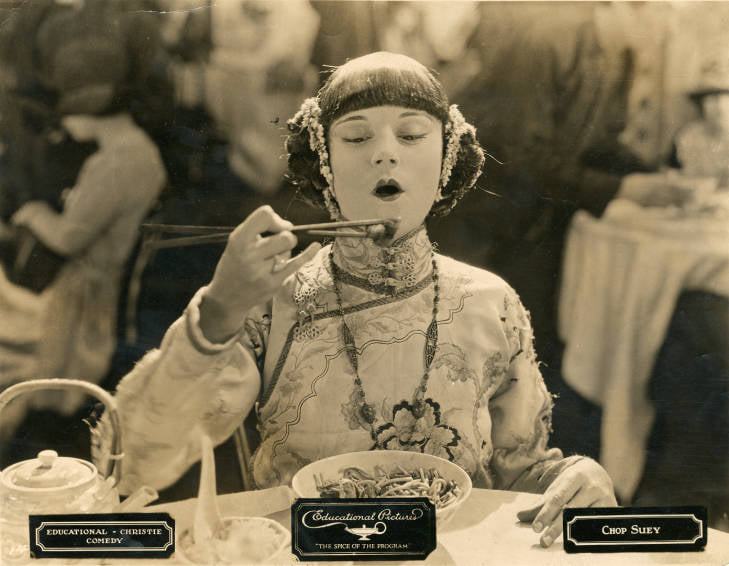
To witness Chop Suey (1922) is to step into a time capsule of high-octane theatricality, a moment where the Al Christie factory was operating at the absolute zenith of its creative powers. Unlike the more somber explorations of identity found in The Woman Between Friends, this short film eschews melodrama in favor of a relentless, almost rhythmic farce. It belongs to an era when the short-form comedy was not merely a preamble to a feature but a distinct art form requiring surgical precision in its timing and an almost reckless abandon in its performances.
The narrative architecture is built upon the classic 'comedy of errors' framework, but it is elevated by the presence of Dorothy Devore. Devore, often overshadowed by the likes of Mabel Normand, possesses a unique, wiry energy that anchors the absurdity. Her character, an American girl whose exposure to China provides the pretext for her transformation, navigates the screen with a calculated grace that contrasts sharply with the blustering confusion of her co-stars. The film functions as a frantic meditation on the malleability of persona, a theme that resonates through other contemporary works like The Smart Aleck, though with a decidedly more exoticized—if problematic by modern standards—aesthetic.
In the early 1920s, the 'ingenue' was often a static role, a prize to be won or a victim to be rescued. Devore disrupts this trope entirely. In Chop Suey, she is the primary engine of the plot. Her decision to masquerade as a Chinese woman is not born of a desire for trickery for its own sake, but as a tactical maneuver to assist a friend. This agency is a hallmark of the Christie Comedies, which often allowed their female leads more room for physical comedy and intellectual maneuvering than the more sentimentalized productions of the time, such as Ruling Passions.
Watching Devore adapt her physicality to the role-within-a-role is a masterclass in silent performance. There is a specific tension in her movements—a blend of the 'flapper' vitality and the stylized, stereotypical gestures expected of the 'Oriental' character in 1922. While the 'yellowface' elements are undeniably jarring to the contemporary viewer, from a purely technical standpoint, the film showcases the incredible versatility required of silent actors. They had to communicate complex shifts in identity without the aid of dialogue, relying entirely on the syntax of the body. This level of physical commitment is something we see echoed in the adventurous spirit of The Daredevil.
Visually, Chop Suey benefits from the high production standards of the Christie Film Company. The lighting is crisp, utilizing the California sun to create sharp contrasts that define the space of the 'Chinese' interior sets. There is a certain claustrophobia inherent in the film’s second half, as more and more characters don disguises and crowd the frame. This burgeoning chaos is managed through tight editing and a clear understanding of the 'geography' of a room—a skill that was being refined in films like The Clock.
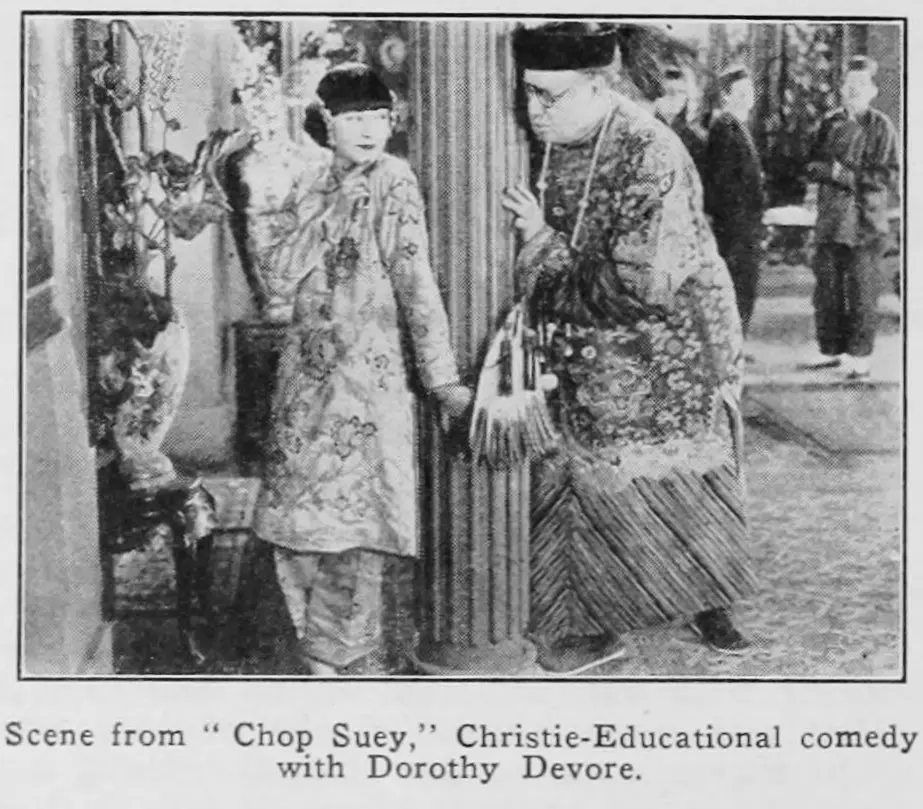
The pacing is breathless. Once the first disguise is donned, the film enters a state of perpetual motion. Each new character who enters the fray adds a layer of complication, leading to a climax that feels like a precursor to the screwball comedies of the 1930s. The writers (though uncredited in many records) understood the mathematical nature of comedy: the more people involved in the lie, the higher the stakes, and the more explosive the resolution. This structural integrity is what separates a classic short like this from the more experimental or disjointed efforts like Screen Follies No. 2.
We cannot discuss Chop Suey without addressing its title and central conceit. In 1922, 'Chop Suey' was more than just a dish; it was a cultural shorthand for an Americanized version of the East—a blend of the authentic and the imagined. The film plays within this 'liminal space'. The characters are not pretending to be Chinese people so much as they are pretending to be the *American idea* of Chinese people. This meta-layer of performance adds a fascinating, if unintended, depth to the film. It mirrors the way early cinema was constantly trying to define 'the other', whether through the mystery of Ultus 5: The Secret of the Night or the historical pageantry of Pyotr i Alexei.
The complications that result from the universal disguising are played for maximum laughs, but they also highlight the absurdity of social barriers. When everyone is wearing a mask, the actual identity of the person beneath becomes irrelevant to the immediate action. This 'leveling of the playing field' through costume is a recurring theme in silent comedy, seen in various forms from the aristocratic bumbling of Baron Olson to the slapstick nursing antics of Naughty Nurses.
While Devore is the star, the supporting players provide the necessary friction to keep the comedy sparks flying. Katherine Lewis serves as the perfect foil, representing the 'normal' world that is slowly being encroached upon by the masquerade. Lincoln Plumer and George Stewart bring a seasoned vaudevillian energy to their roles. Their ability to react—the 'double take', the wide-eyed realization—is essential. Silent comedy is as much about the reaction as it is about the action, a principle well-understood in the pacing of Panama.
The chemistry between the cast members suggests a troupe that has worked together extensively. There is a shorthand in their interactions, a sense of trust that allows the physical gags to feel dangerous yet controlled. This ensemble work is reminiscent of the best moments in Mackó úr kalandjai, where the humor arises from the collective energy rather than a single stand-up performance.
From a technical standpoint, the film’s cinematography by the Christie regulars is functional yet effective. The use of intertitles is sparse, allowing the visual storytelling to take center stage. This 'pure cinema' approach was the hallmark of the early 20s before the heavy-handedness of late-silent drama began to take hold. The film doesn't need to explain why people are putting on wigs; the desperation in their eyes and the frantic nature of their movements tell the story. This visual economy is something that even modern filmmakers struggle to achieve, often relying on dialogue to bridge gaps that could be filled with a simple, well-timed gesture.
The set design for the 'Chinese' elements of the film is particularly interesting. It’s a theatrical interpretation of the East, filled with lanterns, silks, and incense—a 'stagey' environment that emphasizes the performative nature of the plot. It creates a dreamlike, almost surreal atmosphere that contrasts with the mundane American setting of the film’s opening. This shift in visual tone is similar to the atmospheric transitions seen in Die rote Nacht.
Revisiting Chop Suey in the 21st century requires a dual perspective. We must acknowledge the historical context of its tropes while celebrating the sheer comedic craftsmanship on display. It is a film that captures the 'anything goes' spirit of the early 1920s—a period of immense experimentation and joy in the medium of film. It lacks the self-consciousness of later works and instead offers a raw, unadulterated look at what made audiences laugh a century ago.
For fans of Dorothy Devore, this is essential viewing. It captures her at the peak of her 'Christie Girl' fame, showcasing the wit and physicality that made her a household name. It also serves as a fascinating companion piece to the celebrity-obsessed culture seen in Meeting Theda Bara, illustrating the different ways stardom was constructed and utilized in the silent era. While one focused on the 'vamp' mystique, the other—personified by Devore—focused on the relatable, yet extraordinary, 'girl next door' who could navigate any crisis with a smile and a clever disguise.
In the grand tapestry of silent cinema, Chop Suey may be a minor thread, but it is a vibrant one. It reminds us that the primary goal of these early two-reelers was to entertain, to surprise, and to push the boundaries of visual storytelling. Whether it's the frantic chases, the absurd costumes, or the impeccable timing of Dorothy Devore, there is a vitality here that refuses to be dimmed by the passage of time. Like the bluegrass fields in Blue Grass, there is a natural, unforced beauty in the way these comedies unfold—a testament to a time when cinema was still discovering its own voice and having a marvelous time doing so.
Ultimately, Chop Suey is a dizzying, delightful, and deeply strange artifact of 1922. It invites the viewer to abandon logic and embrace the chaos of the masquerade. In a world where identity is often treated with heavy-handed seriousness, there is something refreshingly anarchic about a film where the solution to every problem is simply to put on a different hat—or in this case, an entire cultural identity—and run toward the nearest exit.
IMDb 6.5
1926
Community
Log in to comment.