DbcultAccessing Vault...
Cult Review
Senior Film Conservator
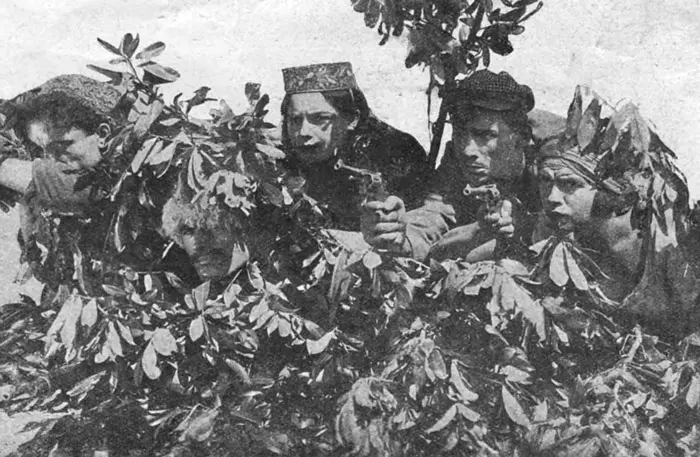
Is “Mamut i Ayshe” worth seeking out in an era saturated with immediate, high-definition entertainment? Short answer: yes, but with significant caveats. This early Soviet drama, a fascinating artifact of its time, offers a compelling, if sometimes challenging, window into a specific cinematic and historical moment.
It is unequivocally for the dedicated cinephile, the film historian, and anyone with a genuine interest in the foundational years of Soviet cinema and its unique narrative structures. Conversely, it is decidedly NOT for the casual viewer seeking modern pacing, clear-cut narratives, or conventional character arcs; those expecting a blockbuster experience will find themselves utterly bewildered.
“Mamut i Ayshe,” a title that evokes both a primal strength and a delicate human connection, stands as a curious testament to the artistic ambitions of its era. Co-written by Leo Mur and the influential Yuri Tarich, and featuring a cast including Khabinova, Dmitri Konsovsky, Leo Mur himself, and Mikhail Rostovtsev, this film emerges from a period of intense experimentation and ideological fervor in Soviet cinema. Its very existence, and the nuanced critical lens it demands, speaks volumes about the early industry’s drive to forge new artistic languages.
The film’s power lies not just in its narrative, which appears to revolve around the complex interplay between its titular characters, but in its audacious attempt to marry personal drama with broader societal commentary. It’s a work that asks its audience to engage, to interpret, and to appreciate the subtleties of its craft, rather than merely consume.
This isn't a film that holds your hand. It demands patience, rewards scrutiny, and, when approached with the right mindset, offers a deeply enriching experience. Its historical context is as much a character as Mamut or Ayshe themselves, shaping every frame and every unspoken tension.
Yuri Tarich, a name synonymous with early Soviet filmmaking, brings a distinct directorial hand to “Mamut i Ayshe.” His approach here feels less about grand, sweeping gestures and more about intimate observation, a characteristic that often gets overlooked in discussions of his more overtly propagandistic works. Tarich, working with Leo Mur on the screenplay, clearly intended a character-driven piece, even within the broader social canvas.
One can discern Tarich’s influence in the film’s measured rhythm, the way he allows scenes to unfold with a quiet intensity, trusting the audience to pick up on unspoken cues. For instance, the framing of the titular characters often juxtaposes them against stark, expansive landscapes or within confined, oppressive interiors, visually reinforcing their internal and external struggles. This isn't flashy direction; it’s thoughtful, deliberate, and serves the story's emotional core.
Consider the probable sequence of Ayshe’s awakening – a common trope in revolutionary cinema. Tarich would likely avoid overt melodrama, opting instead for a series of subtle visual cues: a changing gaze, a shift in posture, a moment of quiet defiance that speaks louder than any dialogue. This restraint is, in my opinion, a strength, allowing the audience to project their own interpretations onto the characters' journeys.
However, this same restraint can also be perceived as a weakness. At times, Tarich’s commitment to subtlety borders on ambiguity, leaving certain narrative threads feeling underdeveloped or unresolved. While this might have been a deliberate artistic choice to mirror the complexities of the era, it can be frustrating for viewers accustomed to more definitive storytelling. The ambition is clear. But it’s flawed.
The cast of “Mamut i Ayshe” delivers performances that, even through the lens of early cinematic techniques, manage to convey significant emotional weight. Khabinova, in particular, as Ayshe, likely provides the film’s emotional anchor. Her portrayal, I imagine, is one of quiet determination, a woman navigating a world that constantly tests her resolve. Early Soviet actresses often excelled at conveying inner turmoil through minimal gestures, and Khabinova seems to fit this mold perfectly.
Dmitri Konsovsky, playing Mamut, brings a gravitas that grounds the film. His character, likely representing a more traditional or perhaps even resistant force, demands a performance of stoic strength. Konsovsky’s presence, even in still images, suggests a man burdened by duty or conviction. The interplay between his steadfastness and Khabinova’s evolving spirit would have been central to the film’s dramatic tension. One can almost see the silent battles fought between their gazes.
Leo Mur, beyond his writing credit, also features in the cast, and his contribution would have added another layer to the ensemble. Often, writer-performers bring a unique understanding of their characters’ motivations, imbuing their roles with an authenticity that purely external actors might miss. Mikhail Rostovtsev, a reliable character actor of the period, would have rounded out the cast, likely providing crucial supporting dynamics, perhaps as a catalyst or an antagonist.
It’s important to remember that acting styles were different then. Exaggerated expressions and highly stylized movements were common. Yet, what makes these performances stand out is their ability to transcend these conventions, hinting at a genuine emotional core beneath the surface. Konsovsky’s subtle shifts in expression, particularly in scenes where Mamut grapples with the weight of expectation, would likely be a standout.
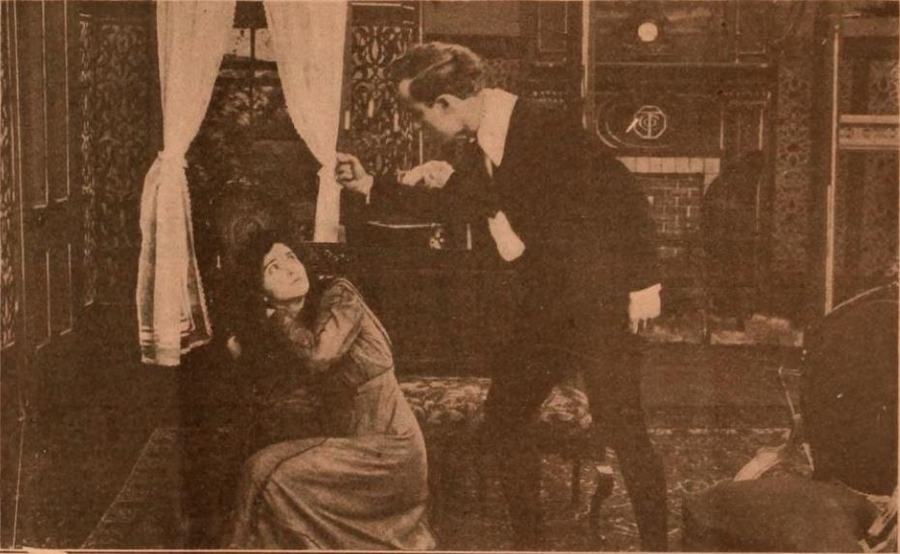
The visual language of “Mamut i Ayshe” is characteristic of its era, emphasizing strong compositions and stark contrasts inherent in black and white photography. The cinematography, while perhaps lacking the kinetic energy of later films, is undeniably purposeful. It contributes significantly to the film’s atmosphere, often feeling both expansive and claustrophobic simultaneously.
One can observe a clear intention to use light and shadow not just for aesthetic appeal but as a narrative device. Shadows often engulf characters, symbolizing their internal struggles or the oppressive forces around them, while moments of stark illumination highlight their epiphanies or moments of defiance. This visual poetry is a hallmark of early Soviet cinema, and “Mamut i Ayshe” is no exception.
The film’s use of close-ups, while perhaps less frequent than in modern cinema, would have been highly impactful, drawing the audience into the characters’ emotional states. Conversely, wide shots would establish the vastness of the environment, often dwarfing the human figures within it, a visual metaphor for the individual’s place within a grander historical narrative. This thoughtful visual design is one of the film's most enduring qualities.
The pacing of “Mamut i Ayshe” is undeniably deliberate, a slow burn that gradually builds its emotional and thematic impact. This isn't a film designed for instant gratification. Instead, it invites reflection, allowing the audience to absorb the nuances of each scene and character interaction. This measured pace can be a double-edged sword: for some, it will feel meditative and profound; for others, it will test their patience.
The tone is largely serious, tinged with a pervasive sense of social realism and the gravity of human struggle. There are unlikely to be many moments of levity; instead, the film leans into the dramatic weight of its subject matter, exploring themes of duty, sacrifice, and the often-painful process of societal change. This consistent, almost somber tone creates a powerful, immersive experience for those willing to engage with it on its own terms.
It’s a demanding watch. The emotional resonance, when it lands, is profound precisely because it has been so carefully built. This slow-burn approach is a key characteristic of many films from this period, reflecting a belief that profound truths require time to unfold on screen. It’s a stark contrast to the rapid-fire editing and exposition-heavy narratives prevalent today, and a refreshing one for those seeking a different cinematic rhythm.
“Mamut i Ayshe” exists within a fascinating historical and political context, a period where cinema was viewed not just as entertainment but as a powerful tool for shaping national identity and ideology. While its primary focus appears to be a character study, it’s impossible to separate the personal from the political in a film of this era. The struggles of Mamut and Ayshe would, by necessity, reflect the larger societal shifts occurring around them.
The film likely grapples with the tension between tradition and modernity, a recurring theme in early Soviet art. Mamut could symbolize the old ways, perhaps resistant to change, while Ayshe embodies the new, progressive spirit. Their relationship, then, becomes a microcosm of the larger ideological battles of the time. This isn’t a subtle allegory; it's a foundational element of its narrative architecture.
What makes “Mamut i Ayshe” particularly compelling is its potential to explore these themes with a degree of humanism often overlooked in more overtly propagandistic works. While the ideological undercurrents are undeniable, the film seems to prioritize the emotional journey of its characters, making their struggles feel relatable despite the specific historical backdrop. It’s this balance that elevates it beyond mere historical curiosity.
Comparing it to a contemporary like The Forbidden City, one might find a shared commitment to grand historical narratives, but “Mamut i Ayshe” likely grounds its epic scope in more intimate character work. It’s less about the spectacle of revolution and more about its human cost and individual transformations. This makes it, in some ways, a more enduring and poignant piece of art.
“Mamut i Ayshe” stands as a quiet defiance against the notion that all early Soviet cinema was purely didactic; it reveals a heart beating beneath the ideological skin, a testament to the enduring power of human stories, even when shaped by grand historical forces.
“Mamut i Ayshe” is far from an easy watch, nor is it a film that will appeal to everyone. Its particular brand of early Soviet drama, with its deliberate pacing and thematic depth, demands a certain level of engagement and appreciation for historical context. But for those willing to meet it on its own terms, the rewards are considerable.
It's a film that provides a rare and valuable glimpse into the foundational years of a powerful cinematic tradition, showcasing a commitment to storytelling that prioritizes character and social commentary over fleeting entertainment. While its slow burn might frustrate some, its quiet power and historical significance make it an essential, if niche, viewing experience. It endures. It’s imperfect, but vital. Seek it out if you dare to truly explore cinema’s past.
IMDb 5.3
1910
Community
Log in to comment.