DbcultAccessing Vault...
5.1/10
Senior Film Conservator
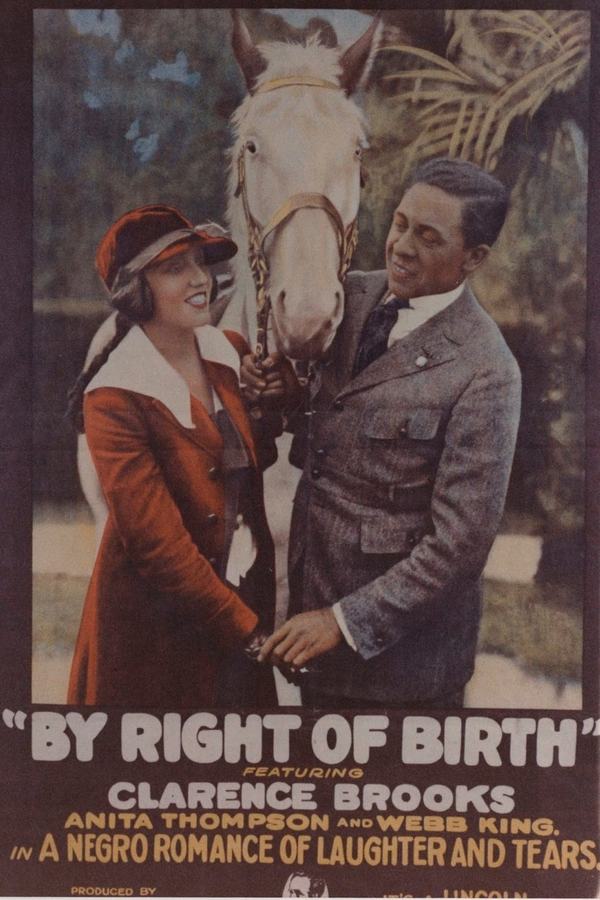
A definitive 5.1/10 rating for a film that redefined the boundaries of cult cinema. By Right of Birth remains a cornerstone of transgressive art.
The first thing that scalds the eye in By Right of Birth is the mirage of prosperity: a Kansas prairie shimmering like fool’s gold while derricks punch the horizon. Within that hallucination, Juanita Cooper—played by Baby Ruth Kimbrough with the regal poise of someone who already knows she’ll be edited out of history—navigates a labyrinth of forged signatures, racialized greed, and the quiet ache of being the “lucky” adoptee in a household that measures love in barrels per day.
Director George Johnson and scenarist Dora Mitchell do not give us a melodrama; they hand us a land deed drenched in kerosene and strike a match. Every intertitle crackles with double meaning: “A drop of oil is worth a drop of blood” flickers on-screen right before Romero—Lester Bates channeling a fox in patent-leather shoes—tips his hat to Helen’s empty rocking chair, confident the rightful owner will never return to claim the soil that cradles her ancestors.
The film’s visual grammar is prairie-cosmopolitan: low-angle shots tilt up at wooden oil rigs as though they were Gothic spires, while parlor scenes are lit like Dutch still-lifes—every lace doily a silent witness to larceny. Johnson’s camera glides from Black townships celebrating Emancipation Day to the Cooper mansion where Geraldine—Dora Mitchell in a performance of glass-splintered hauteur—counts mineral leases the way other socialites count pearls. The cut is not geographic; it is moral. One moment we’re bathed in communal hymnody; the next, we’re trapped under cut-glass chandeliers that refract Romero’s grin into a thousand predatory shards.
Juanita’s adoptive status is no footnote—it is the fulcrum. The screenplay weaponizes the word “by right of birth” until it becomes a cruel pun: who gets to inherit the earth, and who merely inherits the debt? When Juanita uncovers the forged deed, her hands tremble not from shock but from recognition: the same ink that erases Helen’s claim could, tomorrow, erase hers. Kimbrough lets that terror bloom across her face in a lingering close-up, the camera lingering long enough for us to count every eyelash, every unspoken fear.
Romero’s scheme hinges on the Freedmen’s unfamiliarity with paper abstractions—geological surveys, royalty clauses, acceleration riders. The film’s most chilling sequence is a montage of signatures: elderly Black farmers, ex-sharecroppers, press ink-stained thumbs onto contracts they cannot read while a brass band plays “Oh! Susanna” off-key in the background. Johnson refuses to give us the comfort of a villain twirling a mustache; the theft is bureaucratic, banal, and therefore eternal.
Where Southern Pride whitewashes Reconstruction into a lost-cause fantasy, By Right of Birth insists that history is a shell game played with land patents. Likewise, the masquerade in Masked Ball is mere flirtation; here, every mask is a quitclaim deed. Even the more avant-garde Threads of Fate lacks the ferocious specificity with which Johnson indicts both racial capitalism and the perfidy of respectability politics.
Anita Thompson’s Helen never appears in the present tense; she is a silhouette on a wanted poster, a name muttered by notaries. Yet her absence becomes the film’s most palpable performance, a negative space around which every covetous glance orbits. Clarence Brooks, as the town’s Black attorney, delivers a courtroom monologue entirely through intertitles—white letters on black film stock—but his eyes, visible in a single medium shot, burn with the weary knowledge that the law is a weather vane that pivots toward whoever owns the wind.
Lester Bates walks away with the film, not by scene-stealing but by scene-smiling: his Romero greets every setback with the same unctuous grin, a man convinced the universe has subscribed to his bulletin. When his final gamble collapses, the grin remains, now frozen into a rictus—capitalism’s death mask.
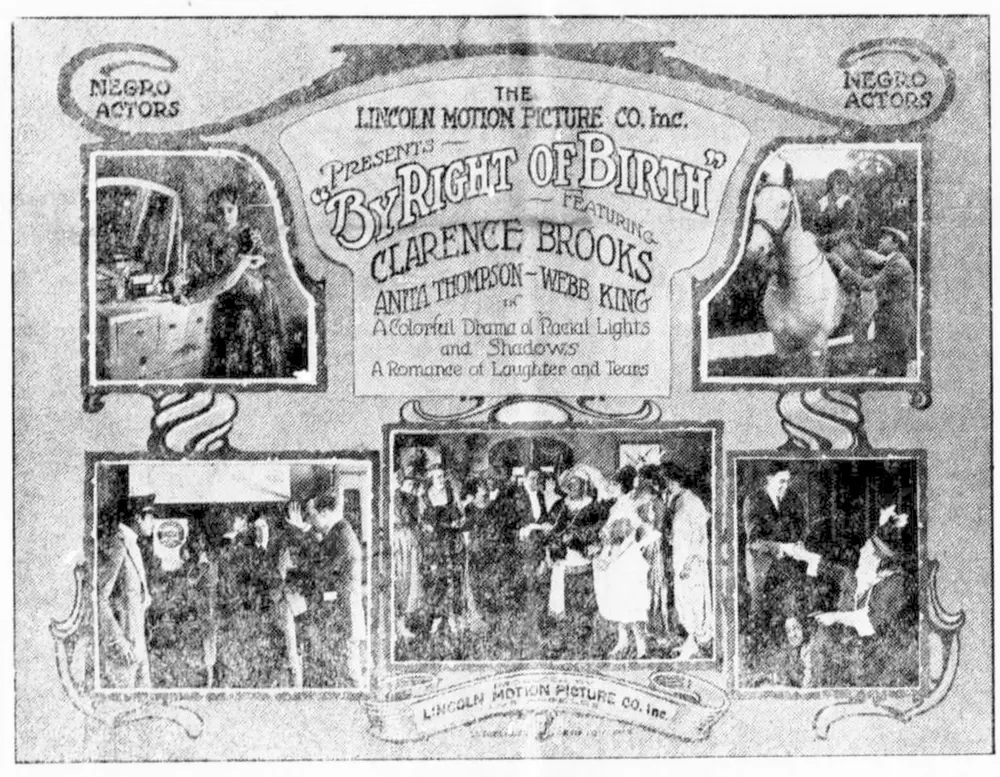
Surviving prints—what little remain—are bathed in amber and cyan, the colors of petroleum and sky. Night interiors glow with ghostly blue, as though every kerosene lamp were an urn holding the ashes of promises. During the oil-gush finale, Johnson overlays actuality footage of a spewing well onto a matte painting of the prairie; the frame splits, half-documentary, half-dream, reminding us that every extraction leaves a hole in both land and memory.
Geraldine Cooper’s complicity is gendered performance: she weaponizes philanthropy the way others wield a whip. In one scene she hosts a “Lawn Fete for the Freedmen’s Orphan Fund,” her tea gown stitched from the very chintz sold by the trading company that will foreclose on the orphans’ guardians. The camera tracks from her gloved hand—dripping lemonade into crystal—to a Black wet-nurse feeding a white infant, a visual rhyme that spits at the myth of benevolence.
Juanita’s rebellion, by contrast, is quiet: she rewrites the deed in her own blood, a Gothic flourish that feels less like melodrama than like ancestral duty. When the ink refuses to flow, she pricks her finger, turning the document into a covenant that predates courthouse jurisprudence. The film refuses to show us whether the forgery is ultimately upheld; we cut to a long shot of derricks pumping against a sunrise that looks suspiciously like a hemorrhage.
Though silent, the film was originally accompanied by a Black choir whose harmonies were transcribed in the souvenir program. Archival notes indicate that during the oil-auction scene, the chorus shifted from “Steal Away” to “Didn’t My Lord Deliver Daniel,” the tempo decelerating until each syllable landed like a gavel. Contemporary restorations substitute a modern score, but the true soundtrack is the rustle of speculators’ wallets—an atonal symphony no orchestra can replicate.
For decades By Right of Birth languished in the same vault that swallowed The Child of Destiny and La lussuria. Then a 2019 auction in Tulsa unearthed a 35-mm reel mislabeled “Oklahoma Larks.” The nitrate reeked of vinegar syndrome, but the frame-line retained enough silver to resurrect faces. Digital archaeology—wet-gate scanning, machine-learning de-flicker—revealed details previously illegible: the price per barrel chalked on a blackboard ($1.17), the tiny “X” Helen scrawled instead of a signature, the reflection of a lynch mob in Romero’s polished boot.
Today, when lease buyouts proliferate through robocalls promising “fast cash for mineral rights,” the film plays like prophecy. The same racialized asymmetry—information vs. desperation—propels contemporary extraction. Watch Romero lean across a kitchen table to coax a widow into signing, and you’ll recognize the DNA of every predatory equity firm now strip-mining neighborhoods for natural gas or sub-prime loans.
Moreover, the film anticipates the current debate over reparations: who inherits the wealth that was never paid, and who inherits the debt that was never acknowledged? By staging the theft of Black land during the very decade when Tulsa’s Black Wall Street was razed, By Right of Birth implicates cinema itself as both witness and accessory. After all, the same projectors that screened this cautionary tale also flickered newsreels celebrating the Oklahoma oil boom, the narrative suture between profit and plunder stitched so tight it disappears into the grain.
The last image is not a human face but a gusher: black gold spraying skyward, backlit so it resembles both celebration and funeral. No intertitle intrudes. The film ends mid-spray, the gate left open, the story literally unfinished—an apt metaphor for a nation still spewing legacies it has never fully owned. To watch By Right of Birth is to stand in that spray, drenched by history that refuses to stay underground.
—Restoration available via Kanopy through select university libraries; 4K Blu-ray preorder rumored for fall.
IMDb —
1919
Community
Log in to comment.