DbcultAccessing Vault...
Cult Review
Senior Film Conservator
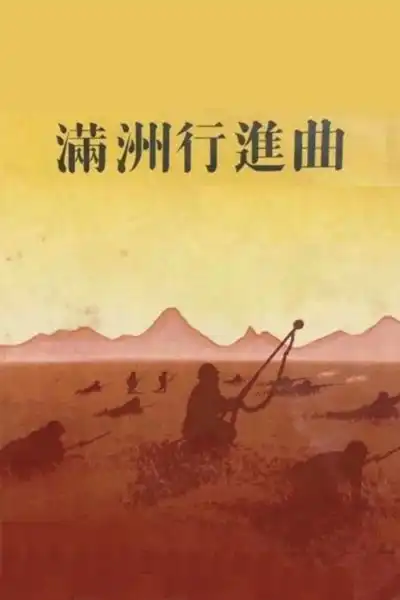
If you are looking for something fun to watch on a Friday night with popcorn, Manchurian Marching Song is absolutely not it. You should probably only watch this if you are a completionist for early Japanese cinema or if you have a weirdly specific interest in how governments used movies to make war look like a big, sad parade.
History buffs will find it interesting for about twenty minutes. Everyone else will probably get bored once the third slow-moving scene of people looking stoic starts.
The movie is basically a collection of moments showing how 'brave' and 'noble' everyone is being about the conflict in Manchuria. It feels like a long music video for a song that isn't actually that catchy.
One thing that jumped out at me was seeing a very young Chishū Ryū. He is the guy who is in almost every Ozu movie later on, usually playing a wise old dad.
Here, he is just this fresh-faced kid. It is so strange to see him without the grey hair and the slow way of talking he developed later.
There is a scene where a group of women are sewing or preparing stuff for the soldiers. The camera just sits there and watches them for what feels like an eternity.
I noticed one of the actresses in the back looks like she is genuinely struggling with her needle. It is a tiny thing, but it made me realize these were real people in a drafty studio almost a hundred years ago.
The film doesn't have the same energy as something like A Youthful Affair. That movie feels like it has some life in its veins, while this one feels a bit stiff.
The sound quality on the version I saw was pretty rough. There is this constant hissing sound that makes it feel like you are watching the movie through a rainstorm.
Sometimes the music kicks in so loud it actually made me jump. It is not exactly a balanced mix, but that is 1932 for you.
There is a lot of marching. I mean, the word 'Marching' is in the title, so I should have expected it.
But they really lean into the rhythm of the boots on the ground. After a while, the thump-thump-thump starts to feel like a headache coming on.
I found myself thinking about The Passion of a Woman Teacher while watching this. Both movies have this heavy, serious atmosphere that makes you feel like you are sitting in a classroom instead of a theater.
The acting is very much of its time. People stand very still and then suddenly move their arms in big, dramatic gestures.
Takeshi Sakamoto is in this, and he is always reliable. He has one of those faces that just looks like it has seen a lot of stuff, which helps when the script is a bit thin.
There is a moment near the middle where a character receives a letter. The way he holds the paper—like it is made of gold—is really touching for about five seconds.
Then the movie goes back to being a commercial for the military. It is hard to stay emotionally invested when you know the movie is trying to sell you something.
The sets look okay, I guess. You can tell they were mostly filmed on a soundstage because the lighting doesn't change when they 'go outside.'
I liked the shots of the train station. There is something about old steam trains in black and white that always looks cool, even in a movie that is mostly boring.
The ending comes up pretty fast. It doesn't really resolve anything; it just sort of stops after a big emotional peak.
I sat there for a minute after the screen went black just wondering if I missed a reel. But no, that is just how they did things back then.
It is definitely not as engaging as It's a Great Life or other movies from that era that actually tried to have a plot. This is more of a mood piece, and that mood is 'nationalistic sadness.'
If you see it on a list of 'must-watch' classics, you can probably skip it unless you are writing a thesis. I don't regret watching it, but I don't think I'll ever watch it again.
It is a ghost of a movie. Interesting to look at, but there is nothing to grab onto.
IMDb —
1936
Community
Log in to comment.