DbcultAccessing Vault...
Cult Review
Senior Film Conservator
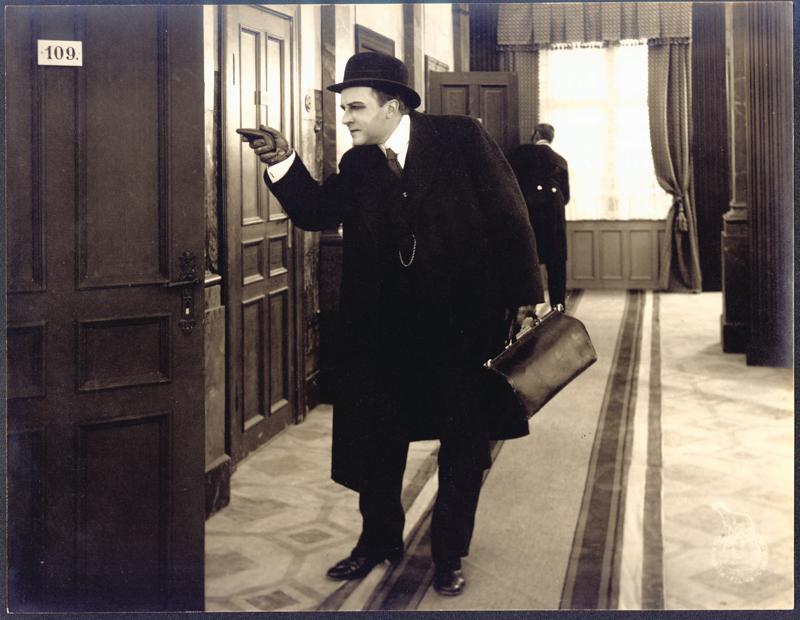
There are films you watch and films that watch you—Manden med de ni Fingre II belongs to the latter cabal, its lens trained like a sniper on the spectator’s moral jugular. Director A.W. Sandberg, oft-overlooked amid the sturm-und-drang of German expressionism, crafts here a Danish hallucination that feels dredged from the same obsidian river as The World, the Flesh and the Devil yet chills more icily for its Nordic restraint. Where American counterparts romanticize the underdog, Sandling’s sequel—yes, sequel, though the original is lost to nitrate bonfires—presents crime as civic infrastructure, a sewer system overflowing after torrential guilt.
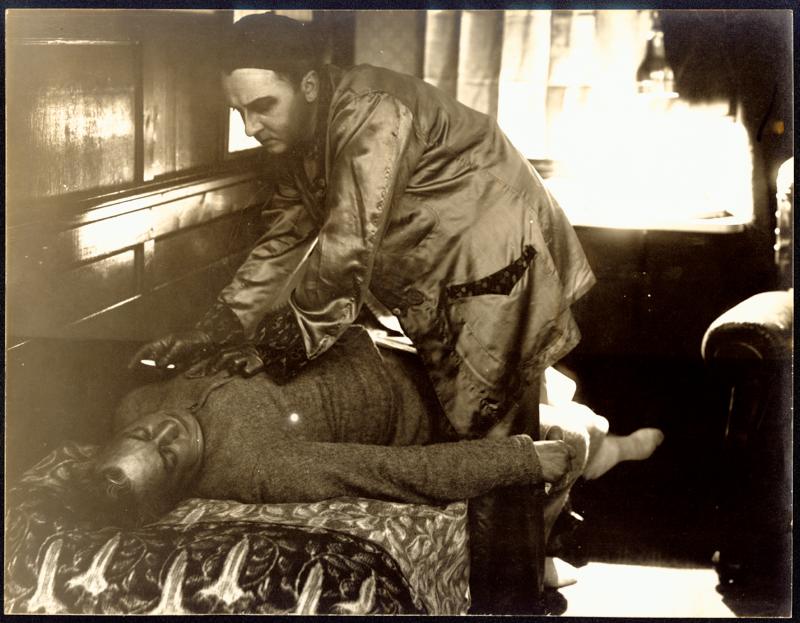
Call it digit-noir: every composition fetishizes the absence of fingers. Close-ups linger on gloves slipped off to reveal stumps, cigarette holders clenched between knuckles, piano keys struck by truncated hands that sound diminished chords of despair. Cinematographer Valdemar Christensen rims each silhouette with a sickly halo—streetlamps diffused through wet celluloid—so characters appear carved from butter left under gaslight. The film’s palette, though bound by monochrome, suggests infernal color: sulphuric yellows in cigarette flare, arterial oranges in forge-lit blacksmith scenes, bruised teals in waterfront taverns. You half expect the screen itself to bruise.
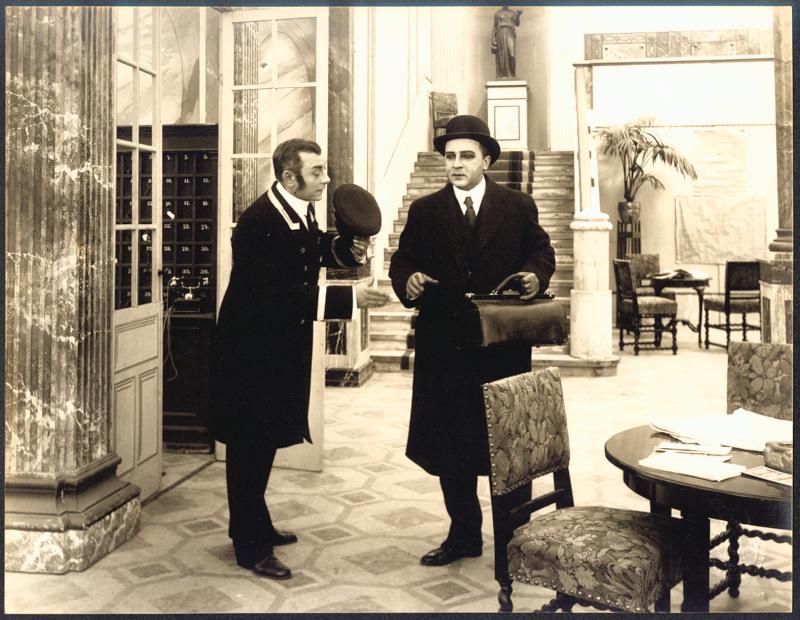
“In Sandberg’s Copenhagen, guilt is not a burden but currency—passed like bad coin from pocket to pocket until the whole city jingles with shame.”
Consider the hallucinatory train sequence midway: negative exposure inverts morality—robbers wear white hoods, nuns sport black. As steam billows, the image morphs into a Rorschach blot of national trauma; the gold coins melt into molasses that drips upward, defying physics yet obeying nightmare logic. It predates the fever-dream montage of Martin Eden by nearly a decade but feels centuries ahead in moral rot.
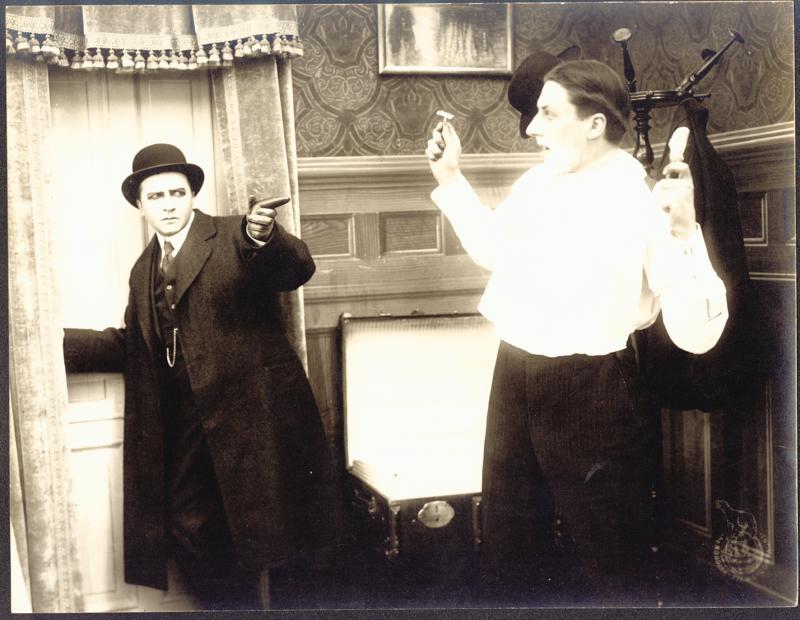
Alf Blütecher’s Nine-Fingered Man never solicits empathy; his charisma lies in surgical precision—each gesture a scalpel incision. Watch how he drums the stiletto-finger against mahogany: tap-tap-tap—a metronome counting down someone’s final heartbeat. His voice, conveyed through intertitles, drips with icicle sarcasm: “A man minus fingers learns to count in lives instead.” One wonders if Conrad Veidt studied this role’s DNA before morphing into The Man Who Laughs.

Franz Skondrup’s journalist Valdemar provides the film’s frayed moral compass, yet Sandberg denies us the comfort of redemption. Valdemar’s eyes, ringed with opium shadows, oscillate between hunger and horror, a pendulum that ultimately severs its own chain. In a bravura tavern scene he delivers a monologue via title card while the camera slowly dollies past patrons whose faces dissolve—superimposed skulls flicker over their features, death in real time. The effect predates the CGI skulls in The Toll of Mammon yet outstrips them in unsettling candor.
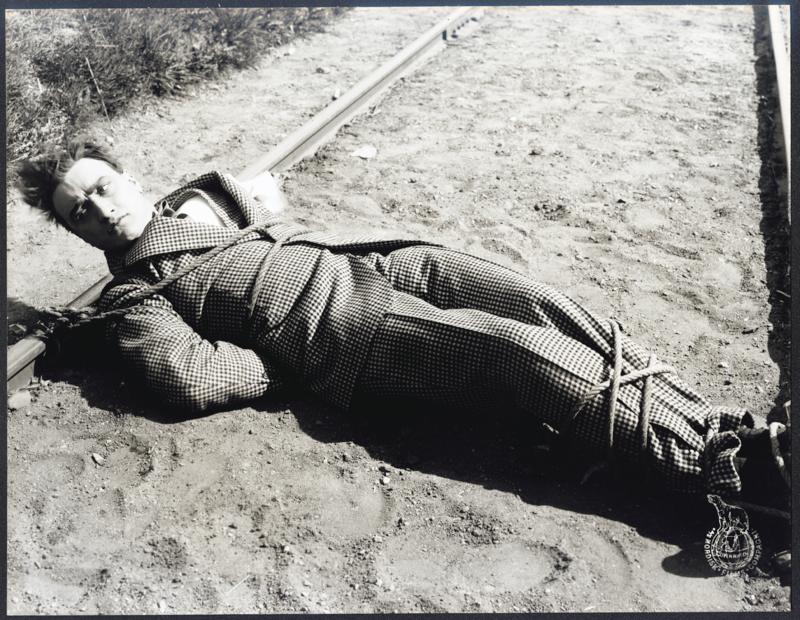
Silent cinema is often praised for universality, yet here the absence of dialogue becomes a negative space where the viewer’s guilt echoes. Listen beyond the accompaniment—whether you supply a modernist piano score or allow your own pulse to provide rhythm—and you’ll hear the clank of the Nine-Fingered Man’s prosthetic, the soft thud of a gloved fist muffling a scream, the whistle of train steam that sounds like a mother calling children who will never return. Sandberg weaponizes Foley avant la lettre; every off-screen crash lands like a verdict.
Unlike My Best Girl where romance sweetens adversity, Manden med de ni Fingre II offers women who function as account books. Ida, the banker’s daughter, is traded twice—first for solvency, then for silence. Her final stare into camera, eyes glassy as frozen lakes, indicts the spectator more eloquently than any suffragette pamphlet. Sandberg refuses the male-savior trope; when she ultimately wields the stiletto, it is not empowerment but systemic rot personified.
Cinephiles will spot DNA shared with God, Man and the Devil—both traffic in Faustian bargains—but Sandberg’s Hell is colder, more bureaucratic. One flashback montage, printed on blue-tinted stock, depicts our villain applying for reparations after the war, only to be told amputations qualify for half-compensation per knuckle. Kafka could not devise crueller arithmetic. The film also converses with East Lynne’s maternal suffering, yet here motherhood itself becomes an IOU.
For decades the sole print languished in a Helsingør basement, vinegar-syndrome blooming like frost flowers across emulsion. A 2018 4K restoration by the Danish Film Institute, scanned from a 1950s acetate duplicate, reveals textures that smolder: individual staples on wanted posters, grains of snuff on a clerk’s mustache. Streaming on Danish Silent Classics with optional English subtitles, though aficionados should seek the Blu-ray whose booklet essay by Lars Lönström contextualizes the film within post-Versailles economic panic. Be warned: the standard-definition transfer circulating on archive-dot-org omits the negative-exposure sequence, reducing the narrative to incoherence.
A masterpiece of moral gangrene, Manden med de ni Fingre II proves silent cinema could excavate psychic trenches deeper than many talkies manage with full artillery of sound. Its pessimism is total, its artistry uncompromising, its aftertaste that of rusted iron. Approach expecting the catharsis of Captain Starlight and you will exit with fewer fingers than you brought in.
Rating: ★★★★★ (out of 5)

IMDb —
1916
Community
Log in to comment.