DbcultAccessing Vault...
Cult Review
Senior Film Conservator
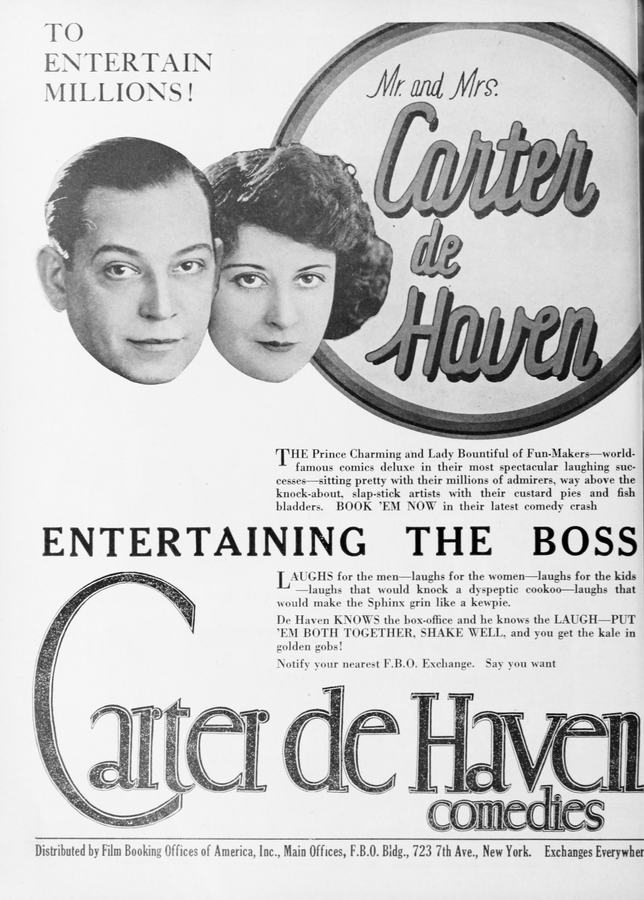
The year 1914 stands as a monumental threshold in the evolution of the moving image, a period where the primitive flickers of the nickelodeon began to coalesce into the sophisticated grammar of narrative cinema. Within this fertile environment, Entertaining the Boss emerges not merely as a relic of early slapstick, but as a poignant, if hilariously frantic, interrogation of the American class struggle. Directed and written by the formidable Carter DeHaven alongside Beatrice Van, the film captures a specific brand of domestic claustrophobia that remains eerily resonant a century later. The premise—a young clerk attempting to feign prosperity while his basic utilities are severed—is a masterclass in the comedy of embarrassment, a subgenre that relies heavily on the audience's shared fear of exposure.
The casting of Carter DeHaven and Flora Parker DeHaven brings a palpable vaudevillian energy to the screen. Their chemistry is not merely romantic but technical; they move with a synchronized agility that suggests years of stage-bound refinement. In many ways, the film functions as a bridge between the broad physical antics of early short subjects and the more character-driven features that would follow. When we look at contemporary works such as Oh, You Kid, we see a similar fascination with youthful exuberance, yet Entertaining the Boss grounds its humor in the cold, hard reality of unpaid bills. The 'cut-off' notice becomes the ultimate antagonist, a silent specter that haunts every frame of the protagonist's desperate hospitality.
The narrative engine is fueled by the arrival of the Boss, played with a delightful, oblivious pomposity by Wilfrid North. The boss figure in early cinema often represented a secular deity—a man whose favor could bestow life-changing wealth or whose displeasure could result in immediate destitution. This power dynamic adds a layer of genuine tension to the slapstick. Every time the protagonist has to improvise a solution for the lack of running water or the inability to cook a hot meal, the stakes feel remarkably high. Unlike the more surreal escapades found in The Vagrant, the conflict here is rooted in the mundane horrors of the urban dweller.
Technically, the film utilizes the static camera of its era to create a sense of proscenium theater, yet the internal blocking is surprisingly sophisticated. The use of deep space allows the audience to witness the protagonist’s frantic efforts in the background while the boss remains blissfully unaware in the foreground. This visual irony is the heartbeat of the film. While it lacks the stylistic experimentation seen in later European works like Die Bestie im Menschen, its focus on the 'social mask' provides a fascinating psychological study. The protagonist is not just fighting his landlord or the utility company; he is fighting the revelation of his own inadequacy.
The dinner table, a recurring motif in silent comedy, serves here as a site of ritualistic torture. In films like One Hour, the etiquette of the meal is the primary source of humor. However, in Entertaining the Boss, the humor is derived from the absence of the meal's essential components. The desperation to maintain appearances leads to a series of increasingly absurd 'hacks'—using cold water where hot is required, or perhaps feigning a culinary style that masks the raw state of the food. The supporting performances by Max Asher and Nick Cogley provide the necessary counterweights to the central couple, adding layers of skepticism and inadvertent sabotage that heighten the comedic crescendo.
There is a palpable sense of the 'shabby-genteel' throughout the production. The sets, while modest, are designed to look like a home striving for a status it cannot quite afford. This visual storytelling mirrors the themes found in The Intrusion of Isabel, where the domestic space is invaded by external social pressures. In Entertaining the Boss, the invasion is not a person, but the reality of poverty itself, leaking through the walls despite the protagonist's best efforts to paper over the cracks.
The writing by Beatrice Van and Carter DeHaven deserves significant praise for its economy of storytelling. In a short runtime, they establish character, conflict, and a series of escalating complications without the need for excessive intertitles. The 'gas and water' dilemma is a brilliant narrative device because it is universal. Whether one is watching in 1914 or 2024, the anxiety of a utility shut-off is instantly recognizable. This universality is what separates a mere period piece from a lasting work of art. While it may not possess the gothic intensity of The Phantom's Secret, its observational sharpness regarding the human condition is no less profound.
Furthermore, the film's pacing is relentless. Once the boss enters the domicile, the rhythm adopts a staccato quality, mirroring the protagonist's heartbeat. We see echoes of this frantic energy in other contemporary comedies like Maid of the West, but here it is channeled into a more singular, focused objective: the preservation of the ego. The performance of Mabel Van Buren adds a groundedness to the proceedings, providing a necessary foil to the more exaggerated movements of the male leads.
As we reflect on Entertaining the Boss, it is essential to view it within the broader context of early 20th-century American life. This was an era of rapid urbanization and the birth of the white-collar middle class. The film taps into the collective nightmare of that class: the fear that the veneer of respectability is only as thick as a paid invoice. It shares a certain thematic DNA with Down to Earth, where the struggle to maintain a certain lifestyle leads to comedic upheaval. Yet, there is a grit here that is uniquely its own.
The resolution of the film, while often following the traditional 'happy ending' of the period, usually involves a realization that honesty might have been the easier path—though far less entertaining for the viewer. The ingenuity displayed by the protagonist, however misguided, is a testament to the human spirit's ability to innovate under pressure. It is this core of relatability that keeps the film from becoming a mere museum piece. We laugh because we have all, in some small way, been that young man, trying to hide our metaphorical 'cut-off notices' from the world while serving a metaphorical five-course meal.
In the pantheon of silent comedy, Entertaining the Boss stands as a vibrant example of how the medium could tackle serious social anxieties through the lens of the absurd. It lacks the melodrama of La lussuria or the pastoral sweep of Meg o' the Mountains, but it possesses a kinetic, urban vitality that is infectious. It is a reminder that the most compelling stories are often found within the four walls of a modest home, where the simple act of turning on a tap can become a moment of profound theatrical drama.
Ultimately, the film is a triumph of ensemble acting and clever scenario construction. The DeHavens proved themselves to be astute observers of the human circus, and Entertaining the Boss remains a sparkling jewel in their crown. For those interested in the roots of the domestic sitcom, this film is an essential text, providing a blueprint for the comedic chaos that would define the genre for decades to come. It is a work that celebrates the art of the 'hustle' long before the term entered the common parlance, proving that even in the silent era, the struggle was very much audible.
IMDb —
1919
Community
Log in to comment.