DbcultAccessing Vault...
6.8/10
Senior Film Conservator
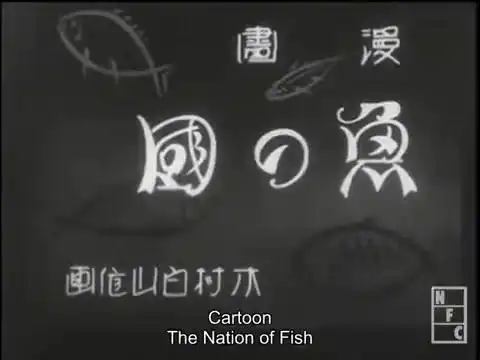
A definitive 6.8/10 rating for a film that redefined the boundaries of cult cinema. Manga: Sakana no kuni remains a cornerstone of transgressive art.
Okay, let's talk about Manga: Sakana no kuni. If you’re looking for a fast-paced, action-packed anime, you should probably just skip this one. But if you’ve got an evening free, and you’re into something that just *washes over you* with really distinct visuals and a sort of gentle melancholy, then yeah, give it a shot. People who enjoy the quiet, artistic side of animation, maybe Studio Ghibli but dialed way down on the plot urgency, will find something here. Anyone expecting big battles or clear-cut heroes and villains? You'll be pretty bored.
The premise is simple enough: a young girl, Hana, finds herself in this fantastical underwater world after a mysterious event. It’s not quite a "new world" portal situation, more like her existing reality just… shifted. The whole place is populated by these incredibly imaginative fish creatures, some grand and ancient, others tiny and almost glowing. It’s less about a grand quest and more about her simply existing and trying to understand this new, fluid existence.
The first thing that really hit me was the *color palette*. 🎨 Everything has this soft, almost watercolor glow, especially in the deeper parts of the "fish country." There’s a scene where Hana is just drifting past a school of bioluminescent jellyfish-fish, and the light they cast on her face is just mesmerizing. It doesn't quite feel like traditional cel animation or modern CG. It’s got a texture to it, like each frame was painted individually, then brought to life.
Pacing-wise, it’s definitely on the slower side. There are long stretches where not much 'happens' in the conventional sense. Hana spends a good chunk of time just observing, or trying to communicate with these strange fish. There's a particular sequence, maybe twenty minutes in, where she just watches this enormous, ancient whale-like creature pass by. It’s not moving fast, it’s just… *present*. The camera stays on it, and you really feel its immense scale and age. Some viewers will probably check their phone during this bit, but I found myself really leaning in.
The film isn't afraid of silence, either. So many animated films feel like they need constant dialogue or a booming score. Not here. There are moments of absolute quiet, just the gentle sounds of water or a distant, low hum. It makes the score, when it *does* kick in, feel much more impactful. Like that mournful flute melody that plays when Hana first discovers the ruins of what looks like an old human city, now completely submerged and reclaimed by the ocean. A bit cliché, maybe, but still effective.
There are these small, weird details that stuck with me. Like the way some of the smaller, darting fish have almost human-like eyes, but they blink sideways. Or how Hana’s hair, when she’s submerged, doesn’t just float; it moves with this almost *conscious* rhythm, like it's a part of the water itself. It's a subtle effect, but it makes her feel truly integrated into the environment, not just visiting.
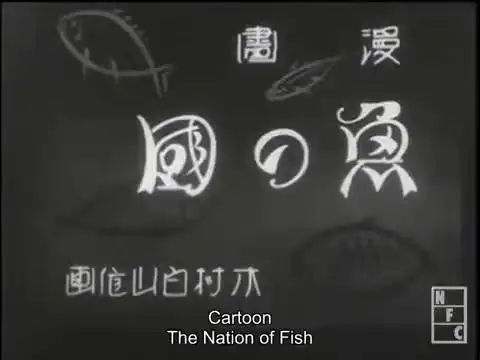
The character of Hana herself is interesting. She’s not particularly expressive, which might put some people off. Her reactions are often internal, communicated more through her body language and those quiet moments of observation. There's a scene where she finds a small, injured fish and tries to help it. Instead of a big, dramatic rescue, it’s this very gentle, almost awkward interaction. The fish doesn't immediately trust her, and she doesn't automatically know what to do. It felt *real* in its hesitancy. That tiny fish's struggles, the way it tried to swim away from her touch, that part really got to me. It's not a grand gesture, just this tiny, fragile thing.
I did find myself wishing for a bit more clarity on *why* she was there, or what the ultimate goal was. The film hints at a larger purpose, maybe something about environmental balance or a connection between worlds, but it never really spells it out. It's more about the journey than the destination, which is fine for some, but can be a little frustrating if you like your narratives tidy. You can almost feel the movie trying to convince you this moment matters, without giving you a clear reason why *it should* beyond "look how pretty this is."
And speaking of pretty, the animation of the water itself is incredible. The way light refracts, the movement of currents, the way bubbles rise… it’s all just stunning. You can tell they put a lot of effort into making the underwater world feel both alien and completely believable. There’s one shot, from deep inside a coral forest, looking up towards the surface where a sliver of sunlight pierces through. It’s breathtaking. 🤩
There's a subtle ecological message woven in, but it’s not preachy at all. More like a quiet reminder of how interconnected everything is, and how fragile. It makes you think about our own oceans without hitting you over the head with it. It’s just part of the fabric of this "fish country."
The ending felt a little... abrupt? It doesn't offer a neat resolution, which I guess fits the overall tone. It leaves you with a feeling, rather than a conclusion. It’s one of those films that stays with you, not because you’re still pondering the plot points, but because certain images and sensations linger. Like the feeling of deep blue, or the gentle sway of kelp forests. It's a film about atmosphere and immersion, and on that front, it largely succeeds.
So, yeah, Manga: Sakana no kuni isn't for everyone. It's definitely an experience, though. If you're willing to just drift along with it, you might find something quite beautiful and strangely moving. Just don't expect a typical story arc. This one swims its own course. 🐠

IMDb 5.3
1932
Community
Log in to comment.