DbcultAccessing Vault...
Cult Review
Senior Film Conservator
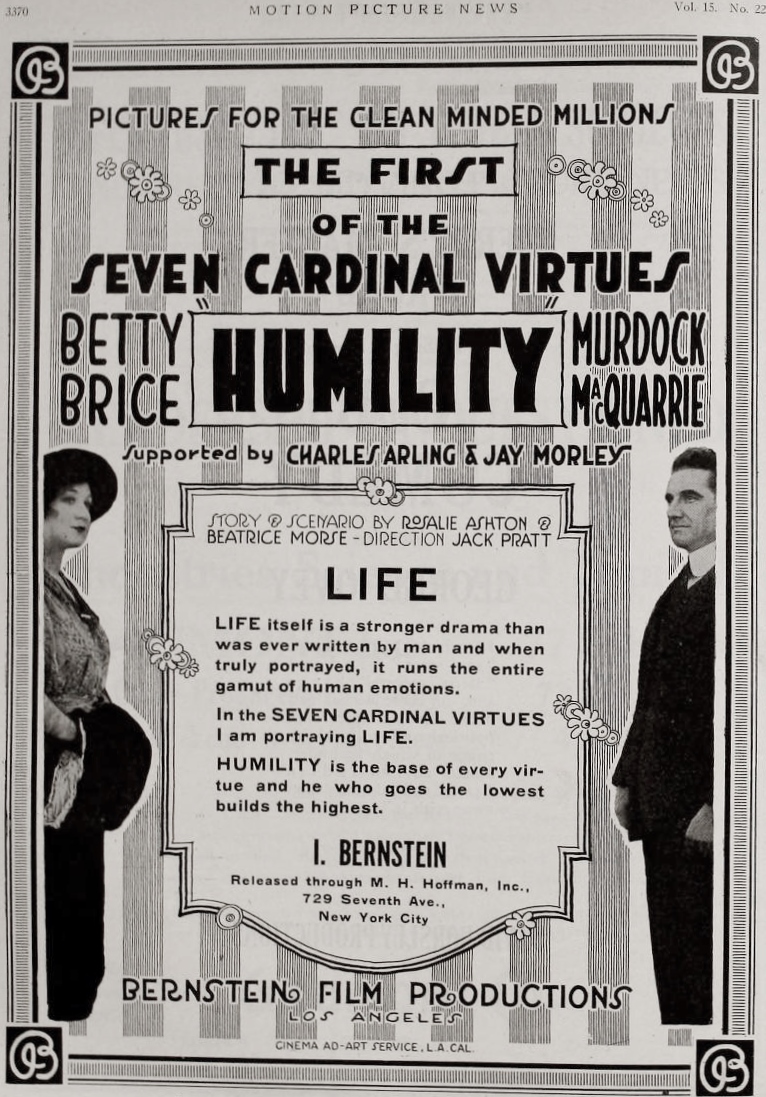
Forgive the bluntness: most silent melodramas age like newspaper left under a rain-spout—brittle, bleached, illegible. Humility, however, still bleeds. Shot on orthochromatic stock that turns human lips into bruised slate, the picture turns every close-up into an X-ray of the soul. When Jay Morley’s Ezra stands before a cracked mirror, his reflection fractures into three selves—clerk, husband, accused embezzler—each shard held together only by the fraying collar around his throat. The moment lasts four seconds yet feels longer than some careers.
The plot, deceptively linear, corkscrews inward like a baroque fugue. Beatrice Morse’s intertitles refuse the usual expository gab; instead they arrive as gnomic fragments—“Shame keeps the ledger”, “Charity bruises the giver”—that flicker long enough to brand themselves on the retina. Rosalie Ashton’s scenario dispenses with the cathartic courtroom scene we await; guilt is tried in alleyways and drawing-room whispers, verdict delivered by the squeak of a brass gate as Ezra is shut outside the town’s last charitable mission.
Poverty here is not a social condition but a metaphysical climate: damp, persistent, inhaling body-heat the way marshes swallow footprints.
Director-cinematographer MacQuarrie, also essaying the venal office manager who engineers Ezra’s fall, shoots Lowell, Massachusetts, as if it were Dürer’s Melencolia—gables like furrowed brows, telegraph wires slicing the sky into anxious strips. Compare this to The Woman Pays, where poverty is decorative, a lace cuff of ruin. Here it is ontological; even the philanthropists look embalmed.
Jay Morley, primarily remembered for corn-fed comic shorts, strips vanity to the bone. His eyelids droop under the gravitational pull of chronic fatigue; watch how he removes his boots—slowly, as if negotiating a truce with gravity—then cradles them like house pets before setting them down. The gesture lasts eight frames yet indicts every bootstraps maxim ever hawked by Horatio Alger.
Betty Brice, as the consumptive spouse Martha, refuses the saintly consumptive cliché. She scratches flea-bites beneath her nightgown, snarls when Ezra brings her watery broth, then kisses his knuckles with sudden ferocity, a lioness guarding the last scrap of pride. Their marriage feels lived-in, down to the fray where the wallpaper’s floral pattern peels like eczema.
Charles Arling’s philanthropist Mr. Venner carries the rigid rectitude of a man who has never misplaced a penny, yet when he realizes the clerk’s innocence, the actor lets his left cheek twitch—once—an infinitesimal crack through which whole cathedrals of remorse seep. It is the silent era’s answer to Shame’s more histrionic guilt; here, conscience is not shouted but inhaled, like coal dust.
MacQuarrie’s visual grammar predates German Expressionism yet equals it for psychic distortion. In the counting-house, vertical shadows from window mullions cage Ezra within a grid of debits. Later, when he trudges across a frozen river at twilight, the camera tilts until the horizon cants at twenty degrees—world sliding out from under him like a tablecloth snatched by a malicious magician. No need for CGI vertigo; the emulsion itself seems to buckle.
Lighting swings between sodium glare and tenebrous void. The dismissal scene is staged in a single take: clerk, manager, cashier. A wall sconce spits a corona of magnesium-white onto the safe’s iron door; beyond that radius, faces dissolve into chiaroscuro masks. The intertitle intrudes—“Your integrity is a counterfeit coin”—yet the real dialogue is the hiss of the gas jet as it gutters, like a moral snicker.
Surviving prints arrive without original score; most archives slap on generic piano mats. Do yourself a favor: cue up Max Richter’s Infra or, for purists, a field recording of an 1899 textile mill—shuttles clacking, turbines whining. The machinery syncs uncannily with the images, turning every footstep into an echo of industrial fatigue. The absence of human noise throws focus onto micro-sounds: the rasp of Ezra’s sleeve against a brick wall, the wet click when he swallows shame. Silence becomes a timbre, not a void.
Unlike Sylvia on a Spree or Caprice of the Mountains, where women twirl through consumerist daydreams, the female body here is site of attrition. Martha’s sickroom is photographed with the clinical detachment of a medical bulletin: bedpan, laudanum bottle, blood-speckled handkerchief. Yet Brice’s performance reclaims agency; she dictates the terms of her own decay, insisting Ezra leave for work even as hemorrhage stains her nightgown crimson. The film anticipates contemporary debates on who gets to narrate suffering.
Scholars often cite 1940s Hollywood for birthing corporate noir, yet the DNA is here: forged ledgers, predatory superiors, the anonymity of the ledger line. MacQuarrie even frames a shot through the iron spokes of a stool, so Ezra appears imprisoned by furniture—an ancestor to The Dare-Devil Detective’s Venetian-blind shadows, but starker, colder.
A mission hall sequence flirts with bathos—hymns projected via intertitle, washed-out close-ups of uplifted faces. Yet MacQuarrie sabotages the piety: the preacher’s hand is missing two fingers, consequence of a mill accident; charity baskets contain dented cans with labels peeling. Grace, if it arrives, does so off-screen, registered only by the subtle relaxation of Ezra’s shoulder blades as someone—finally—offers him a chair without first wiping it.
Spoilers adhere differently to 1921; even so, suffice it to say the resolution dodges both sentimental rescue and tragic death. Ezra ends up pushing a broom in a rural mission, eyes still lowered, though the final iris shot closes on his cracked boots treading fresh snow—each footprint a muted testimony that tomorrow will demand again the excruciating labor of beginning. Compare this to The Strength of Donald McKenzie, where adversity forges steel. Here it merely sands a man down to the marrow, and the film’s greatness lies in staring at that marrow without flinching.
Only two 35 mm nitrate prints survive: one at MoMA (missing reel 3), one at EYE Filmmuseum. A 2018 2K restoration patched the gap with a 9.5 mm reduction print, resulting in fluctuating grain density that, serendipitously, intensifies the film’s bruised texture. Kino Lorber’s Blu-ray is region-free, includes an essay by Philippa Gates that situates the movie within post-WWI labor unrest. Streaming options rotate between Kanopy (US universities) and MUBI (limited engagements). Bootlegs on video-sharing sites are pallid ghosts—avoid.
Seek it out, but brace yourself: Humility doesn’t want your tears; it wants that squirming moment when you recognize your own fingerprints on every petty cowardice Ezra endures. And it gets what it wants.
IMDb 7.5
1932
Community
Log in to comment.