DbcultAccessing Vault...
6.4/10
Senior Film Conservator
A definitive 6.4/10 rating for a film that redefined the boundaries of cult cinema. Lache in harem remains a cornerstone of transgressive art.
Is Lache in harem worth watching today? Short answer: yes, but with significant caveats. This early cinematic curiosity offers a fascinating, albeit brief, glimpse into the nascent art form, making it a must-see for film historians and enthusiasts of silent cinema, yet utterly unsuited for those seeking modern narrative pacing or character depth.
This isn't a film for casual viewers accustomed to intricate plots or rapid-fire dialogue; it's an artifact, a whisper from a bygone era that demands patience and an appreciation for the foundational experiments of cinema. If you approach it with the right mindset, 'Lache in harem' reveals itself as a surprisingly ambitious piece of its time, a testament to early filmmakers' desire to stretch the medium's imaginative reach.
Let's be clear about who will connect with this film and who will likely find it an exercise in frustration. If your idea of a good time at the movies involves a clear protagonist, a three-act structure, and a resolution, then 'Lache in harem' is decidedly not for you. Its narrative is as wispy as the dream it depicts, its characters more archetypes than individuals.
However, if you are drawn to the archaeology of cinema, fascinated by how early directors grappled with storytelling and visual effects using rudimentary tools, or if you simply enjoy the unique aesthetic of the silent era, then 'Lache in harem' offers a peculiar charm. It’s a historical document as much as it is entertainment, a window into a specific cultural moment.
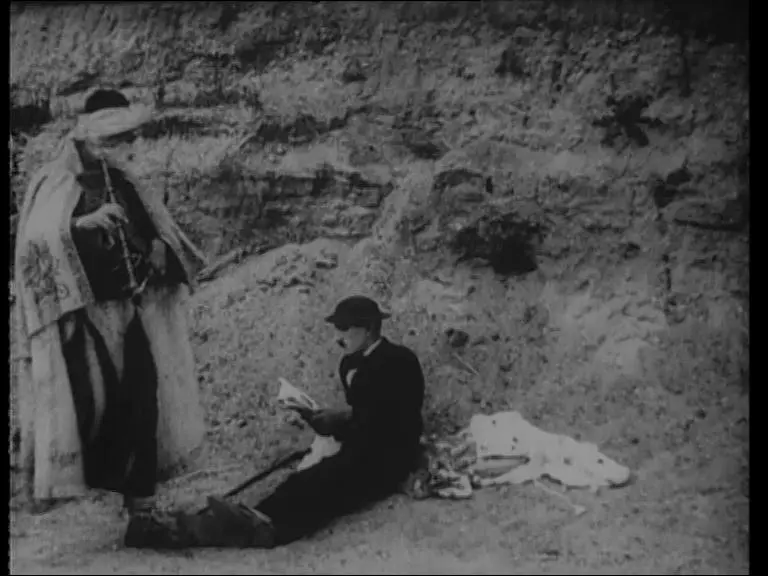
At its core, Lache in harem is a study in cinematic aspiration. The film presents the simple premise of a young man drifting into sleep by a lake, only to be transported into a lavish, exotic dream of a harem. This conceit, while straightforward, allowed early filmmakers to indulge in spectacle and fantasy, largely unburdened by the demands of realism.
This film works because of its audacious attempt to visualize the intangible. For an early silent film, the very act of depicting a dream — a subjective, often illogical experience — was a significant undertaking. It pushes the boundaries of what the camera could convey beyond simple action, venturing into the realm of the subconscious. The film's brief runtime, paradoxically, enhances its dreamlike quality; it feels fleeting, just as a dream often is upon waking.
This film fails because its narrative is paper-thin, even by silent film standards. There’s no real conflict, no character arc, and certainly no profound thematic exploration beyond a superficial exoticism. What might have been a rich tapestry of dream logic becomes, in practice, a series of tableaux, albeit often visually interesting ones. The acting, while energetic, lacks the nuanced emotional depth that even some contemporary films like The Hoosier Schoolmaster were beginning to explore.
You should watch it if you are a film student, a historian of early cinema, or someone deeply interested in the evolution of visual storytelling. It’s a fascinating case study in how early directors used fantasy to explore the limits of their medium. If you're looking for a compelling story or a modern entertainment experience, however, you'll likely find it wanting.
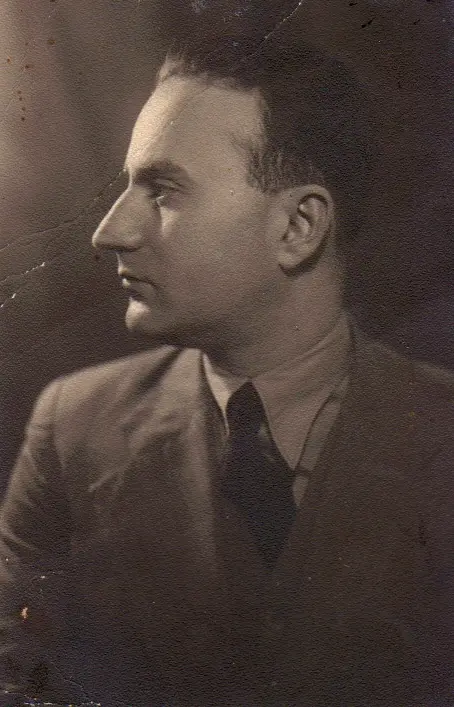
The direction in Lache in harem, while uncredited, demonstrates a clear, if rudimentary, vision for depicting a fantastical realm. The transition from the mundane lakeside setting to the opulent harem is handled with the kind of simple yet effective optical tricks available at the time, likely a dissolve or an iris effect that visually signals the shift in reality. This early attempt to differentiate between waking and dreaming states through cinematic technique is noteworthy.
The director’s primary goal seems to have been the creation of atmosphere. The scenes within the harem are less about plot progression and more about establishing a mood of exoticism and sensual allure, albeit filtered through an early 20th-century European lens. The use of stage-like blocking, where actors move within a confined space, is typical of the era, but here it serves to frame the "dream" as a series of living paintings.
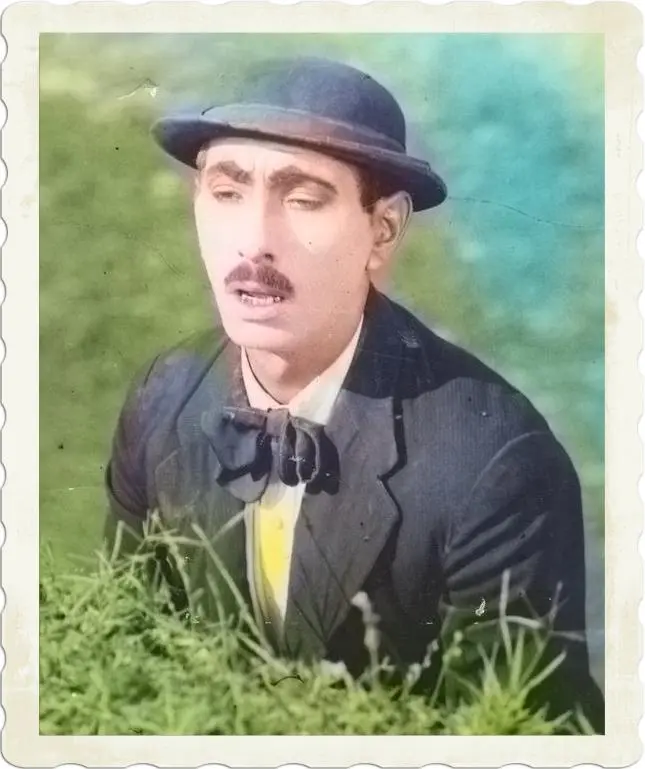
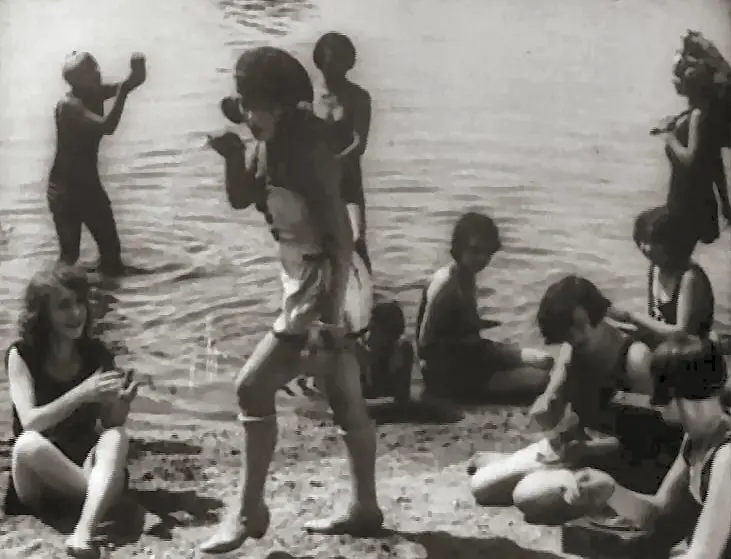
Consider the staging of the harem women, portrayed by Lila Stanescu and Elena Popescu-Liciu. Their movements are often stylized, almost dance-like, designed to emphasize grace and an idealized femininity. This isn't realism; it's a deliberate construction of fantasy, reminiscent of theatrical spectacles of the period. The direction leans heavily into visual suggestion, allowing the audience to fill in the blanks of this silent, imagined world.
One could argue that the film's greatest directorial strength lies in its unselfconscious ambition. To attempt such a subject with the limited tools available speaks volumes about the early filmmakers’ belief in cinema's potential. There’s a raw, pioneering spirit here that transcends its technical simplicity, a desire to conjure worlds that exist only in the mind.
However, this ambition is also its Achilles' heel. The director, constrained by technology and perhaps narrative conventions of the time, struggles to imbue the dream with genuine narrative momentum. The transition from one tableau to the next often feels abrupt, lacking the fluid, illogical progression that defines true dreams. It's a series of beautiful snapshots, not a flowing vision.
The performances in Lache in harem, featuring talents like Lila Stanescu, Elena Popescu-Liciu, Simion Sismanian, and V.D. Ionescu, are very much products of their time. Silent film acting relied heavily on exaggerated facial expressions and broad physical gestures to convey emotion and intent, a necessity born from the absence of dialogue. In a dream sequence, this style is paradoxically both fitting and limiting.
Simion Sismanian, as the dreaming young man, provides the film’s anchor, though his role is largely passive. His awakening and subsequent falling asleep are the only direct narrative actions he performs. His expressions, however, must carry the weight of wonder, desire, and eventual realization, which he achieves through classic silent film techniques – wide eyes, an open mouth, a slight tremor of the hands to denote excitement or awe.
The women of the harem, particularly Stanescu and Popescu-Liciu, are tasked with embodying the idealized, often objectified, vision of beauty within the dream. Their performances are less about individual character development and more about collective allure. They move with an almost choreographed grace, their smiles and glances directed more at the unseen dreamer than at each other, creating an atmosphere of captivating, yet ultimately superficial, charm. Think less nuanced character work and more living, breathing ornaments.
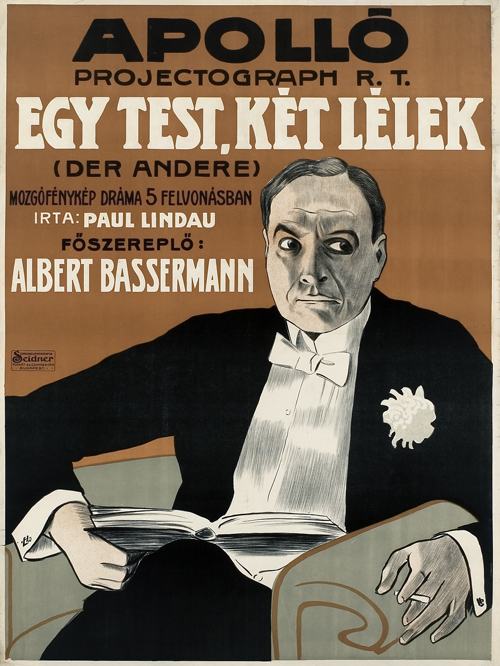
IMDb 5.3
1913
Community
Log in to comment.