DbcultAccessing Vault...
6.7/10
Senior Film Conservator
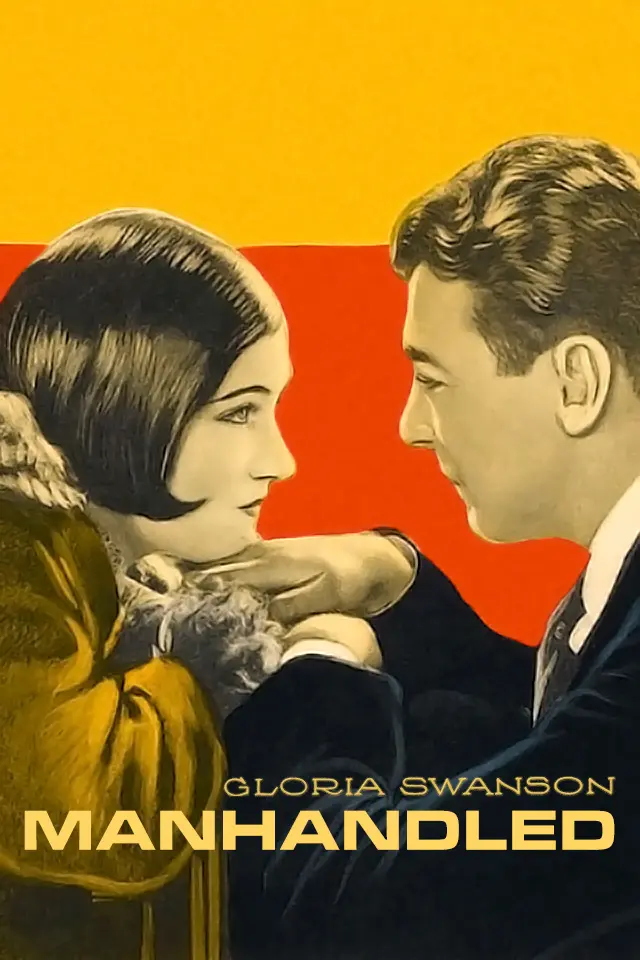
A definitive 6.7/10 rating for a film that redefined the boundaries of cult cinema. Manhandled remains a cornerstone of transgressive art.
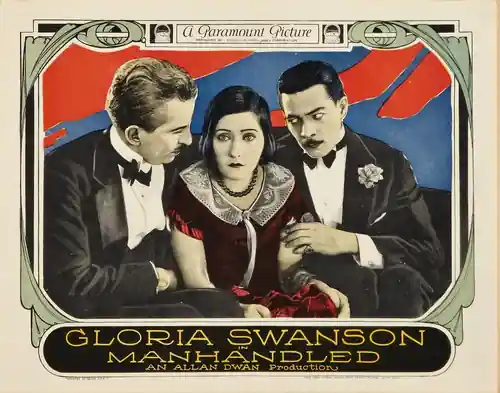
The 1924 celluloid tapestry Manhandled stands as a towering testament to the mercurial brilliance of Gloria Swanson, an actress who could pivot from the depths of proletarian exhaustion to the heights of czarist artifice with a single twitch of her expressive features. Directed with a keen eye for urban kineticism by Allan Dwan, the film eschews the saccharine sentimentality often found in silent-era romances, opting instead for a gritty, almost tactile exploration of the New York struggle. It is a film that breathes the soot of the subway and the perfume of the salon in equal measure, presenting a social hierarchy that is as porous as it is perilous.
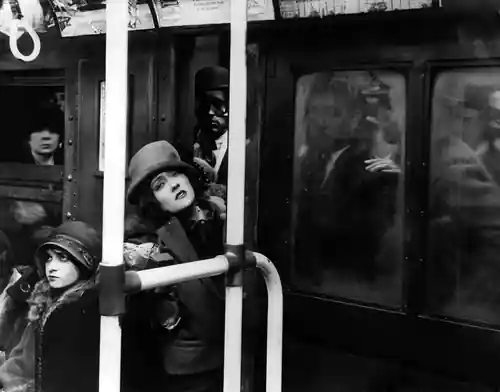
Few sequences in the history of silent cinema possess the visceral, claustrophobic energy of the opening subway commute. Swanson’s Tessie McGuire is not merely a character; she is a physical manifestation of the urban grind. We see her buffeted, squeezed, and literally 'manhandled' by a sea of anonymous masculinity, a sequence that mirrors the chaotic energy found in Call a Taxi, yet infused with a much sharper sense of gendered vulnerability. The subway car becomes a microcosm of a society that treats the working-class woman as a commodity to be pushed and pulled. Swanson’s performance here is a masterclass in physical comedy, utilizing her entire body to convey the absurdity of the daily commute, a far cry from the more structured melodrama of Her Moment.
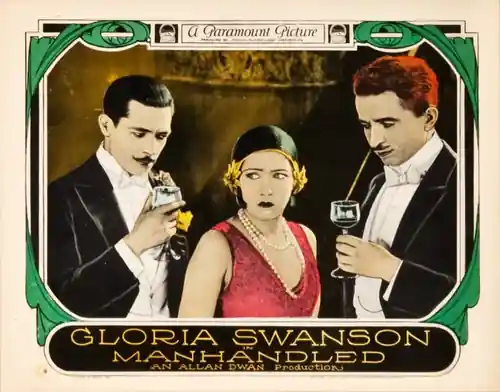
This opening serves as the essential anchor for the film’s later flights of fancy. Without the established reality of Tessie’s weary life—the cramped apartment, the indifferent boyfriend, the relentless noise—her eventual transformation into a faux-Russian aristocrat would lack its satirical bite. It is the juxtaposition of the shopgirl’s reality against the artist’s fantasy that provides the film’s narrative engine. When her boyfriend, played with a stolid, somewhat frustrating sincerity by Tom Moore, neglects her for his mechanical inventions, Tessie’s decision to step into the night is not just an act of pique, but a desperate grab for agency in a world that consistently denies it to her.
The heart of the film lies in the bohemian party sequence, where Tessie’s talent for mimicry is revealed. In a display of staggering versatility, Swanson parodies the stars of her era, including a devastatingly accurate Charlie Chaplin. This isn't merely a 'bit' for the audience; it is a thematic revelation. Tessie survives by observing and reflecting. Her ability to inhabit other personas is a survival mechanism honed in the department store, where one must constantly perform a version of service-oriented subservience. This theme of fractured identity echoes the narrative shifts seen in The Fortune Teller, where the mask eventually begins to dictate the wearer’s reality.
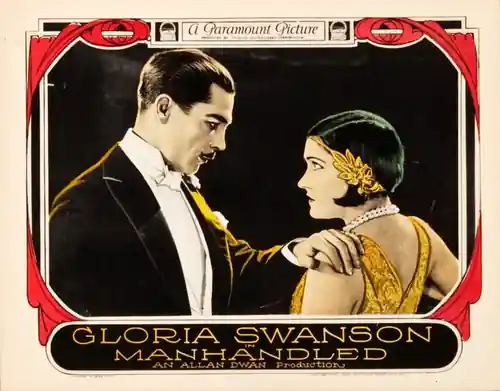
When Frank Morgan’s character, the opportunistic dressmaker, recruits Tessie to play the 'Countess,' the film pivots into a sophisticated satire of the American obsession with European pedigree. The fashion house becomes a stage, and the wealthy patrons are the gullible audience, willing to pay exorbitant prices for the privilege of being snubbed by a 'noble.' This segment of the film carries a cynical edge that reminds one of the darker social maneuvers in A Pair of Sixes, though Dwan’s direction keeps the tone buoyant enough to avoid descending into pure nihilism. The 'Countess' is a construct of silk and silence, a reminder that in the Jazz Age, brand was often more important than bloodline.
The production design of Manhandled deserves significant praise. The contrast between the stark, utilitarian spaces of Tessie’s everyday life and the decadent, over-designed interiors of the dressmaker’s salon creates a visual dissonance that underlines the film’s class themes. The salon is a labyrinth of mirrors and shadows, much like the deceptive plots found in Fantomas - On the Stroke of Nine. It is a place where every interaction is a transaction, and where Tessie’s beauty is treated as just another fabric to be draped and sold. The cinematography captures the shimmering textures of the gowns with a reverence that borders on the fetishistic, yet it never loses sight of the exhaustion behind Tessie’s eyes.
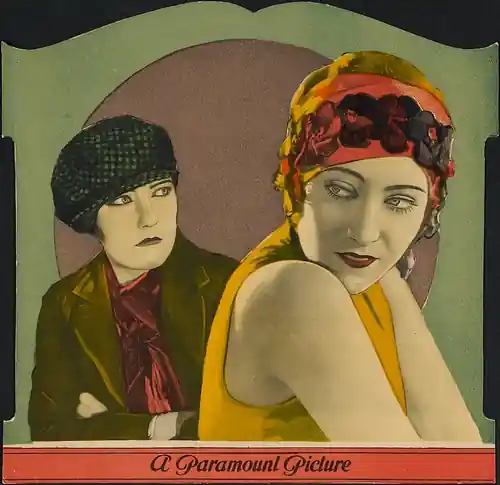
As the ruse deepens, the film explores the predatory nature of the men who surround the 'Countess.' Ian Keith plays the suave, dangerous Robert Thayer with a serpentine grace, representing a world of wealth that views women as trophies to be collected. His interactions with Tessie are fraught with a tension that is both sexual and social. She is constantly on the verge of being 'found out,' not just as a fake royal, but as a woman who has dared to step out of her assigned station. This sense of impending exposure creates a suspense that is as taut as any thriller, reminiscent of the high-stakes deception in Michael Strogoff, albeit in a domestic, urban setting.
To understand Manhandled, one must look at the landscape of 1924. It was a year of transition, where the innocence of the early silents was being replaced by a more cynical, sophisticated urbanity. While films like Pure Grit or Bull Arizona - The Legacy of the Prairie looked backward toward the frontier and a simpler moral code, Manhandled is firmly rooted in the 'now.' It deals with the reality of the working woman in a way that feels surprisingly modern. Even the title, with its connotations of physical and social mistreatment, suggests a level of frankness that was rare for the time. It lacks the epic scale of Armenia, the Cradle of Humanity, but it possesses a psychological depth that is equally profound.
The film’s humor also sets it apart. Unlike the broad slapstick of Le peripezie dell'emulo di Fortunello e compagni or the lighthearted antics of Monty Works the Wires, the comedy in Manhandled is often derived from social discomfort. We laugh at Tessie’s struggle to maintain her Russian accent or her attempts to navigate a formal dinner, but the laughter is tinged with the knowledge of what is at stake for her. If the mask slips, she returns to the subway and the department store. The film understands that for someone like Tessie, comedy is a shield, much like the protective persona in Don't Call Me Little Girl.
The resolution of Manhandled is perhaps its most debated element. After navigating the pitfalls of the high-life and narrowly escaping moral ruin, Tessie returns to her inventor boyfriend. Some critics view this as a regressive retreat into domesticity, a surrender to the status quo. However, viewed through a more contemporary lens, it can be seen as an act of radical honesty. Tessie has seen the 'other side'—the vacuity of the elite, the cruelty of the fashion world—and chooses a life of authentic struggle over one of gilded deception. It is a choice of substance over shadow, much like the moral dilemmas faced in Beatrice Fairfax Episode 9: Outside the Law.
Ultimately, the film belongs to Swanson. Her performance is a tour de force that bridges the gap between the clown and the countess. She captures the frantic energy of a woman trying to keep a dozen plates spinning at once, while never losing the core of vulnerability that makes Tessie so relatable. Whether she is fighting for a seat on the train or fending off a drunken millionaire, Swanson remains the magnetic center of the frame. The film’s enduring power lies in its refusal to simplify the female experience. It acknowledges the madness of the city—a theme explored in June Madness—and the specific 'manhandling' that a woman must endure to find a sliver of happiness.
From a technical standpoint, Manhandled is a marvel of its era. The lighting, particularly in the salon scenes, uses high-contrast chiaroscuro to highlight the artifice of Tessie’s new world. The editing is sharp, moving with a rhythm that mirrors the heartbeat of the city. While it may not have the surrealist leanings of some contemporary European cinema, it possesses a quintessentially American dynamism. It is a film that feels 'built' rather than just filmed, reflecting the industrial spirit of the age. It shares a certain gritty determination with What Love Will Do, yet operates on a much grander psychological scale.
In the final analysis, Manhandled is more than just a vehicle for a superstar; it is a vital document of a specific moment in time. It captures the intersection of class, gender, and performance with a wit and wisdom that remain startlingly relevant. Gloria Swanson didn't just play Tessie McGuire; she inhabited the very soul of the 1920s working woman, giving voice (through silence) to the millions who were being 'manhandled' by history, economy, and society alike. It is a masterpiece of nuance, a comedy of manners that isn't afraid to get its hands dirty in the grit of the real world.
IMDb 5.4
1936
Community
Log in to comment.