DbcultAccessing Vault...
Cult Review
Senior Film Conservator
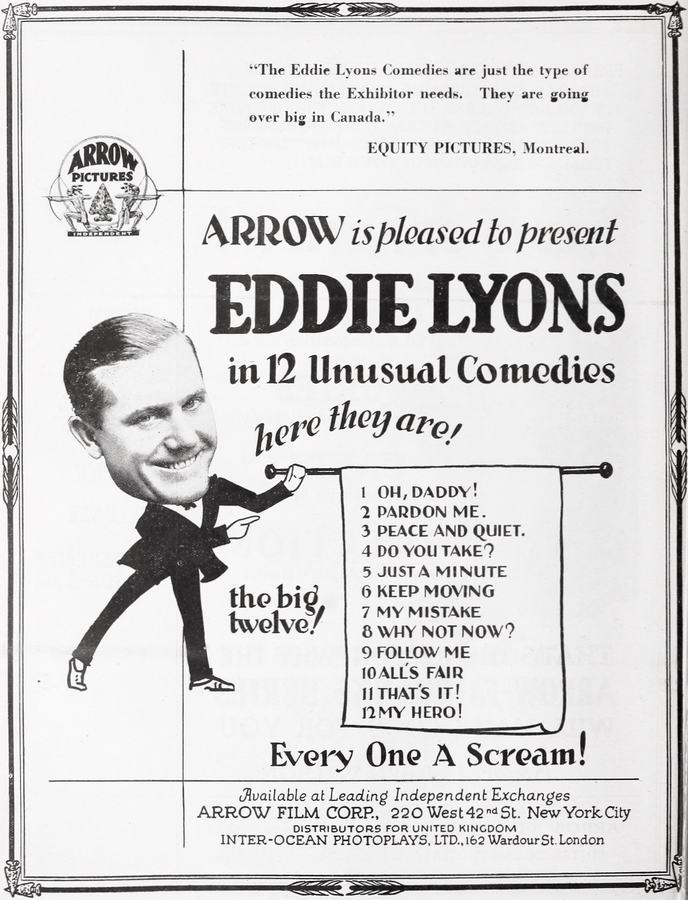
Vincent Bryan’s All Is Fair arrives like a nitrate ghost—edges frayed, emulsion scarred, yet blazing with an anger so contemporary it feels streamed rather than screened. The plot, nominally a two-day courtship, is actually a surgical dismantling of every sentimental lie the Great War sold to civilians: that love conquers shellfire, that marriage offers safe conduct through history, that a white dress can stay white while the world burns.
Lillian Hackett, all clavicles and kohl, plays her Bride as a woman who has already memorized her own widowhood. Watch the micro-twitches around her mouth when she rehearses vows—she’s not dreaming of a future but editing a past that hasn’t happened yet. Opposite her, Eddie Lyons’s Groom is a study in cartographic dissociation: he maps terrain because he no longer trusts ground to stay ground. Their first shared close-up—an Eisensteinian collision of profiles—lasts only twenty-four frames yet contains more erotic arithmetic than the entirety of A Zuni Kicking Race.
The city itself hijacks the ceremony: air-raid sirens yodel, bridal satin is re-stitched into field dressings...
Bryan’s screenplay, a palimpsest of crossed-out church hymns and censored telegrams, refuses three-act piety. Instead it spirals like a shell casing down a marble staircase. Scene transitions are accomplished through match-action wounds: a cut lip on the Bride dissolves into a crater on the western front; the Groom’s trembling compass needle superimposes over a nurse’s syringe. This is montage as shrapnel—every edit tears something away.
Cinematographer Jules Cronjager—who also shot the more pastoral En vinternat—here abandons snow-blinded palettes for industrial phosphors. Bridal whites are dialed toward ultraviolet; they glow like radium watch faces in the blackout. Notice how the Bride’s paper roses, initially the same shade as her dress, progressively desaturate until they resemble bureaucratic forms. By reel five the flowers have become stationery; love letters morph into requisition slips.
The camera itself performs a kind of espionage. In the cathedral-come-soup-kitchen sequence, Cronjager hides the apparatus behind hanging laundry so that parishioners become shadow-theatre silhouettes. Depth collapses; space feels rationed. Later, inside the honeymoon suite, the lens peers through a keyhole shaped suspiciously like a military cross-hair, turning marital intimacy into a sniper’s vantage point.
Though released two years before The Jazz Singer, All Is Fair anticipates sound cinema by embedding sonic ghosts in the intertitles. Words throb, jitter, repeat: “I DO I DO I DO” cascades down the screen like descending artillery. In one infamous card, the font itself disintegrates—individual letters slide off the bottom edge—so that the sentence ends mid-vow, an auditory amputation. Archivists at MoMA’s recent restoration discovered that the original orchestra score called for typewriter orchestras and ticking gas meters, instruments designed to make the absence of human speech feel like a casualty.
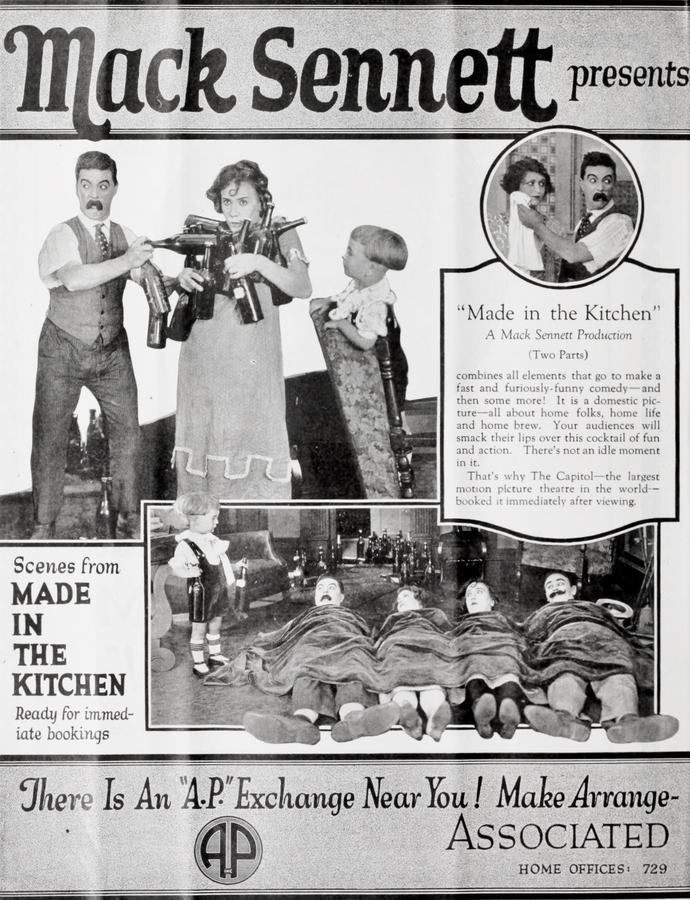
Compare this to the more conventional melodrama of Mother's Angel, where intertitles merely exposit. Bryan weaponizes text; he makes silence detonate.
Silent acting is often accused of semaphore exaggeration, yet Hackett operates on the decimal scale. Her right eyelid possesses more narrative micro-climates than most performers manage with entire bodies. Halfway through, when she discovers the Groom’s cartographic tattoos on her torso, the lid performs a stutter—fluttering between belief and refusal—an oscillation so rapid it seems the film itself might jam. No cutaway, no title card, just that eyelid broadcasting civil war.
Lyons, by contrast, anchors his performance in the extremities. His left index finger develops a tremor calibrated to artillery cadence. Watch how he steadies it by pressing against the Bride’s clavicle, turning her skeleton into a tuning fork. The gesture is repeated with variations: in a trench, in a ballroom, in the planetarium finale. Each time the finger finds a new surface—mud, marble, star-projector glass—until the tremor infects the filmstrip itself: the image jitters during those moments, as if the projector empathizes.
While contemporaries like A Man's Prerogative treat womanhood as moral lighthouse, Bryan recasts femininity as contraband. The Bride’s veil is requisitioned for bandages; her garter becomes a tourniquet. Yet the film refuses simple victim tableau. In a ballroom turned black-market bazaar, she trades her last silk stocking for a forged exit visa, then uses the stocking to garrote a profiteer who attempts to shortchange her. The act occurs in a single take, the camera gliding past dancers so that strangulation masquerades as waltz.
Masculinity fares no better. The Groom’s cartographic expertise—usually cinematic shorthand for rational control—here becomes pathology. He charts the Bride’s bruises with the same ink he once reserved for No-Man’s-Land, collapsing the distinction between lover and battlefield. When he finally tries to reclaim agency by enlisting, the recruiting officer stamps ‘REDUNDANT’ across his chest, branding him obsolete before firing squads can oblige.
Place All Is Fair beside The Undercurrent and you witness antithetical DNA. Both flirt with marital fatalism, yet where Undercurrent dilutes its poison with moral redemption, Bryan offers no such antidote. Pair it with For the Freedom of the World and watch propaganda implode: Bryan’s war does not ennoble; it bureaucratizes the heart.
Even against the hallucinatory Farkas, All Is Fair feels more contemporary. Its DNA replicates in later works like Eternal Sunshine or Phantom Thread—romances that treat intimacy as contested territory rather than sanctuary.
The 2023 4K restoration by EYE Filmmuseum unearthed a previously lost reel in which the Bride undergoes a medical examination by military doctors who measure her uterus with a slide rule, cataloging her as ‘suitable for repopulation.’ The scene lasts ninety seconds yet reframes the entire film: marriage is no longer metaphorical battleground but literal factory for cannon fodder. Censors in 1921 excised it for ‘obscene arithmetic’; modern viewers will note how the doctors’ white coats echo the earlier bridal gown, completing a chromatic cycle from innocence to institutional predation.
Color grading also reinstates Bryan’s original bi-polar palette: arsenic greens for state institutions, bruise purples for private trysts. The reappearance of these hues clarifies leitmotifs previously muddied by sepia decay.
Upon its initial release, All Is Fair was condemned by the New York Herald as “a nuptial nihil unfit for veterans’ fragile eyes.” Yet within months, Dadaists in Zurich were projecting it onto bed sheets during manifesto readings. Tristan Tzara reportedly screened the film backwards, claiming the reverse chronology revealed a happy ending hidden inside the negative.
Contemporary criticism has been equally polarized. Some feminists hail the Bride as prot-antecedent to Promising Young Woman’s Cassandra, while masculinist factions decry the film as “gynocratic artillery.” Both readings undersell the picture’s broader contempt: Bryan indicts not gender but the institutional scaffolding that weaponizes it.
To watch All Is Fair is to feel the projector bulb become interrogation lamp. The film survives not as nostalgic artifact but as operational ordinance; its emulsion carries live rounds. Every contemporary romance that dares to stage a wedding without acknowledging the geopolitical dowry risks looking feckless beside Bryan’s scorched bridal veil.
Stream it—if you can find it—then try to sleep without hearing typewriter artillery where your pulse should be. The Bride and Groom may never reach the altar, but they have blasted open a crater in cinema’s heart that still smokes a century on.
IMDb 6
1916
Community
Log in to comment.