DbcultAccessing Vault...
Cult Review
Senior Film Conservator
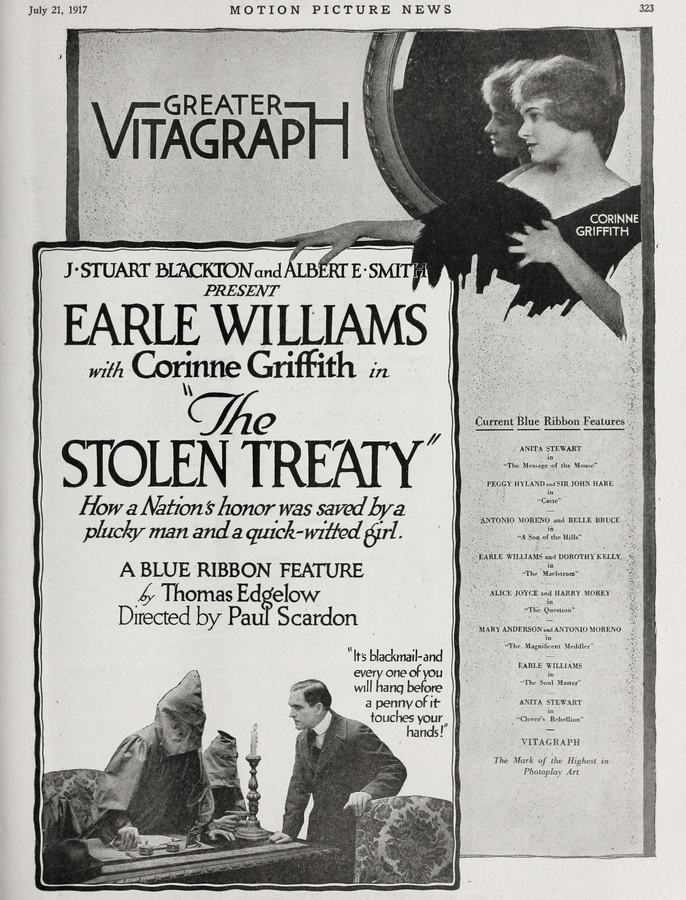
In the annals of early cinema, where narratives unfolded through the eloquent ballet of gesture and the poignant intertitle, certain films managed to transcend their technological limitations, crafting tales of intrigue and moral complexity that resonate even today. The Stolen Treaty stands as a compelling artifact from this era, a silent spy thriller that, despite its seemingly straightforward premise, delves into the precarious balance between national duty and personal failing. It’s a film that, upon closer inspection, reveals a subtle yet potent critique of appearances, exposing the rot that can fester beneath the polished veneer of high society and international diplomacy.
The narrative unfurls with a delicate precision, introducing us to Prince Zarl of Zorania, a figure of aristocratic grace ostensibly enjoying a leisurely vacation. Yet, beneath this placid surface lies a far more significant objective: to broker a crucial treaty with the United States. This political tightrope walk is observed, and indeed participated in, by Geoffrey Wynne, a man whose seemingly languid existence as a society dandy is but a meticulously crafted disguise for his true calling as a secret service agent. The film immediately establishes a world where identity is fluid, and trust, a commodity to be handled with extreme caution.
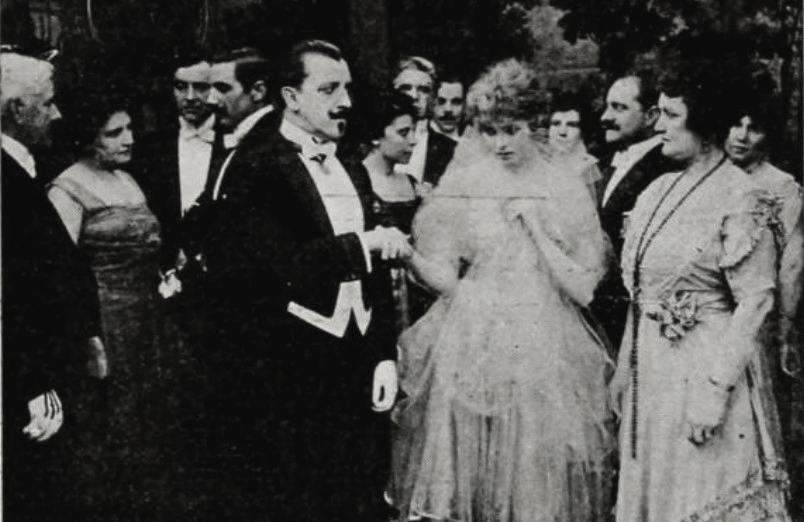
Geoffrey Wynne, portrayed with a captivating blend of nonchalance and sharp intellect, is the quintessential silent film hero – quick-witted, resourceful, and possessing an uncanny ability to blend into his surroundings. His initial introduction at the reception, a masterclass in understated observation, immediately sets him apart. He is not merely present; he is assessing, calculating, and anticipating. The script, co-written by Helmer Walton Bergman and Thomas Edgelow, cleverly uses Wynne’s dual identity as the central axis around which the plot’s tension revolves. This trope, while not entirely novel even in its time, is executed with a refreshing earnestness that ensures our investment in Wynne's perilous mission. One might draw a parallel to the nuanced portrayals of undercover agents in other period pieces, though perhaps less overtly dramatic than the moral quandaries faced by characters in films like The Commanding Officer, where loyalty and identity are perpetually tested.
The moment Wynne is summoned to Washington, the narrative shifts gears, plunging us into the high-stakes world of international espionage. The theft of the treaty, a document of immense geopolitical significance, transforms the urbane setting into a battleground for national security. The ransom demand of $15,000,000, a truly astronomical sum for the era, underscores the gravity of the situation, elevating the stakes beyond mere personal vendetta to a crisis of international proportions. This escalation is handled with a commendable sense of urgency, relying heavily on the visual cues and the expressive performances of the cast to convey the burgeoning panic and determination.
Enter Irene Mitchell, Wynne's fiancée, whose involvement adds a layer of personal jeopardy and emotional resonance to the unfolding drama. Corinne Griffith, in her portrayal of Irene, brings a certain vivacity to a role that could easily have been relegated to a mere damsel in distress. Instead, Irene is presented as a woman of agency, albeit one whose actions, initially, are guided by her devotion to Wynne and her desire to aid his cause. Her enlistment in apprehending the Italian thief, Farnelli, is a pivotal moment, showcasing her courage and resourcefulness. It's a testament to the script's understanding that even secondary characters can drive significant plot points, moving beyond the passive roles often seen in contemporary melodramas like The Little Duchess.
The sequence where Irene meets Farnelli and offers to accompany him to New York is imbued with a palpable tension. The audience, privy to Wynne's suspicions, watches with bated breath as Irene navigates this dangerous encounter, her charm masking a deeper purpose. This particular scene is a masterclass in silent suspense, relying on subtle glances, poised body language, and the inherent dramatic irony to generate a powerful sense of unease. The director skillfully builds anticipation, allowing the audience to feel the precariousness of Irene's position, even as she appears to be in control.
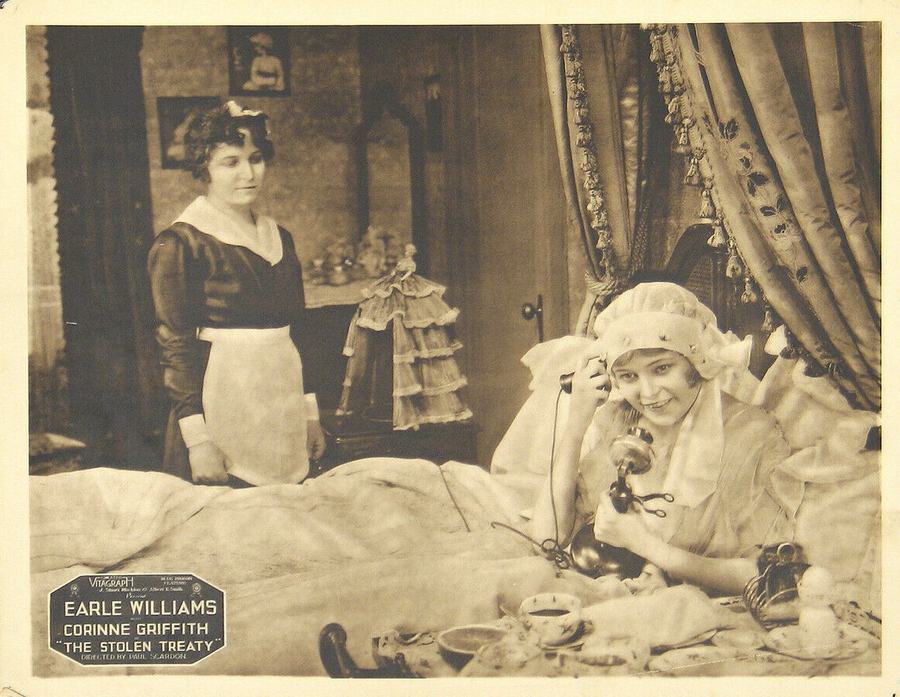
The climax, when Wynne overtakes Irene and Farnelli, is swift and decisive. The chloroforming of Farnelli is an abrupt, almost brutal act, underscoring the high stakes and Wynne's unwavering commitment to his mission. But it is the subsequent tearing off of Farnelli’s disguise that delivers the film's most potent shock: the revelation that the Italian thief is none other than Prince Zarl himself. This twist is genuinely impactful, transforming a seemingly external threat into an internal betrayal of the highest order. Bernard Siegel's performance as Zarl, particularly in this unmasking, must have been riveting, conveying the sudden collapse of his elaborate deception through purely visual means.
Zarl's confession – that he stole the treaty to cover his gambling debts – is a devastating blow, shattering the illusion of diplomatic integrity and exposing the dark underbelly of aristocratic privilege. This motivation, rooted in personal weakness rather than grand political machinations, renders Zarl a tragic figure, a man whose moral compass has been irrevocably skewed by vice. It's a stark reminder that even those entrusted with the greatest responsibilities are susceptible to the most mundane human failings. This theme of personal failings leading to grand betrayals can be seen in various forms across cinematic history, often with a more romanticized bent, but here it's presented with a bluntness that is both surprising and effective for a film of its era. It's a far cry from the more idealized, heroic figures often depicted in adventure stories like The Saint's Adventure, offering a more cynical, yet perhaps more realistic, view of human nature.
Beyond the thrilling plot, The Stolen Treaty explores several compelling themes. The most prominent is the precariousness of appearances. Wynne's dandyism and Zarl's diplomatic pretense both serve as elaborate masks, concealing vastly different realities. The film forces us to question what lies beneath the surface, challenging our preconceived notions of character based on social standing or public image. This thematic depth elevates the film beyond a simple potboiler, inviting contemplation on the nature of truth and deception in human interaction.
Another significant theme is the conflict between personal desire and national duty. Zarl's gambling addiction, a deeply personal failing, directly impacts the geopolitical landscape, jeopardizing a vital international agreement. This stark contrast highlights the potential for individual weaknesses to have far-reaching, catastrophic consequences. Wynne, on the other hand, embodies unwavering duty, placing the security of his nation above all else, even if it means putting his fiancée in harm's way. This moral juxtaposition provides a strong backbone to the narrative, giving it weight and substance.
The film also touches upon the concept of trust and betrayal. The entire premise rests on the betrayal of trust – Zarl betraying his nation, and, implicitly, the trust placed in him by the United States. Wynne, in his role as a secret agent, constantly navigates a world where trust is a weapon, to be wielded or withheld with strategic precision. Irene's trust in Wynne, and her unwitting participation in his scheme, further complicates this web of deceit, making the audience question the very foundations of interpersonal relationships when cloaked in espionage.
As a product of the silent era, The Stolen Treaty relies heavily on visual storytelling. The performances, particularly from Earle Williams as Wynne and Bernard Siegel as Zarl, would have been characterized by expressive pantomime, exaggerated gestures, and nuanced facial expressions designed to convey emotion and intent without spoken dialogue. Billie Billings and Robert Gaillard, among others, contribute to a rich tapestry of supporting characters, each playing their part in advancing the intricate plot. The effectiveness of these performances is crucial, as they must communicate complex motivations and emotional states solely through their physical presence on screen. In this regard, the film likely shares an artistic lineage with the dramatic flair seen in epics like Quo Vadis?, where grand gestures and powerful imagery carried the narrative weight.
The use of intertitles, while a necessary component of silent film, is handled judiciously, providing essential plot points and dialogue without overwhelming the visual narrative. The pacing, a critical element in any thriller, is likely maintained through dynamic editing, alternating between scenes of quiet tension and bursts of frenetic action. The director’s ability to build suspense through visual cues—a lingering shot, a sudden close-up, a quick cut—would have been paramount. For instance, the sequence of Wynne pursuing Farnelli (Zarl) would have been crafted to maximize adrenaline, a common technique in adventure films of the period, perhaps reminiscent of the urgency in The Spider.
Furthermore, the cinematography, even in its nascent stages, would have played a vital role in establishing mood and atmosphere. The contrast between the opulent reception scenes and the more clandestine, shadowy encounters would have been conveyed through lighting and set design, contributing to the film's overall aesthetic and enhancing its dramatic impact. The visual language of the film, therefore, becomes a character in itself, guiding the audience through the labyrinthine plot with compelling artistry.
What makes The Stolen Treaty endure, beyond its historical significance as a silent film, is its timeless exploration of human nature. The themes of betrayal, the allure of vice, and the clash between personal morality and public duty are universal, transcending the specific historical context of the film's production. While it may not possess the grand romantic sweep of Beloved Adventuress or the overt social commentary of Vanity, its strength lies in its focused, taut narrative and its surprising emotional punch.
For modern audiences, viewing The Stolen Treaty offers a unique window into the storytelling conventions and artistic expressions of a bygone era. It challenges us to engage with cinema on a purely visual and emotional level, to interpret meaning from gesture and expression rather than dialogue. It reminds us that compelling narratives don't require elaborate special effects or booming soundtracks; sometimes, all it takes is a well-crafted plot, nuanced performances, and a profound understanding of the human condition to create a truly memorable cinematic experience.
In an age saturated with sound and fury, the quiet intensity of The Stolen Treaty serves as a potent reminder of the power of silent cinema. It’s a film that, despite its age, retains its capacity to thrill, to surprise, and to provoke thought about the intricate dance between appearance and reality, and the often-hidden costs of human frailty. It is a testament to the enduring power of storytelling, proving that a well-spun tale, regardless of its medium, can captivate and resonate across generations. Its legacy isn't just as a historical curiosity, but as a compelling piece of narrative art that speaks to universal truths, much like the timeless appeal found in stories such as The Legend of Provence, albeit in a vastly different genre.
— The Film Chronicler
IMDb —
1930
Community
Log in to comment.