DbcultAccessing Vault...
Cult Review
Senior Film Conservator
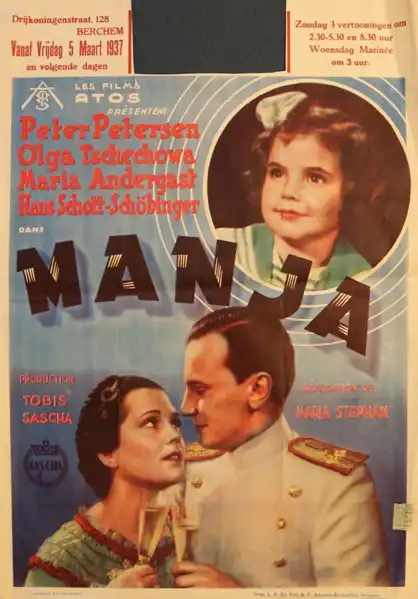
I think you should watch this if you have a soft spot for the kind of movies that feel like they were filmed inside a giant jewelry box. It is perfect for people who like vintage Austrian cinema and don't mind a plot that takes its sweet time getting anywhere.
If you need explosions or people talking like normal humans, you will probably hate it. This is a movie for the dreamers and the people who enjoy looking at old wallpaper patterns.
Maria Andergast is the main reason to sit through this. She plays Manja with this sort of permanent sadness in her eyes that really works for the period.
She has this way of holding her head that makes her look like she is carrying the weight of the whole world. It’s very 1930s.
I found myself watching her hands a lot. There is a scene where she’s just sitting at a table, and the way she fidgets with a lace handkerchief tells you more than the actual dialogue does.
The dialogue is... well, it’s a bit stiff. People don't just say things; they declare them.
It reminds me of the heavy atmosphere you see in The Mummy, where every shadow feels like it’s hiding a secret. But instead of a monster, we just have a lot of social pressure and family drama. ☕
Olga Tschechowa shows up and she is just incredible. She doesn't have to do much to own the scene.
She just walks into a room and everyone else suddenly looks like they are just taking up space. Her costumes are so elaborate I wonder how she even breathed in some of them.
There is this one scene at a party where she just gives a look to someone across the room. It’s sharp.
It’s the kind of look that would make me want to leave the building immediately. The movie is full of these small, wordless moments that are much better than the big dramatic speeches.
The movie is slow. Like, really slow.
Sometimes a character will walk across a room and it feels like it takes five minutes. You can almost feel the director waiting for the perfect shadow to fall on the wall.
I didn't mind it too much because the sets are so pretty to look at. But if you are tired, this movie will definitely put you to sleep.
It’s not quite as gripping as Der lebende Leichnam. That one has a bit more grit to it, while this feels a bit more like a polished stage play.
There is a scene near the middle where the editing gets a little wonky. It’s like they missed a few seconds of footage and just decided to jump to the next morning.
It’s a bit jarring, but it also adds to the charm of watching something this old. You can see the seams of how it was made.
The whole story is about sacrifice and what we owe to other people. It’s a bit melodramatic, sure.
But there is something honest about it. Even when the actors are being a bit too much, you can feel the emotion behind it.
I found myself actually caring about whether Manja would find happiness. Even though I knew, deep down, that this kind of movie rarely ends with everyone smiling and eating cake. 🍰
The ending feels a bit rushed, to be honest. After all that slow building, it just sort of... happens.
I would have liked five more minutes of just letting the characters breathe. But I guess they had a runtime to stick to.
It’s a solid 1930s drama. It’s not a masterpiece, but it’s comfortable.
If you like Maria Andergast, you’ll be happy. If you like looking at old European architecture and fancy dresses, you’ll be happy.
Just don't expect it to change your life. It’s just a nice, sad story told with a lot of style.
I’ll probably forget half the plot by next week, but I’ll remember the way the light hit Maria’s face in that final scene. That’s enough for me.
IMDb 7.2
1930
Community
Log in to comment.