DbcultAccessing Vault...
Cult Review
Senior Film Conservator
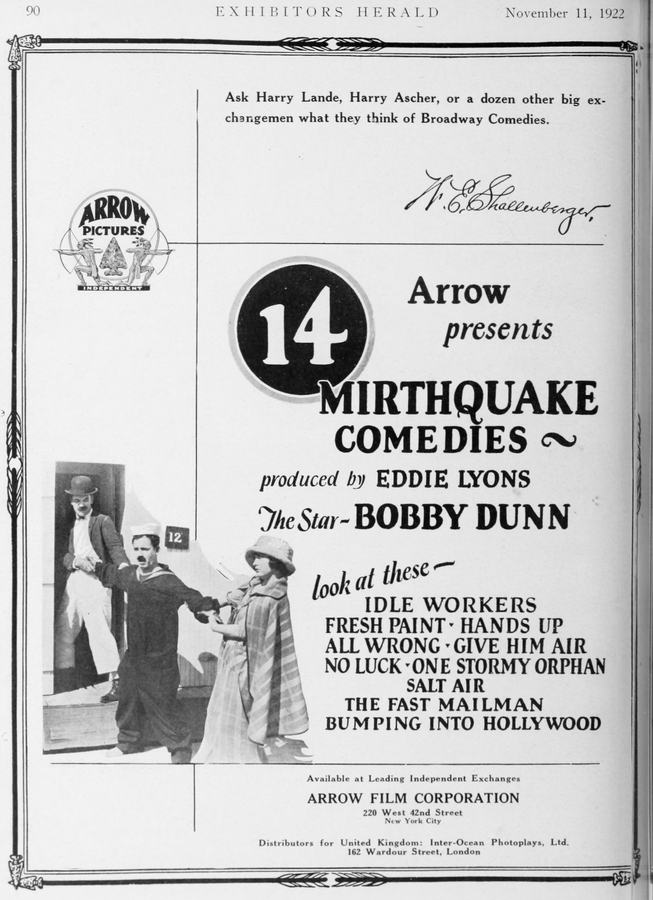
In the pantheon of early silent cinema, few works manage to oscillate so violently between the whimsical and the macabre as Ralph Ceder’s 1922 curios, All Wrong. While contemporaries were busy refining the grammar of the chase or the pathos of the tramp, Ceder and lead Bobby Dunn were busy dismantling the fourth wall and the very concept of the romantic lead.
At the epicenter of this narrative whirlwind is Bobby, a man whose professional life is literally a facade—a walking advertisement. This choice of occupation is no accident. In an era where the cult of celebrity was beginning to solidify, Bobby represents the ultimate outsider, the man who carries the signs of industry but owns none of the product. His obsession with Vera Pretty (Helen Dale) is not merely a romantic pursuit; it is a desperate attempt to transcend his two-dimensional existence. Unlike the domestic struggles found in A Doll's House (1918), Bobby’s alienation is not confined to the home; it is a public, spatial exclusion from the halls of glamour.
The film’s early sequences, where Bobby attempts to breach the studio gates, are masterclasses in kinetic frustration. Each attempt is a rejection of the 'common' man by the 'mythological' apparatus of the studio. This isn't just slapstick; it’s a socio-economic commentary on the barriers to entry in the world of the elite. Every time Bobby is 'thrown out,' we witness a literal expulsion from paradise. The repetition of these failures builds a rhythmic tension that mirrors the cyclical nature of poverty and aspiration, a theme explored with more gravity in The Dark Road.
The narrative pivot occurs when the artifice of the studio collides with the lethal reality of the state. The introduction of a real escaped convict, destined for execution, introduces a tonal shift that is jarring even by 1920s standards. When Bobby purchases the convict’s uniform, he is not merely changing clothes; he is adopting a persona of transgression. He believes that by playing a criminal, he can finally gain the visibility required to stand beside Vera Pretty. This meta-theatricality—a man playing a man playing a role—prefigures much of the self-referential cinema of the later 20th century, much like the identity shifts in The Masked Motive.
The irony is palpable: Bobby is never more 'visible' to the world than when he is perceived as a threat to it. The guards who hunt him represent a cold, mechanical authority that stands in stark contrast to the whimsical, if equally exclusionary, authority of the film director. Here, Ceder uses the prison setting to amplify the stakes. This isn't the lighthearted mischief of Kids and Kidlets; it is a brush with the gallows. The physical comedy during the escape is frantic, fueled by a genuine fear that transcends the typical 'pie-in-the-face' humor of the era.
When Bobby finally stumbles onto the film set, his genuine terror is mistaken for brilliant acting. This is perhaps the film’s most cynical and insightful observation: that the 'industry' values authenticity only when it is accidental and exploitable. The director, a figure of god-like detachment, sees Bobby’s life-or-death struggle merely as 'good takes.' This commodification of trauma is a theme that resonates deeply even today. Bobby, the sandwich man, has finally become the product he was once only advertising.
Compare this to the theatrical ambitions found in Thomas Graals myndling, where the creative process is treated with a certain degree of reverence. In All Wrong, the creative process is a chaotic accident. Bobby’s 'success' is a result of his total lack of control. He is offered a leading role not because of his talent, but because his real-world suffering fits the frame of the fiction. It is a hollow victory, one that underscores the superficiality of the cinematic world he so desperately wanted to join.
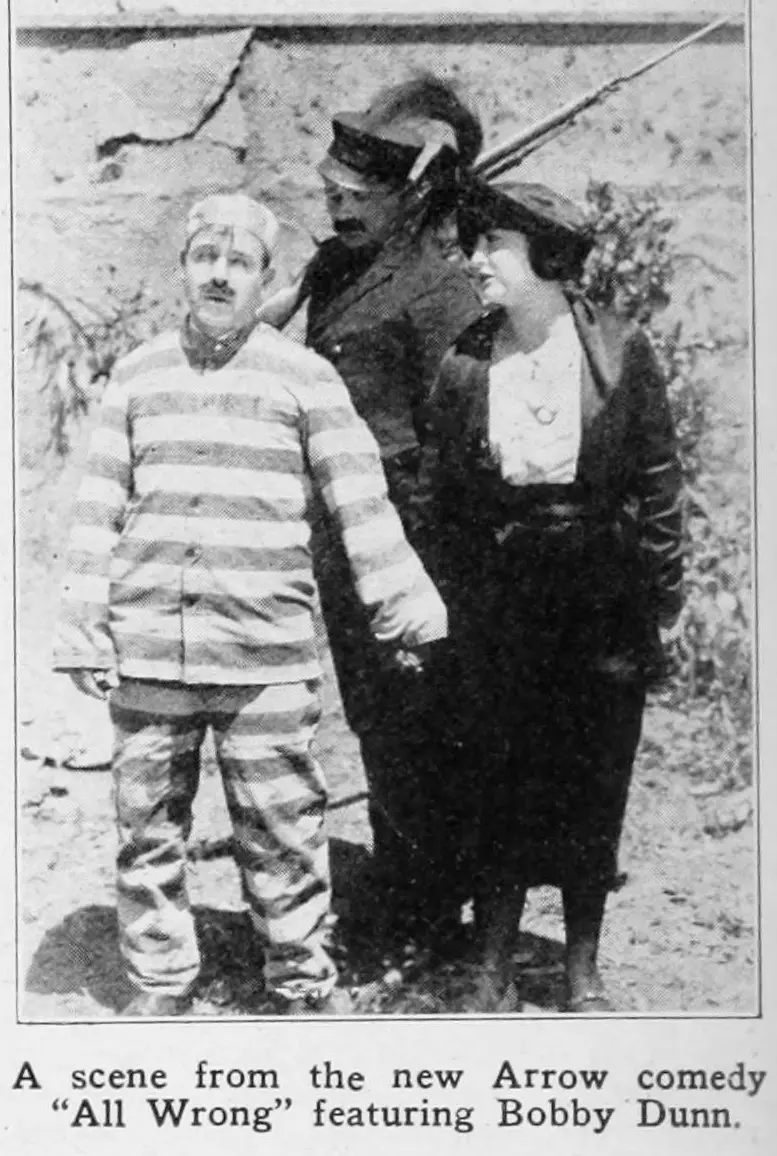
The conclusion of All Wrong is where the film earns its place as an outlier in silent comedy. When Vera Pretty reveals that only her husband can play her leading man, the illusion is shattered. Bobby realizes that the studio, for all its inclusive imagery, is a closed shop—a nepotistic fortress. The rejection is total. It is not just a rejection of his love, but a rejection of his newfound identity as an 'actor.'
Bobby’s decision to return to the prison to face execution is a radical, nihilistic gesture. If he cannot be the leading man in the world of light and shadows, he would rather be the protagonist of a real-world tragedy. This choice elevates the film from a mere comedy to a piece of existentialist art. It mirrors the tragic inevitability of King Lear or the somber moral weight of The Deemster. Bobby chooses the finality of the state’s judgment over the perpetual rejection of the studio’s gatekeepers.
Ralph Ceder’s direction is remarkably sophisticated for a 1922 short. The use of depth in the studio scenes creates a sense of a world within a world, a layers-of-reality effect that is visually stimulating. The editing during the prison chase sequence is sharp, maintaining a breakneck pace that leaves the viewer as breathless as the protagonist. While it may lack the high-budget sheen of Love Never Dies (1921), it possesses a raw, visceral energy that is often missing from more 'prestige' productions of the era.
The performance of Bobby Dunn is a revelation of controlled mania. Dunn’s physicality is not as fluid as Chaplin’s nor as architectural as Keaton’s; instead, it is jagged and anxious. He moves like a man who knows the world is out to get him. Helen Dale, as Vera Pretty, provides the necessary contrast—she is the still, beautiful center of the storm, a marble statue that Bobby keeps crashing into. Her performance captures the detached aura of the silent film star perfectly, a distant sun that provides light but no warmth.
Ultimately, All Wrong is a film that lives up to its title by being 'wrong' in the most fascinating ways. it subverts the expectations of the genre, offering a dark reflection of the audience's own desires for stardom and recognition. It shares a certain thematic DNA with Strictly Confidential in its exploration of hidden truths, but pushes those truths to a much more uncomfortable extreme.
Is it a comedy? Technically, yes. But it is a comedy of the absurd, a precursor to the works of Beckett or Ionesco. It suggests that our pursuit of the 'ideal'—whether it be fame, love, or art—is a fool’s errand that likely ends in our own destruction. In the landscape of 1922, this was a bold, perhaps even transgressive, message. While films like A Lady of Quality sought to elevate the spirit, All Wrong was content to point out the bars of the cage.
For the modern viewer, All Wrong serves as a poignant reminder of the fragility of the human ego. In an age of social media and digital personas, Bobby’s struggle to be 'seen' by his idol feels more relevant than ever. We are all, in some sense, sandwich men carrying around boards of our own design, hoping someone in the 'studio' will notice us and offer us a lead role. Ceder’s film warns us that even if they do, the cost might be more than we are willing to pay. It is a brilliant, biting, and utterly essential piece of silent cinema that deserves a place in the conversation alongside the era’s more famous masterpieces.
Reviewer Note: This film should be viewed as a companion piece to the more dramatic explorations of justice found in Everyman's Price or the historical weight of Yulian Otstupnik, providing a comedic yet equally sharp perspective on the human condition.

IMDb —
1930
Community
Log in to comment.