DbcultAccessing Vault...
Cult Review
Senior Film Conservator
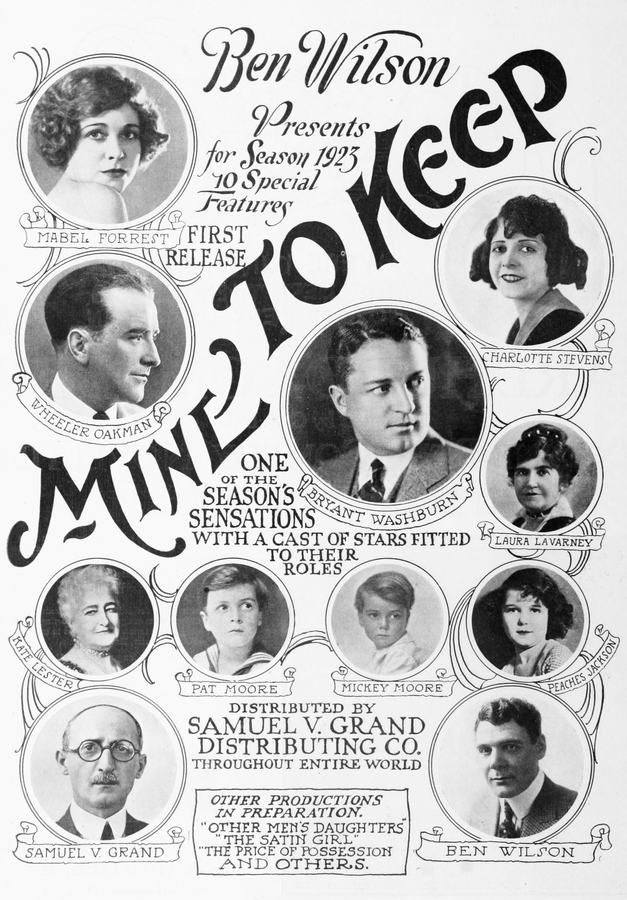
When the reels of Mine to Keep spin, the audience is thrust into a domestic tableau that feels simultaneously intimate and theatrical. Wheeler Oakman’s Victor Olney is not merely a scrawny playboy; he is a study in the contradictions of early twentieth‑century masculinity—a man whose public bravado masks a fragile, insecure core. Oakman’s performance oscillates between swagger and desperation, a duality that the camera captures with a lingering close‑up that feels almost modern in its psychological probing.
Peaches Jackson, cast as Constance, brings a luminous restraint to the role. Her eyes convey a quiet strength that refuses to be eclipsed by Victor’s tempestuous outbursts. The chemistry between Oakman and Jackson is deliberately restrained, underscoring the film’s central premise: love is as much about trust as it is about passion.
The screenplay, penned by Arthur F. Statter and Evelyn Campbell, adheres to a classic three‑act structure, yet it subverts expectations by allowing jealousy to function as both antagonist and catalyst. The inciting incident—Mowbray’s insinuation about a supposed tryst—does not merely introduce conflict; it exposes the fragility of Victor’s ego and the precariousness of Constance’s agency.
Clint Mowbray, portrayed by Bryant Washburn, is the polished foil to Victor’s rough‑hewn charisma. Washburn’s measured delivery, laced with an undercurrent of contempt, makes his accusations feel less like idle gossip and more like a strategic assault. The film cleverly uses Mowbray’s character to question the societal double standards of fidelity: while Victor’s past indiscretions are tacitly dismissed, a hint of impropriety on his part becomes a weapon against him.
Cinematographer Michael D. Moore employs chiaroscuro lighting to accentuate the emotional turbulence within the domestic space. Shadows creep along the walls of the Olney household, mirroring Victor’s internal darkness. When Constance departs to nurse the injured dancer, the scene is bathed in a soft, almost ethereal glow, hinting at redemption through compassion.
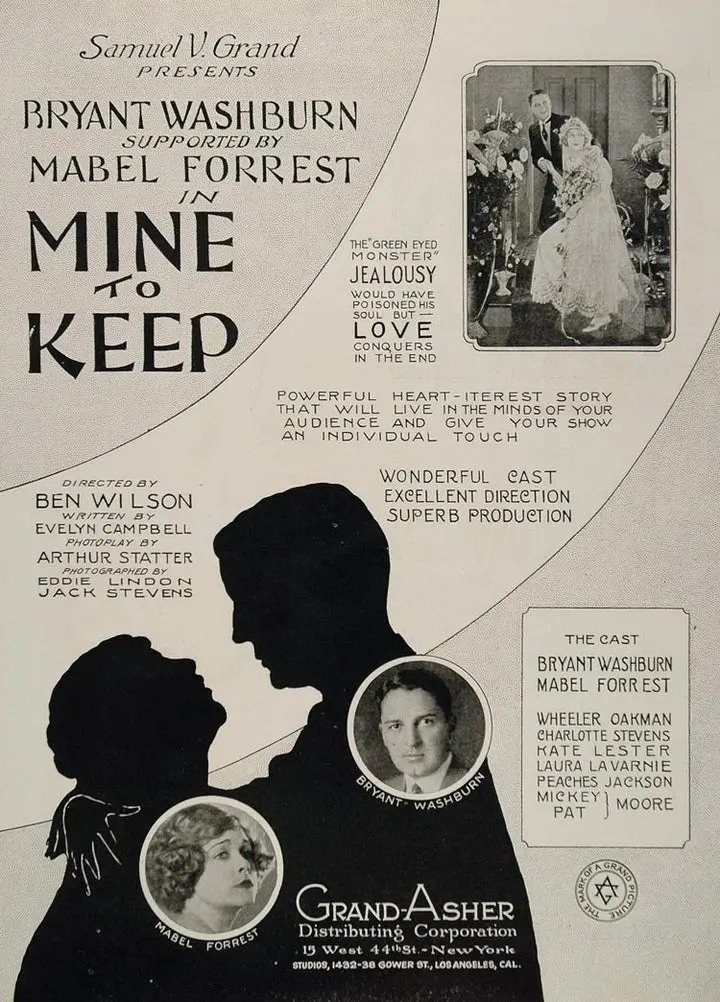
The film’s set design, though modest, is meticulously arranged to reflect class distinctions. Victor’s study is cluttered with trophies and smoking paraphernalia, a visual metaphor for his need to constantly prove his virility. In contrast, Constance’s bedroom is sparse, its white linens a visual anchor of purity amid the surrounding moral ambiguity.
Pat Moore’s portrayal of the dancer—whose name remains unspoken—serves as a narrative catalyst. Though she appears briefly, her physical vulnerability (a broken ankle sustained at Victor’s bachelor party) becomes the fulcrum upon which the entire plot pivots. The dancer’s silence allows viewers to project their own assumptions onto her, thereby intensifying the drama surrounding Victor’s alleged infidelity.
Charlotte Stevens, as the mother‑in‑law, embodies the voice of reason. Her counsel to Victor is delivered in measured tones, and the scene is framed with a cool sea‑blue filter (simulated through lighting) to denote calm rationality. This visual cue subtly differentiates her pragmatic worldview from Victor’s impassioned volatility.
While Mine to Keep stands alone in its exploration of marital jealousy, it shares thematic DNA with other silent era dramas. For instance, the tension between societal expectations and personal desire mirrors the conflict in Queen of the Turf, where a woman's agency is constantly negotiated against patriarchal pressures. Similarly, the moral quandary faced by Victor resonates with the internal struggle of the protagonist in Is Matrimony a Failure?, underscoring a broader cultural preoccupation with the sanctity of marriage during the 1920s.
Director Bryant Washburn (who also appears as Mowbray) demonstrates an astute awareness of pacing. The film’s rhythm decelerates during Constance’s caregiving scenes, allowing the audience to savor the quiet heroism of her compassion. Conversely, the moments of confrontation between Victor and the dancer are edited with rapid cuts, heightening the sense of accusation and urgency.
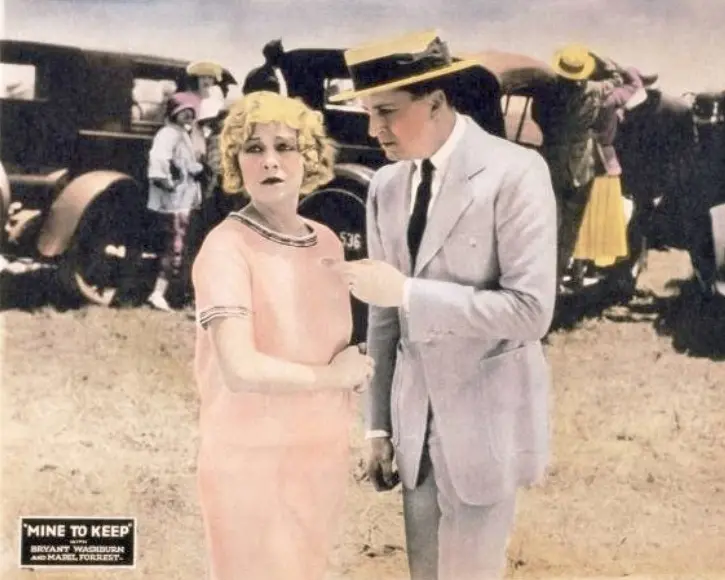
Mabel Forrest’s fleeting appearance as a confidante provides a rare glimpse into the female solidarity that underpins Constance’s decisions. Forrest’s delivery is understated yet powerful, a reminder that the silent era could convey profound emotional depth without reliance on dialogue.
The film’s denouement—Victor’s admission of innocence and Constance’s return—might appear conventional, yet it carries a subversive undertone. By allowing Constance to initiate the reconciliation, the screenplay subtly endorses female agency within the marital framework, a progressive stance for its time.
The final scene, bathed in a warm amber hue (simulated through a filtered lens), suggests a hopeful rebirth. The audience is left with a lingering question: does forgiveness truly heal, or does it merely mask unresolved tensions? The ambiguous answer invites repeated viewings, each time revealing new layers of nuance.
Decades later, Mine to Keep remains a compelling artifact of silent cinema, offering insight into early Hollywood’s negotiation of gender dynamics and marital expectations. Its influence can be traced in later melodramas such as The Self‑Made Wife, where the central female figure similarly navigates the treacherous waters of trust and autonomy.
For contemporary scholars, the film serves as a case study in how visual storytelling can articulate complex emotional states without spoken words. The interplay of lighting, composition, and performance creates a rich tapestry that rewards careful analysis.
In sum, Mine to Keep is a masterful blend of melodramatic intrigue and subtle social commentary. Its deft handling of jealousy, the fragility of reputation, and the restorative power of trust renders it a timeless piece worthy of both academic study and casual appreciation. The film’s artistic merit, bolstered by strong performances and a nuanced script, secures its place within the pantheon of silent era classics.
IMDb —
1929
Community
Log in to comment.