DbcultAccessing Vault...
5.7/10
Archivist John
Senior Editor
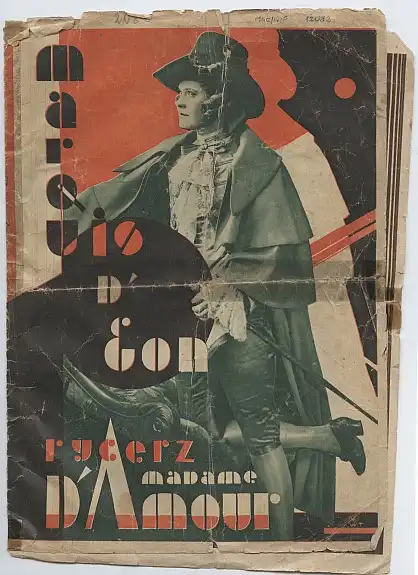
A definitive 5.7/10 rating for a film that redefined the boundaries of cult cinema. Marquis d'Eon, der Spion der Pompadour remains a cornerstone of transgressive art.
If you’re coming to this 1928 silent for a deep, nuanced take on gender identity, you’re about ninety years too early. But if you want to see how the late 20s dealt with the weird, legendary life of the Chevalier d’Eon through a haze of heavy makeup and courtly paranoia, it’s worth the hour or so. It’s definitely for the people who enjoy digging through the Weimar archives, but if you can’t stand long, static scenes of people in massive wigs reading letters, you’ll probably be checked out by the ten-minute mark.
The movie is a bit of a costume shop explosion. Everything feels stiff. Liane Haid, who plays the Marquis, has this very specific 1920s face—round, big eyes, very expressive—that doesn't quite disappear into the role of a soldier, but she carries the 'disguise' bits with a sort of frantic energy. There’s a scene early on where she’s being fitted for a dress, and the way she stands—shoulders squared, looking slightly annoyed at the lace—actually feels like a real moment of someone uncomfortable in their own skin. It’s one of the few times the movie stops being a 'period piece' and feels like it’s about a person.
Fritz Kortner is the one to watch, though. He has this way of standing in the frame where he feels twice as large as everyone else. If you’ve seen him in other stuff from this era, you know the look: the bulging eyes, the mouth set in a permanent sneer. He’s doing that thing where he looks like he’s trying to explode through the screen. There's a scene where he’s just watching someone across a room, and his eyes are doing so much work it almost feels like he’s in a different, much more intense movie than everyone else. He makes the political stakes feel dangerous, even when the plot itself is just people moving pieces of paper around.
The pacing is... let's say 'leisurely.' There’s a lot of walking into rooms, bowing, and then walking out of rooms. It reminds me a bit of the slower parts of The Knight of the Rose, where the pageantry starts to swallow the actual story. You can almost feel the director, Karl Grune, getting distracted by the sets. There’s this one shot where the camera just sits on a doorway for what feels like a full minute before anyone even enters. It’s not 'atmospheric'—it just feels like they forgot to yell action or were really proud of the molding on the doorframe.
The title cards are a bit of a nightmare. There are so many of them, and some stay on screen long enough for you to read them, look around the room, check your watch, and read them again. It kills the momentum, especially during the 'suspenseful' bits where d’Eon is trying to sneak through the Russian court. You get a card explaining the danger, then a shot of a door, then another card, then a shot of a hand on a doorknob. By the time the door actually opens, you’ve forgotten why we were supposed to be worried.
I kept thinking about Sein größter Bluff while watching this, mostly because of how much better the late 1920s were at comedy than these heavy-handed historical dramas. When they try to be serious, it often just ends up looking like people in very expensive curtains having a disagreement about mail. The chemistry between Haid and the rest of the cast is also pretty non-existent. Everyone feels like they are acting in their own little bubble, projecting to the back row of a theater that isn't there.
One thing that stuck with me is the lighting in the Russian court scenes. It’s very high-contrast. You can see the dust in the air and the way the white powder on the wigs catches the light. It makes the whole thing feel slightly claustrophobic, despite the supposedly grand setting. It’s a very 'studio' look—you never for a second believe they are anywhere but a soundstage in Berlin, but there’s a certain charm to that kind of artifice.
There is an awkwardness to the way the film handles the gender-swapping that feels very of its time. It’s treated as a gimmick, a spy’s trick, but then there are these flashes where the camera lingers on Haid’s face when she’s alone, and you see a flicker of something else. It’s probably just the lighting or a lucky take, but it gives the movie a weight it doesn't quite earn elsewhere.
The ending feels rushed. After all that buildup with the Empress and the secret documents, it just kind of... stops. You get the sense they ran out of film or the budget for the wigs ran out. It’s not a masterpiece, and it’s certainly not 'visually stunning' in the way modern people use that term to mean 'expensive.' It’s a weird, clunky, fascinating relic of a time when cinema was still trying to figure out how to tell big, complicated historical stories without the actors looking like they were in a school play.
Watch it if you like Fritz Kortner’s face or if you’re a completionist for 1920s German cinema. Skip it if you need a plot that moves faster than a glacier.
IMDb 6.4
1925
Community
Log in to comment.